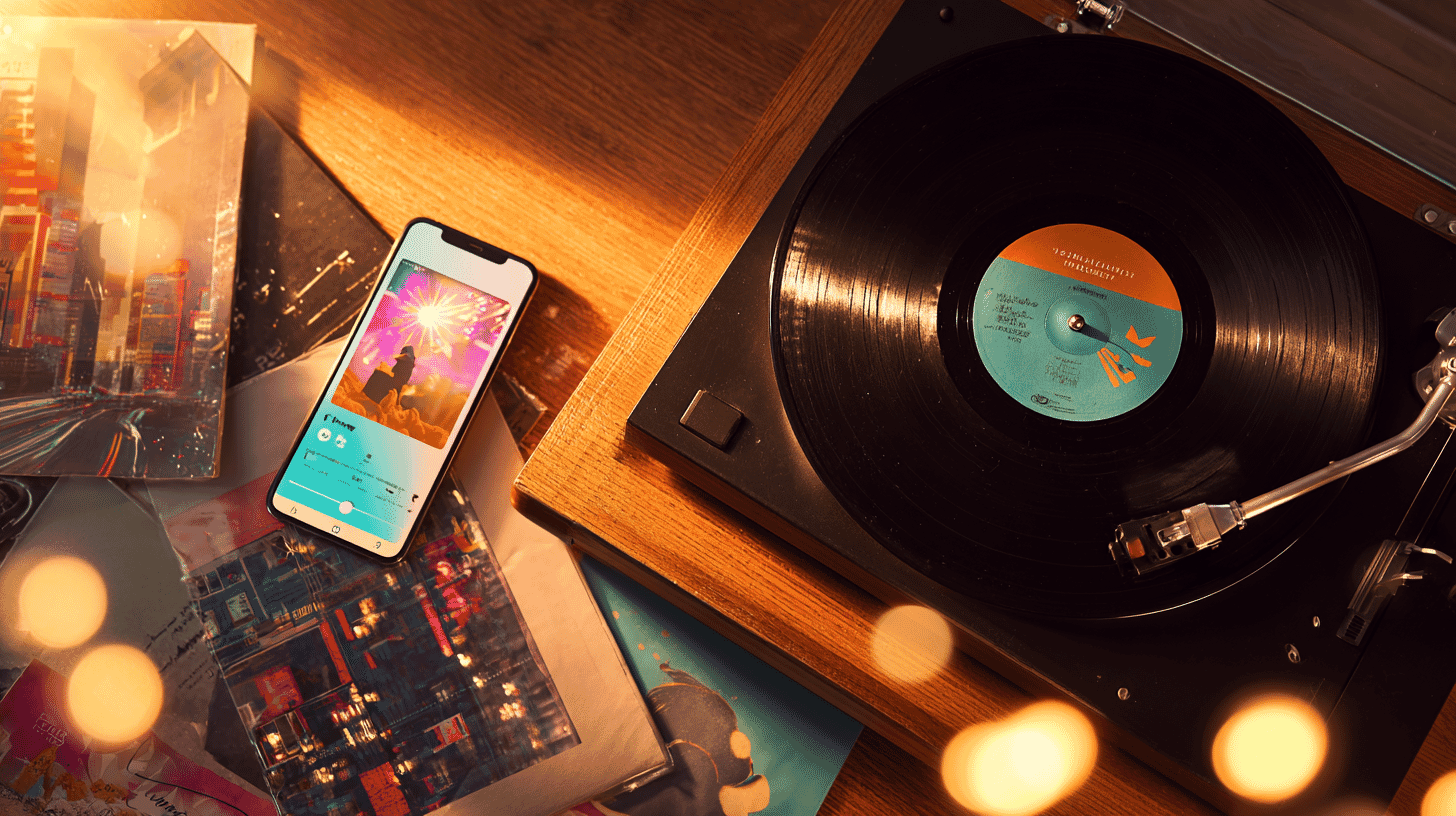
In an age where "music lives on your smartphone," Japan's vinyl record production has exploded. Annual manufacturing plummeted to just 100,000 units in 2009, but by 2024, it had surged to 3.15 million. That's a 30x V-shaped recovery. Why are people choosing the "inconvenient" format of vinyl in the most convenient era of music history? Insights from a 60-year-old Japanese pressing plant and global data reveal what's really driving this boom.
The Streaming Paradox: Digital Dominance Created Analog Desire
With platforms like Spotify and Apple Music offering instant access to tens of millions of songs, the convenience of music consumption has never been higher. Yet paradoxically, this very convenience has sparked an opposite movement: analog vinyl records are experiencing unprecedented demand.
According to the Recording Industry Association of Japan (RIAJ), vinyl record production in 2024 reached approximately 3.15 million units (up 17% year-over-year), with production value hitting ¥7.89 billion, roughly $52.5 million. That revenue figure exceeded ¥7 billion ($47 million) for the first time in 35 years, since 1989.
Toyo Kasei Co., Ltd., Japan's only fully integrated vinyl record manufacturer and jacket printer, operating continuously since 1959, explains the phenomenon this way: "Because digital streaming has become the mainstream way to experience music, a counter-desire has emerged, people want to physically own the music they love." The company reports that orders have been climbing steadily for 15 to 16 years, and notably, vinyl production has grown in parallel with the expansion of streaming services since 2016.
In other words, digital and analog aren't enemies, they're partners. Listeners discover music through streaming, then want to hold it in their hands as a vinyl record. That desire is the engine behind this extraordinary comeback.
"The Inconvenience Is the Point": Vinyl as Experiential Consumption
Toyo Kasei identifies the key appeal of vinyl records as "taiken-kan" (体験感), a Japanese concept that translates roughly to "the feeling of a full experience." It's more than just "experiencing" something; it describes the deep sense of immersion and satisfaction gained through an entire ritual-like process.
Listening to a record requires deliberate action: carefully sliding the disc from its oversized jacket, placing it on the turntable, gently lowering the needle, and flipping to Side B when the first half ends. This "ritual" creates a fundamentally different relationship with music compared to tapping a play button on a phone.
Records offer distinct qualities that digital formats cannot replicate. There's the warm, rich analog sound quality that audiophiles cherish. The 12-inch (approximately 30 cm) jacket transforms album artwork into a displayable art piece. And the very "inconvenience" of needing a turntable, amplifier, and physical interaction becomes a feature, forcing listeners to slow down and give music their full attention.
An IFPI survey found that among vinyl buyers, 49% said they wanted to "physically own music," 41% wanted to "look at the record," and 36% enjoyed "the ritual of playing it." Perhaps most striking: approximately half of people who bought vinyl in 2022 didn't even own a turntable. They purchased records not to listen, but simply to possess them.
Gen Z Is Leading the Global Vinyl Renaissance
The driving force behind this vinyl boom isn't nostalgic baby boomers, it's Gen Z, the generation that barely knows what a CD is.
At one of Tokyo's top vintage record shops, 40–50% of customers are now in their teens and twenties. A female university student in Tokyo shared: "Honestly, I can't really tell the difference in sound quality. But they look cute, and the colored vinyl editions are so collectible." She spends about ¥10,000 ($65) per month on records.
For Gen Z, vinyl records serve multiple roles: they're Instagram-worthy aesthetic objects, a way to support, or "oshi" (推し), favorite artists directly, and an experience that streaming simply can't deliver. Videos of turntables spinning on TikTok and Instagram continue to multiply, with hashtags like #vinyl and #RecordCollection trending globally.
This isn't just a Japanese phenomenon. In the U.S., 43.6 million LPs were sold in 2024, the 18th consecutive year of growth, generating $1.4 billion in revenue and dramatically outpacing CD sales of $541 million. The UK saw 6.7 million vinyl albums sold in 2024, marking 17 consecutive years of growth and the highest total in three decades. The global vinyl market, valued at approximately $1.9 billion in 2024, is projected to reach $3.5 billion by 2033.
City Pop: How Japan's Retro Sound Fueled International Vinyl Hunting
No discussion of Japan's vinyl boom is complete without mentioning "City Pop", the smooth, sophisticated Japanese pop music from the 1970s and '80s. Artists like Tatsuro Yamashita, Mariya Takeuchi, and Taeko Onuki were "discovered" by international audiences through YouTube algorithms and TikTok videos, sparking a worldwide phenomenon.
The result? Foreign tourists now flock to record shops in Tokyo's Shibuya and Shimokitazawa neighborhoods as a must-do cultural activity. At Tower Vinyl Shibuya, Tower Records' analog-specialized store boasting 70,000 titles, there are times when almost every customer in the store is a foreign visitor. Thanks partly to the favorable exchange rate, many buy 10 or more records in a single visit.
Sony Music's reissue of Tatsuro Yamashita's eight 1970s–80s albums on vinyl sold out repeatedly, requiring additional pressings. A reissue of Happy End, a legendary 1970s rock band, also sold out instantly, "unprecedented popularity for 50-year-old music," according to industry insiders. Even current artists are joining in: YOASOBI released their hit "Idol" as a limited-edition vinyl, and acts like LiSA, Spitz, and Sambomaster now regularly include vinyl formats in their releases.
A 100-Year-Old Medium With a Future: Because "Experience" Never Goes Out of Style
Looking ahead, Toyo Kasei offers this perspective: "Analog records will likely re-establish themselves as 'one form of music experience' well into the 2020s and beyond. The history of analog records spans over 100 years. We'd like to believe that demand will continue to exist, adapted to each era."
Coming from a company that has devoted itself exclusively to vinyl records for over 60 years since its founding in 1959, these words carry weight. The ultimate advance of digitalization hasn't killed analog, it has reminded people of the value in things you can touch, things that demand your time and attention. The V-shaped recovery of vinyl records is a profoundly modern phenomenon, born at the intersection of technological progress and a fundamentally human craving for tangible experience.
Is vinyl or analog culture making a comeback in your country too? What experiences do you choose to keep "analog" in this digital age?








Global Discussion
15 comments