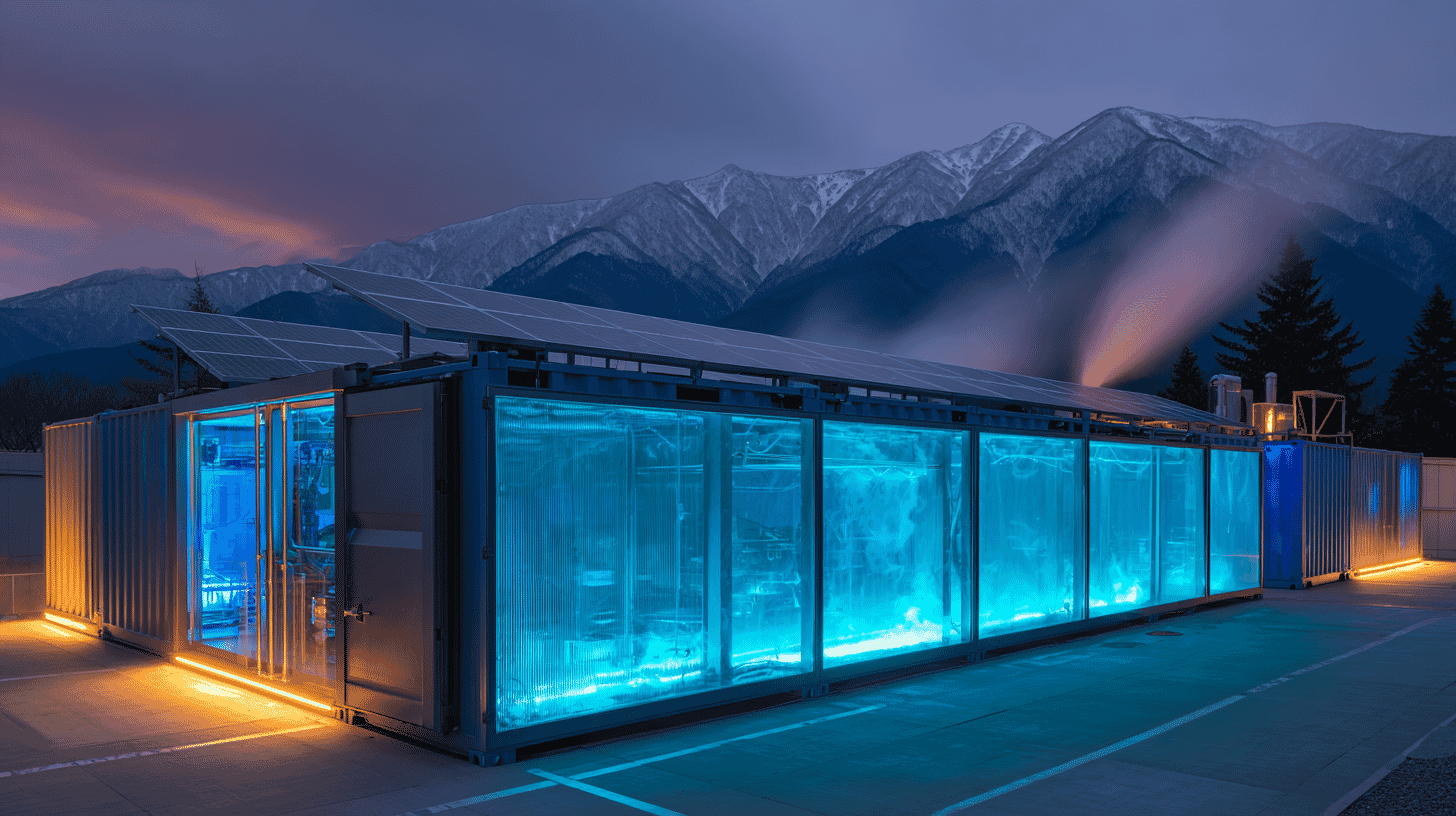
What if you could build a full-scale data center in just three months, inside a shipping container? That era has arrived.
While massive data centers in Tokyo struggle with land shortages and power constraints, a company in the Japanese countryside just launched the nation's first commercial container data center equipped with both water-cooling and liquid immersion cooling. Here's why this small-but-mighty approach could reshape Japan's AI infrastructure from the ground up.
The AI Boom Is Overheating Japan's Data Centers
The explosive growth of generative AI has created an insatiable appetite for computing power worldwide. In Japan, this demand has collided with a stubborn reality: most of the country's data centers are concentrated in the Tokyo metropolitan area, where available land is scarce, electricity supply is strained, and local residents are increasingly resistant to new large-scale facilities.
Building a conventional data center is a massive undertaking. It typically requires years of planning, construction permits, environmental assessments, and enormous capital investment, often running into hundreds of millions of dollars. For many companies that need GPU computing power right now, this timeline simply doesn't work.
Enter the container data center: a compact, modular solution that fits inside standard shipping containers and can be deployed in a fraction of the time.
What TOSYS Built in Nagano
On February 5, 2026, a Nagano-based IT services company called TOSYS officially launched what it describes as Japan's first commercial container data center to combine three cooling technologies in one package: traditional air cooling, water cooling, and liquid immersion cooling.
The facility, branded "Cube Park NAGANO," is located just a 10-minute drive from Nagano Station, and roughly 90 minutes by bullet train from Tokyo. The site includes six container plots available for purchase by clients, plus TOSYS's own "Unit No. 1" data center, which has been in pre-operation testing.
What makes this noteworthy is not just the container format itself, several Japanese companies, including Mitsubishi Heavy Industries and KDDI, have been developing container-type data centers for years. The distinction is that TOSYS is offering all three cooling methods in a single commercial service, which gives clients the flexibility to choose the right cooling approach for their specific server configurations.
Understanding the Three Cooling Methods
For readers unfamiliar with data center cooling, here's a quick primer on why this matters.
Air cooling is the traditional approach, essentially blowing cold air over servers using fans and air conditioning systems. It works fine for standard servers, but as GPU chips like those used for AI training generate increasingly intense heat, air cooling alone starts to struggle. Think of it like trying to cool down a bonfire with a desk fan.
Water cooling (also called liquid cooling or direct liquid cooling) circulates water or a water-based coolant through pipes that are in direct contact with the hottest components, typically the CPU or GPU chips. It's far more efficient than air cooling because water conducts heat about 25 times better than air and carries far more of it. TOSYS's Unit No. 1 uses water-cooled GPU servers developed in collaboration with Fixstars, a Tokyo-based technology company specializing in AI software optimization. Energy-efficient dry coolers are used to dissipate the heat from the water circuit.
Liquid immersion cooling takes the concept even further by submerging entire servers in a tank of specially engineered, electrically insulating coolant fluid. The servers literally "bathe" in this liquid, which absorbs heat across the entire surface area of the hardware. Previous experiments by KDDI, Mitsubishi Heavy Industries, and NEC Nets SI demonstrated that immersion cooling can reduce cooling-related power consumption by up to 94% compared to conventional air-cooled data centers, achieving a PUE (Power Usage Effectiveness) rating as low as 1.05, remarkably close to the theoretical ideal of 1.0.
Why Container Format Matters
The container approach solves several problems simultaneously.
Speed of deployment: Because container data centers are classified as equipment rather than buildings under Japanese regulations, they bypass the lengthy construction permit process. TOSYS says a container unit can be set up in as little as three months, compared to years for a traditional facility.
Lower initial investment: Clients can start small and scale up by adding more containers as needed, rather than committing to a massive facility upfront.
Customization: Each container can be configured differently, one might house water-cooled GPU servers for AI workloads, while another uses air cooling for standard business applications.
Geographic flexibility: Containers can be placed almost anywhere with adequate power and network connectivity, making it possible to build data center capacity in rural areas where land is abundant and renewable energy sources are accessible.
The Regional Advantage
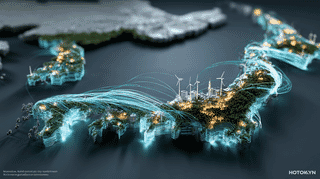
This last point is particularly significant in the Japanese context. The country's data center market has long been dominated by the Greater Tokyo area, but that concentration is becoming a liability. Land prices in central Tokyo are astronomical, and the power grid is already under strain from existing demand.
By contrast, regions like Nagano Prefecture offer spacious land, cooler ambient temperatures (which naturally reduce cooling costs), and proximity to renewable energy sources such as solar, small-scale hydroelectric, and geothermal power.
TOSYS is leaning into this regional advantage. The company plans to implement a "microgrid", a localized power supply system that can incorporate renewable energy sources and operate independently during emergencies. It's also exploring Power Purchase Agreements (PPAs) to secure long-term, sustainable electricity supply.
What's Coming Next
TOSYS's roadmap includes some ambitious forward-looking initiatives. The company has mentioned plans to explore perovskite solar panels, a next-generation photovoltaic technology that is lighter, more flexible, and potentially cheaper to manufacture than conventional silicon panels. Japan has been a global leader in perovskite solar cell research, with companies and universities pushing toward commercial production.
Other planned innovations include super-hydrophobic coatings for container exteriors (to improve weather resistance and thermal management), as well as the use of geothermal heat and small-scale hydroelectric power unique to Nagano's mountainous geography.
TOSYS is also preparing joint research with local universities and seeking partnerships with municipal governments, a model the company calls "community-symbiotic" data center development. Through its affiliation with the CHD Group, which operates nationwide, TOSYS aims to expand the Cube Park concept to other regional locations across Japan.
The Bigger Picture: Japan's Data Center Decentralization
TOSYS's initiative fits within a broader national trend. The Japanese government has been actively promoting data center decentralization as part of its digital infrastructure strategy, partly for disaster resilience (a critical concern in earthquake-prone Japan) and partly to stimulate regional economies.
NTT Data opened a liquid cooling technology testing facility in Chiba Prefecture in late 2024. Mitsubishi Heavy Industries has been developing hybrid cooling container data centers since 2021. Sakura Internet is building a major GPU computing center in Hokkaido. The direction is clear: Japan's next generation of data centers will be smaller, more distributed, and cooled by something other than just air.
What makes the TOSYS story interesting is the convergence of several trends (the container format, triple-cooling technology, renewable energy integration, and the rural revitalization angle) into a single, commercially available package from a regional company, rather than a tech giant.
What Do You Think?
Data center infrastructure is usually invisible to everyday life, but it powers everything from the AI chatbots you use daily to the cloud services behind your favorite streaming platforms. As demand for AI computing skyrockets, countries around the world are wrestling with the same questions: Where do we build? How do we cool them efficiently? How do we power them sustainably?
Japan is betting on small, distributed, liquid-cooled containers in the countryside. How is your country approaching the data center challenge? Are there similar regional or sustainable initiatives happening near you?






Global Discussion
15 comments