♻️ What if every sewage treatment plant could become a power station?
Toray Industries has successfully demonstrated its "all-carbon CO2 separation membrane" at a sewage treatment facility in Osaka Prefecture, Japan. With a remarkable 70% reduction in dehumidification costs, biogas power generation is becoming economically viable like never before.
What Is Biogas Power Generation?
Biogas power generation uses methane gas produced through anaerobic fermentation of organic waste like food scraps and sewage sludge as fuel. It transforms waste into energy without relying on fossil fuels, making it a promising technology for building a circular economy.
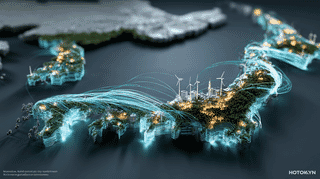
Japan has approximately 1,500 sewage treatment plants, and about 80% of sewage sludge consists of organic matter. According to Japan's Ministry of Land, Infrastructure, Transport and Tourism, the energy potential of sewage sludge, when converted to heat value, is equivalent to roughly 1.6 times the annual electricity consumption of all sewage treatment plants nationwide. In other words, proper utilization could transform these facilities from energy consumers into energy producers.
However, as of 2022, only about 26% of sewage sludge is being converted to energy. The primary barrier has been the high cost of biogas purification.
The Challenge with Conventional Technology
Biogas contains not only methane (the fuel component) but also CO2 and significant amounts of moisture. Purifying this gas to a level suitable for power generation requires removing these impurities.
Conventional membrane separation technologies using polymer membranes or zeolite membranes have a critical weakness: their separation performance deteriorates significantly when exposed to moisture. This meant that before purifying biogas, operators needed to remove moisture using adsorbent-based dehumidification equipment. This pre-treatment process led to larger facilities and increased costs.
As a result, despite understanding the environmental benefits, many municipalities and companies abandoned biogas projects due to economic barriers.
Toray's Innovation Changes the Game
Toray's all-carbon CO2 separation membrane addresses this challenge at its core. Since announcing the foundational technology in 2021, the company has continuously refined it for practical application.
The membrane's key feature is its composition entirely of carbon fiber, making it impervious to moisture damage. It consists of a two-layer structure: a hollow fiber porous carbon fiber support with a diameter of less than 300 micrometers, coated with a thin carbon separation layer just a few micrometers thick.
Since CO2 and methane have different molecular sizes, passing mixed gas through a membrane with appropriately sized pores allows selective separation—like a molecular sieve. CO2 has a molecular diameter of 0.330 nanometers while methane measures 0.380 nanometers. The membrane exploits this tiny difference for selective separation.
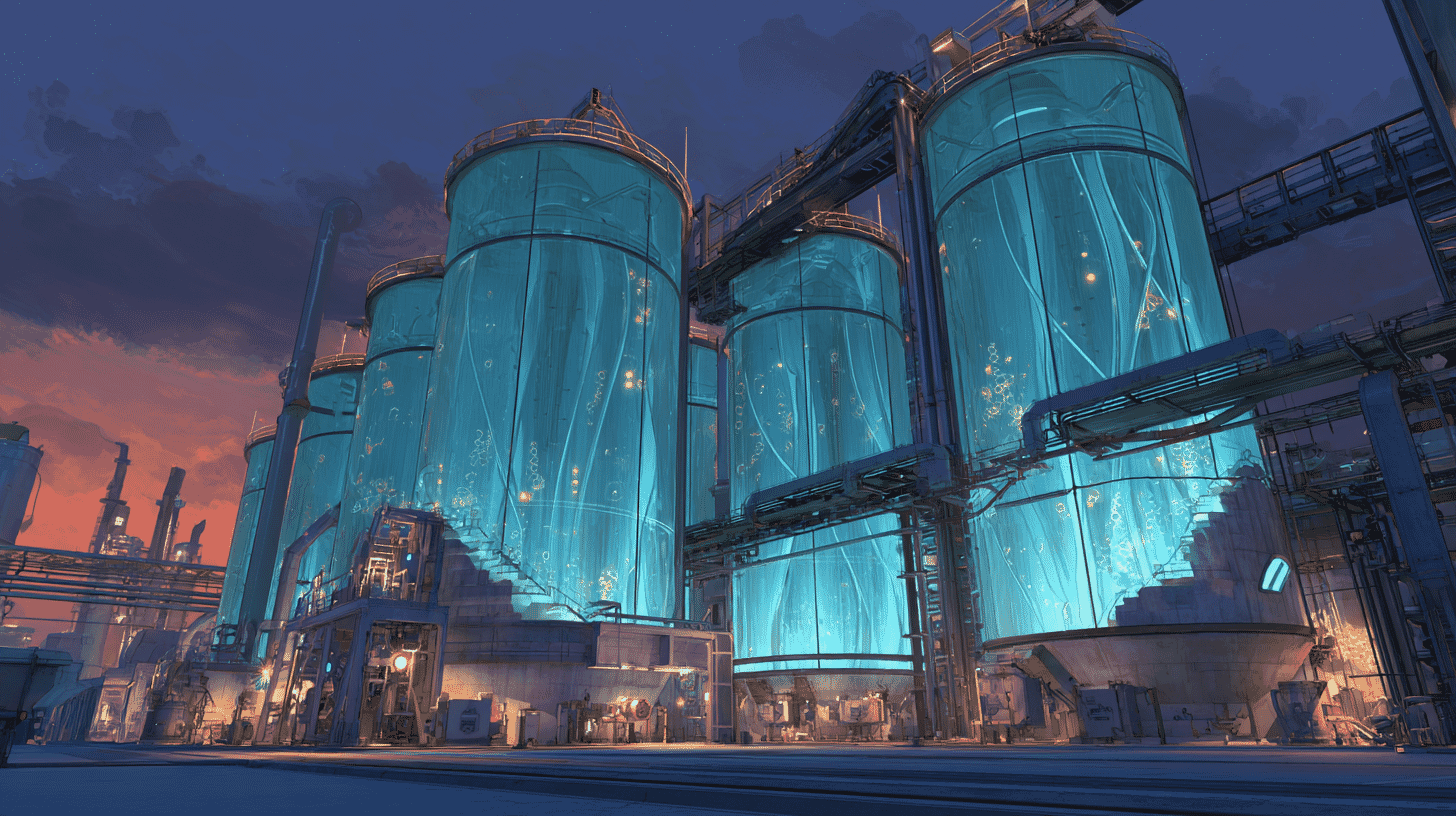
In January 2026, Toray announced successful demonstration at a biogas production facility in an Osaka Prefecture sewage treatment plant, confirming simultaneous removal of CO2 and moisture. Testing verified approximately 70% reduction in dehumidification costs compared to conventional technology.
Technical Advantages and Future Prospects
Beyond cost reduction, this membrane offers several important advantages.
First, it enables compact equipment design. The hollow fibers are extremely thin and flexible, allowing high-density packing. Compared to conventional inorganic CO2 separation membrane modules, it achieves up to five times the CO2 permeation volume in the same space.
Second, the fibers can be continuously produced using methods similar to standard fiber manufacturing, lowering barriers to mass production. Toray plans to operate a pilot facility at its Shiga site by fiscal 2025 and aims for commercialization by fiscal 2026, targeting sales of 10 billion yen (approximately $67 million) by 2035.
Furthermore, this technology shows promise beyond biogas purification. Applications include natural gas refinement and CO2 separation and capture from industrial exhaust gases (CCUS).
Impact on Japan's Biogas Utilization
This technological demonstration carries significant implications for Japan's energy policy. The government has set targets to increase sewage sludge energy utilization rates by 2030, and biogas power generation expansion is essential to achieving them.
For municipalities and companies that previously wanted to adopt biogas but abandoned plans due to high costs, a 70% cost reduction could prompt reconsideration of biogas power as a realistic option. If all 1,500 sewage treatment plants across Japan functioned as small-scale power stations, a distributed regional energy supply network could emerge.
Additionally, since this development received support from NEDO (Japan's New Energy and Industrial Technology Development Organization), widespread adoption could contribute meaningfully to Japan's carbon neutrality goals. Experts suggest it could particularly improve the economics of "biomass-derived fuel conversion" projects under Japan's J-Credit system.
Conclusion
Toray's all-carbon CO2 separation membrane represents a technological solution to the economic barriers of biogas power generation. A pathway is emerging for transforming sewage—an unavoidable byproduct of daily life—into an energy resource.
Currently, a one-year extended demonstration is underway. Depending on the results, sewage treatment plants across Japan could undergo significant transformation. A future where waste treatment facilities become regional energy hubs may already be within reach.
In Japan, efforts to harness energy from sewage sludge are advancing in this way. What initiatives exist in your country for recovering energy from sewage or biomass waste? We'd love to hear about your experiences and perspectives.
References
Reactions in Japan
Toray's technological capability is impressive. The idea of applying water treatment membrane technology to gas separation is brilliant. Japanese manufacturers excel at this kind of steady technological development.
If the 70% cost reduction is real, that's a huge impact. I hope our city's sewage treatment plant considers adopting this. Lower utility costs would benefit citizens too.
I've been interested in biogas power generation for a while, but the payback period for equipment investment was the bottleneck. If this lowers the break-even point, smaller municipalities might be able to adopt it.
The idea of sewage treatment plants becoming power stations is fascinating. If facilities that only consumed electricity can now earn revenue from selling power, it could transform sewage management economics.
If it's receiving NEDO support, this might be a serious national policy project. It's probably a technology with high expectations in the carbon neutrality context.
I wonder how many years it'll take from demonstration to mass production. Even with the technology ready, widespread adoption takes time. Hope it spreads nationwide quickly.
Great to see them leveraging their strength as a carbon fiber manufacturer in the environmental sector. Toray may not be flashy, but they're world-class in materials technology.
Honestly, I'm also concerned about odor issues and maintenance burden of biogas power generation. Hope they develop technology that reduces on-site workload, not just costs.
So it can be used for natural gas purification and CCUS too? Does that mean future expansion into the oil and gas industry? The market size could become quite substantial.
The 10 billion yen target by 2035 seems modest. With such innovative environmental technology, it should grow more. Wonder how their overseas expansion plans look.
Really feel the underlying strength of materials manufacturers. They don't make flashy announcements, but technologies like this support Japan's industry. Deserves more recognition.
Hmm, 70% reduction depends on what the original cost was. Would like to know more about how much the economics improve in absolute terms.
Isn't 26% energy conversion rate for sewage sludge too low? Means there's still huge potential. Hope adoption increases during infrastructure renewal cycles.
Success demonstrated in Osaka - Osaka's sewage treatment plants have an image of being quite progressive. Hope other municipalities follow suit.
So the company that makes Torayvino water purifiers is also doing CO2 separation with similar membrane technology. Clever horizontal application of technology.
Biogas power generation is getting attention in the US too, but high initial investment barriers slow adoption. If this Japanese technology gets exported, things could change. Dairy states especially have high demand for biogas from cattle manure.
Germany is world-leading in biogas power generation, but cost efficiency is always a challenge. Toray's membrane technology is very interesting. With EU environmental regulations tightening, such innovations are welcome.
China is also modernizing sewage treatment infrastructure. Japanese technology is respected for quality, but price competitiveness was an issue. If 70% cost reduction is achieved, it could become competitive in the Chinese market.
In rural Australian cities, sewage treatment costs are a major burden. Distributed energy generation technology is particularly attractive for our vast country. Would love to see more detailed technical specifications.
In India, rapid urbanization means sewage treatment can't keep up. As mentioned, Toray is also doing water treatment demonstrations in India. Hope biogas technology will be introduced to India as well.
In Sweden, we use biogas as fuel for public buses. Reducing purification costs would improve biogas fuel price competitiveness. I think this technology will get attention in Nordic countries too.
Brazil is focusing on biogas generation from agricultural waste. There's much to learn from Japan's advanced technology, but whether the introduction cost fits local economic conditions is key.
Interest in circular economy is growing in Korea too. We acknowledge Japan's technological prowess, but Korean companies are likely pursuing similar research. Technology competition in Asia seems set to intensify.
Nuclear power is dominant in France, but expectations for biogas as a distributed local energy source are rising. Advances in membrane separation technology are an important step toward making biogas more practical.
The UK is targeting net zero by 2050, but specific technologies are still lacking. Japan's proven technologies like this can contribute to carbon neutrality achievement worldwide.
Natural gas purification is an important industry in the Middle East. If this technology works for natural gas purification, there might be demand in Gulf countries. Though I wonder about performance in high-temperature environments.
Belgium is advancing biogas adoption on small farms. The ability to make equipment compact could be a big advantage for small and medium-sized farms in Europe.
Biogas power generation in cold climates is challenging in Canada. The fermentation process is temperature-dependent, making year-round stable operation difficult. Hope for optimization of the entire system, not just membrane technology.
Italy is focusing on biogas generation from food waste. As a food-loving nation, turning waste into resources has cultural significance too. Very interested in Japanese technology.
In Vietnam, environmental measures lag behind industrialization. Japanese environmental technology is helpful, but technology transfer programs for developing countries would be appreciated.