🌱 Artificial turf that dissolves in the ocean? Japan just installed it in a pro baseball stadium.

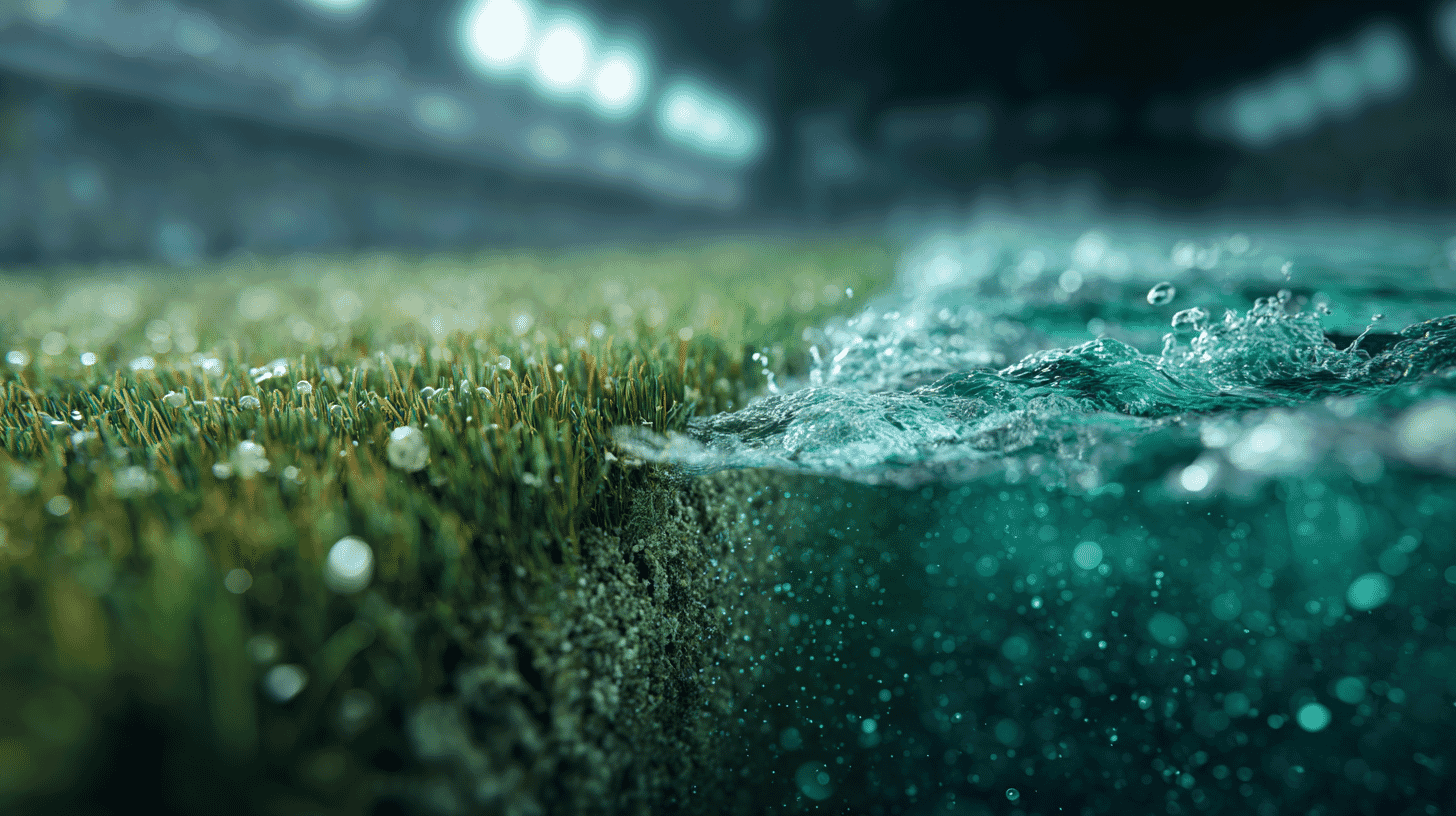
Artificial turf has been quietly polluting our oceans for decades — tiny plastic fragments washing into waterways every time it rains. Now, two Japanese companies have engineered a radical solution: turf that breaks down naturally, even in seawater. Starting this season, the world's first biodegradable artificial turf has been installed at a professional sports venue in Nagoya, Japan.

A World First at Vantelin Dome Nagoya

In February 2026, Vantelin Dome Nagoya — the home stadium of the Chunichi Dragons professional baseball team — unveiled a groundbreaking addition to its facility. The stadium's newly constructed "Home Run Wing" area now features biodegradable artificial turf in its warning zone, the strip along the outfield fence that alerts fielders they're approaching the wall.

The product, called "Re Green Grass 9," was jointly developed by sporting goods giant Mizuno and chemical manufacturer Kaneka Corporation. It marks the first time biodegradable artificial turf has been installed at a professional sports facility anywhere in the world — a milestone that sits at the intersection of athletic performance and environmental innovation.

The Hidden Pollution Problem of Artificial Turf

Why would artificial turf need to be biodegradable? The answer lies in one of the most overlooked sources of microplastic pollution on the planet.

Conventional artificial turf is made from petroleum-based plastics. Over time, player activity, weather exposure, and general wear cause the synthetic grass blades to break down into tiny fragments. These microplastics enter stormwater systems and eventually reach rivers and oceans. The European Chemicals Agency (ECHA) estimates that approximately 16,000 tons of crumb rubber escapes from artificial turf fields into the environment across Europe each year.

Research suggests artificial turf may be responsible for 12% to 50% of global microplastic pollution. In response, the European Union has enacted regulations that will ban the sale of synthetic polymer infill for sports surfaces by 2031. In the United States, where an estimated 19,000 artificial turf fields are in use, growing concerns about PFAS ("forever chemicals") detected in turf materials have added urgency to the debate.

Against this backdrop, the concept of turf that simply dissolves back into nature represents a fundamental shift in thinking.

Kaneka's "Green Planet" — A Biopolymer Born from Microbes

The technology at the heart of Re Green Grass 9 is Kaneka's proprietary biopolymer called "Green Planet." It's a 100% plant-derived material produced through microbial fermentation using plant oils as feedstock.

What makes Green Planet exceptional is its ability to biodegrade not only in soil but also in seawater — a property that most biodegradable plastics cannot achieve. Microorganisms naturally present in soil and ocean water break the material down into just CO2 and water. The material holds the internationally recognized "OK Biodegradable MARINE" certification from TÜV AUSTRIA, which requires over 90% biodegradation within six months in seawater at 30°C (86°F).

Kaneka began researching this material in the early 1990s — years before marine microplastic pollution became a global talking point. The journey started when researchers discovered a microorganism capable of producing the polymer in the soil at Kaneka's Takasago industrial complex. However, early yields were minuscule, and three decades of research and development were needed to achieve commercially viable production. A breakthrough partnership with Japan's RIKEN research institute in 1997 enabled genetic modifications that boosted productivity by several dozen times.

Today, Green Planet has already found its way into everyday life in Japan. It's used in Starbucks straws, Seven-Eleven coffee cup straws, JAL in-flight shopping bags, and FamilyMart cutlery — gradually replacing petroleum-based single-use plastics.

Mizuno's Turf Expertise — Over 50 Years of Innovation

Mizuno, founded in 1906, brings more than half a century of sports facility construction expertise to the partnership. The company holds the top market share for artificial turf installations in Japanese professional baseball stadiums and has been actively pursuing environmental initiatives since 1991.

In recent years, Mizuno developed its "Mizuno Spiral Technology," a specialized crimping process for turf fibers that reduces fiber breakage and limits the dispersal of rubber infill material. The company has also created infill made from recycled tea leaves as part of its sustainability efforts.

But even the most durable petroleum-based turf eventually sheds fragments that persist in the environment indefinitely. To address this fundamental limitation, Mizuno partnered with Kaneka to create turf that would simply return to nature when those inevitable fragments escape.

The Technical Challenge — Making Biodegradable Turf Play Like the Real Thing

Perhaps the most impressive aspect of Re Green Grass 9 is that it doesn't compromise on athletic performance — an achievement that required significant technical innovation.

The biggest hurdle was manufacturing monofilament fibers from biodegradable polymer. Standard artificial turf blades are made by extruding petroleum-based resins into single-strand fibers, but achieving this with biopolymer material was considered extremely difficult. Through specialized resin formulations and carefully designed manufacturing conditions, the Mizuno-Kaneka team accomplished what the industry thought wasn't possible. By optimizing the cross-sectional shape of the fibers, they achieved a texture and feel comparable to conventional artificial turf.

Over 90% of the turf blade material is derived from biomass, significantly reducing CO2 emissions compared to petroleum-based alternatives. Notably, the entire manufacturing process — from fiber production to final turf assembly — takes place domestically in Japan.

Hidehisa Manou, Senior Managing Director of Nagoya Dome Corporation, stated at the press conference: "The biggest feature is the high environmental performance. The safety, durability, and cushioning for the playing environment are equivalent to conventional artificial turf. We hope to demonstrate a new approach to environmental responsibility."

Professional players contracted with Mizuno who tested the surface gave it high marks, confirming that the biodegradable turf meets the demanding standards of professional baseball.

Government Recognition

The innovation has received official recognition from Japan's Ministry of the Environment. Mizuno's biodegradable artificial turf earned the Gold Award in the "Use and Reduce" category of the "Plasuma Awards 2026," part of the ministry's "Plastic Smart" campaign to combat marine plastic waste. The award specifically highlighted the successful combination of environmental performance with real-world usability.

What This Means for the Future of Sports Infrastructure

With the EU's 2031 infill ban approaching and environmental scrutiny of artificial turf intensifying worldwide, the timing of this Japanese innovation is significant. Re Green Grass 9 represents not just a product but a proof of concept — demonstrating that the sports industry doesn't have to choose between performance and environmental responsibility.

Mizuno and Kaneka plan to expand installation to sports facilities and commercial venues across Japan, while also developing outdoor-rated ocean-biodegradable turf for open-air fields. Kaneka is scaling Green Planet production capacity from the current 5,000 tons per year to a target of 100,000-200,000 tons annually (approximately $500 million to $1 billion in projected market value), with plans for manufacturing expansion in both Europe and the Americas.

The warning zone at Vantelin Dome covers only a small portion of the stadium's total playing surface. But in the world of environmental innovation, small starts can signal massive shifts. If biodegradable turf proves its durability over a full professional baseball season, it could fundamentally change how stadiums worldwide think about their playing surfaces.


In Japan, the push to make sports facilities more environmentally sustainable is gaining real momentum. What about where you live? Are stadiums and sports venues in your country taking steps to reduce their environmental impact? Have you ever thought about the hidden pollution from artificial turf? We'd love to hear your perspective.

References

Reactions in Japan

All the buzz about the Home Run Wing was about the terrace seats, but I had no idea this kind of tech was being used for the turf underneath. Nice move, Chunichi. When I go to the dome next season, I'll make sure to check out the grass too.

I agree 0
I disagree 0

So Kaneka's PHBH (Green Planet) has finally reached the sports industry. As a researcher, it's genuinely exciting to see a material that's been quietly developed since the '90s come to fruition like this. The monofilament processing must have been incredibly challenging.

I agree 0
I disagree 0

It's just the warning zone, right? I'd rather they say 'world first' after replacing the entire field. I guess it's a fine first step, but honestly I'm curious about the cost.

I agree 0
I disagree 0

I already knew about Green Planet from Starbucks straws and convenience store cutlery, but I never imagined it would be used for artificial turf 😳 Kaneka is quietly doing amazing things.

I agree 0
I disagree 0

The artificial turf at our city's futsal court is so worn out that green powder gets all over your clothes — and that's all microplastics... I hope this kind of turf spreads to public facilities too. Depends on the price though.

I agree 0
I disagree 0

'Biodegradable' sounds great in theory, but is the durability really okay? If it falls apart after a few years of pro games, that defeats the purpose. Let's see some real track record first.

I agree 0
I disagree 0

Papers show 16,000 tons of microplastics leak from artificial turf annually in Europe, but it's barely known in Japan. I hope news like this raises awareness. Coastal soccer fields are seriously problematic.

I agree 0
I disagree 0

A joint development between Kaneka (4118) and Mizuno (8022). With Green Planet's production expansion plans, Kaneka could be interesting as an ESG stock. The sports facility market is a brand new segment for them.

I agree 0
I disagree 0

I was shocked to learn the artificial turf kids play on every day at school pollutes the environment. If the price comes down enough for schools, it could also serve as a teaching tool for environmental education.

I agree 0
I disagree 0

From a player's perspective, the turf quality of the warning zone is literally a safety issue. You could get seriously injured if your footing slips during a diving catch near the fence. If pro players have approved it, that's reassuring at least.

I agree 0
I disagree 0

I think this technology is an extension of Japan's 'mottainai' (waste nothing) spirit. Instead of assuming disposability, they've built the entire lifecycle into the design. I hope this philosophy spreads worldwide.

I agree 0
I disagree 0

From a facility design perspective, artificial turf renewal cycles are 10-12 years. If durability equal to petroleum-based products is proven over that period, it could be written into public facility specs. Looking forward to the data.

I agree 0
I disagree 0

Beer in hand, watching homers from the terrace seats, with eco-friendly turf underfoot. Vantelin Dome is evolving in the right direction. Now if only the Dragons' performance would follow... 😇

I agree 0
I disagree 0

The EU's artificial turf infill ban starts in 2031. Japan hasn't moved on regulations yet, but it's encouraging to see proactive tech development. Way better than scrambling when regulations hit.

I agree 0
I disagree 0

Isn't this just greenwashing? The warning zone is a tiny fraction of the total field. Come back and brag when you've done the whole thing.

I agree 0
I disagree 0

Kaneka's 30-year research journey is bearing fruit. A microorganism found in soil at Takasago is now part of a pro baseball field. This is the quiet power of Japanese manufacturing — planting seeds of technology that bloom decades later.

I agree 0
I disagree 0

Voices from Around the World

Marcus Lindgren

In Sweden, rubber crumb leaking from artificial turf into waterways is a serious problem and municipalities are scrambling for solutions. If there's a material that biodegrades even in seawater, Nordic municipalities would jump on it. Would love to know the pricing.

Rachel Thompson

I'm a high school coach in the US. Our district has parents up in arms over PFAS contamination from artificial turf. This Japanese tech looks like a real solution, but getting it through FDA/EPA certification would be the big hurdle here.

Pieter van den Berg

I manage facilities for a football club in the Netherlands. With EU regulations looming in 2031, alternative materials are welcome. But we'd need to verify if durability holds up under European climate conditions — our freeze-thaw cycles are brutal.

Wei Chen

I'm in the sports facility construction business in China. Artificial turf is spreading rapidly to soccer fields and school grounds here, but environmental considerations tend to take a back seat. Japanese precedents like this could shift the entire industry's mindset.

Sarah Mitchell

Honest question — 'biodegradable' sounds great, but why not just use natural grass? I get that artificial turf is needed in water-scarce areas like parts of Australia, but it's a domed stadium with a roof...

Carlos Mendes

Many stadiums built for the World Cup and Olympics in Brazil are deteriorating from lack of maintenance. Eco-friendly materials matter, but proper management comes first. Technology alone doesn't solve problems.

Fatima Al-Rashid

I work on artificial turf park management in Dubai. In our extreme heat, turf degrades faster and produces more microplastics. I'm very interested in how biodegradable materials perform in 50°C+ environments.

James O'Brien

I play for a GAA club in Ireland. In our rainy climate, stormwater runoff from artificial pitches carries a lot of microplastics, so biodegradable turf could genuinely be a game-changer. Hoping EU subsidies could help fund adoption.

Kim Soo-jin

Some KBO league stadiums in Korea also use artificial turf. If Japan commercializes this technology, it could come to Korean pro baseball too. Mizuno is already deploying turf in Taiwan, so Asian expansion seems likely.

Henrik Johansson

As a materials scientist, I'm genuinely surprised they achieved artificial-turf-grade tensile strength and abrasion resistance with PHBH-family polymers. Would love to read the paper. The applied research capability of Japanese chemical companies is formidable.

Maria Kowalski

I work for an environmental NGO in Poland. EU regulations are welcome, but bans without alternatives leave people stuck. Technologies like this should be promoted alongside regulation. Japan is good at delivering solutions without waiting for rules.

David Nguyen

Artificial turf fields are proliferating in Canadian cities, but we still can't properly measure the environmental impact. Vancouver is even considering reverting to natural grass. A biodegradable option could change the whole debate.

Giulia Romano

Serie A stadiums in Italy mostly use natural grass, but training grounds rely on artificial turf. It's a little humbling that Japan beat environmentally-conscious Europe to this milestone. But credit where it's due — impressive work.

Adebayo Okonkwo

Football is huge in Nigeria and demand for artificial turf is growing, but environmental awareness is still limited. If biodegradable material costs come down, it could revolutionize sports infrastructure across Africa.

Tom Richardson

The Premier League insists on natural grass, but lower leagues and school grounds are full of artificial turf. Eco-friendly options like this are needed exactly at that level — where the vast majority of people actually play.

Priya Sharma

Cricket grounds in India use natural grass, but cheap artificial turf is proliferating in urban futsal courts and sports complexes. There's no quality control and environmental risks are being ignored. We need international standards.