🏯 What if you could sleep inside a nationally designated cultural treasure? In Hakodate, a hilltop mansion built by one of Hokkaido's wealthiest merchants in 1908 is opening its doors as a 3-room heritage hotel — and your stay directly funds the building's preservation. Welcome to a new kind of travel in Japan.

From "Look, Don't Touch" to "Sleep Inside History" — Japan's New Heritage Hotel Brand

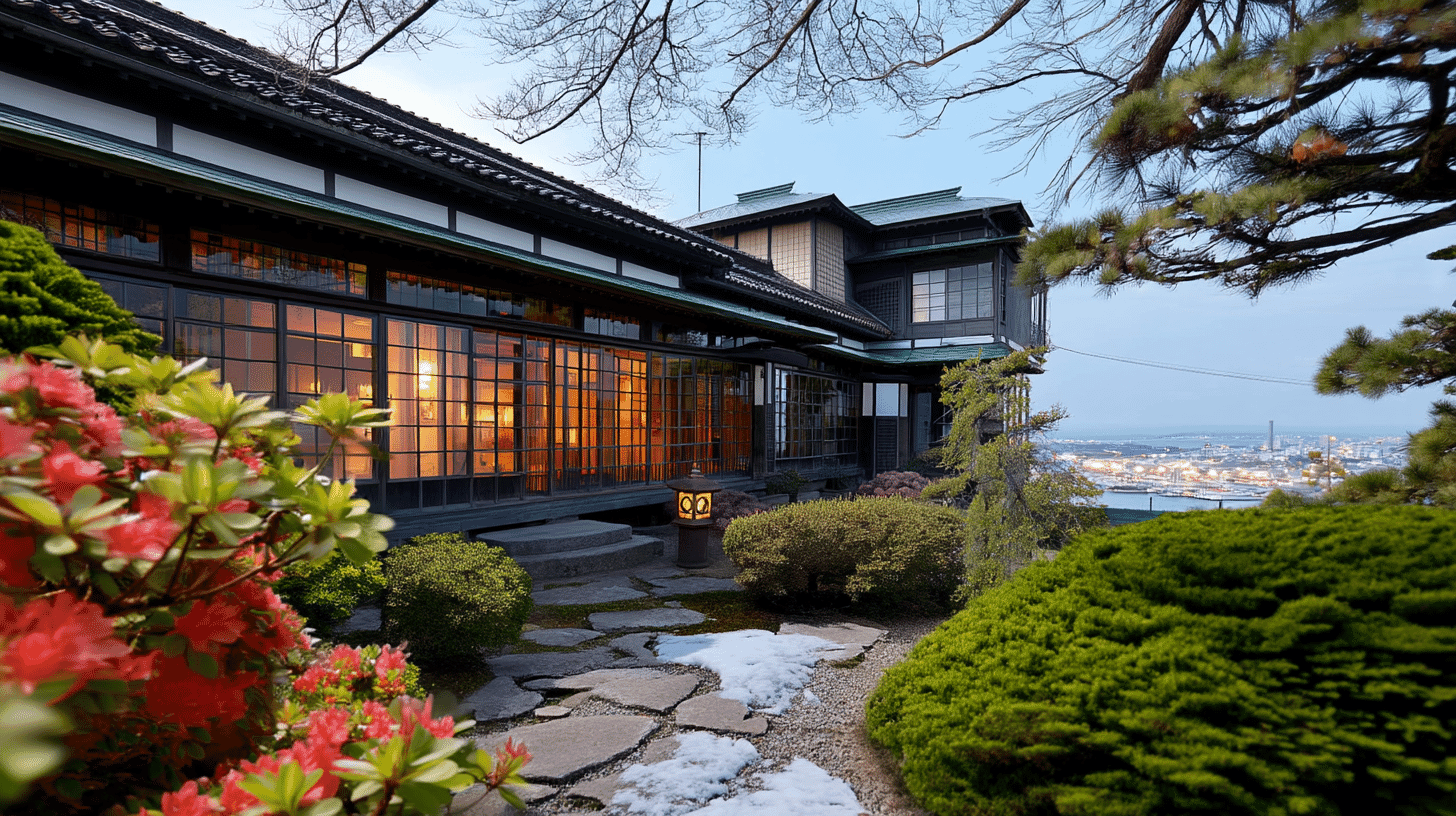
On March 1, 2026, a hotel unlike any other opens in Hakodate, Hokkaido. Called "Kyū Soma-ke Kazeno Heritage," it transforms a nationally designated Important Cultural Property — the former Soma family residence — into an exclusive lodging for just three groups per night.

The company behind this venture is Value Management, an Osaka-based firm that specializes in preserving and repurposing Japan's historic buildings. Since its founding in 2005, the company has restored 115 historic structures across the country. Their most famous project may be Japan's first-ever "Castle Stay" at Ozu Castle in Ehime Prefecture, where guests can sleep inside a reconstructed wooden castle keep for approximately $6,500 per night. That project earned the city of Ozu a spot in the World's Top 100 Sustainable Destinations and a global No. 1 ranking in the "Culture & Tradition" category.

Now, Value Management is launching a new brand series called "Kazeno Heritage" — literally "Wind Heritage" in Japanese. It operates under two categories: "Kazeno Heritage" properties house guests in landmark cultural properties like castles, temples, and grand residences, while "Kaze no" (Wind) properties are dispersed retreat-style hotels spread across entire historic districts.

The Soma mansion is the brand's debut property.

The Merchant Who Built Hakodate

To understand this building, you need to know the man who built it. Soma Teppei was born in 1833 in what is now Niigata Prefecture. At 28, he sailed to the newly opened port of Hakodate and started as a rice merchant. During the Boshin War — the civil conflict that ended Japan's feudal era — he made a bold gamble, buying up rice stocks while others fled, and turned an enormous profit. He went on to build an empire spanning seafood trading and finance, becoming one of the wealthiest men in all of Hokkaido.

But what made Soma truly remarkable was his philosophy of kyōdo hōon — "repaying one's debt to the homeland." After the devastating Hakodate fire of 1907 destroyed much of the city, Soma personally funded the construction of the Hakodate Ward Public Hall (now a popular tourist landmark), covering roughly $320,000 of the $370,000 total cost — an astronomical sum at the time. For his own residence, he deliberately hired fire-displaced citizens as construction workers, turning his private rebuilding project into a public jobs program.

The mansion completed in 1908 spans 680 square meters (about 7,300 square feet). It's a masterwork of wayō secchū — the Japanese art of blending Eastern and Western architectural styles. The main living quarters follow traditional Japanese design with premium timber and grand tokonoma alcoves, while the reception room features Western clapboard siding, botanical carvings on window frames, and ornate ceiling medallions. It was designated a national Important Cultural Property in 2018.

Three Rooms, Three Stories

The hotel conversion carefully divides the property into three all-suite guest rooms, each with its own character.

Room 1 is a flat-type suite at 750 square feet, accommodating up to four guests. Room 2 is the largest at 1,420 square feet with a dramatic mezzanine layout for three guests. Room 3 is a more intimate 590-square-foot flat for two. Guests can also book the entire property for a private takeover experience.

Rates are expected to run approximately $1,000 to $1,600 per room per night.

The interior design philosophy is "Heritage Reimagined" — reinterpreting the building's legacy through a contemporary lens without erasing its soul. The color palette draws from the original cork tiles once used in the home, harmonized with lauan wood, cherry wood, and red brick. All furniture comes from "Time & Style," a brand that uses Hokkaido-grown timber crafted by artisans in the northern city of Asahikawa — a commitment to local sourcing and sustainability.

Each room features replica Esashi byōbu (folding screens) and artisan pieces connected to the Soma family's history. Unlike a museum where art sits behind glass, guests here live alongside cultural artifacts, sleeping in spaces where history is not merely observed but inhabited.

A Cultural Property You Can Invest In

Perhaps the most innovative aspect of this project is its funding model. Rather than relying on government subsidies, Value Management partnered with LEVECHY, a real estate crowdfunding platform, to raise capital from individual investors. The initial funding goal of approximately $1.4 million was reached by April 2025, with additional investment rounds planned for 2026.

This creates a dual pathway for participation. Travelers contribute to preservation by staying at the property — their room fees directly support maintenance and operations. Investors contribute by providing capital — their returns come from the sustainable operation of a living cultural heritage site.

Value Management calls this model "regenerative tourism." The idea is to redefine travel from a "consumption activity" into "a stay for recovery and regeneration," and to reposition guests not as "consumers" but as "co-creators" of cultural heritage preservation.

What's Next: Kurayoshi and Beyond

The second property in the Kazeno Heritage lineup is "Kaze no Kurayoshi," planned to open later in 2026 in Tottori Prefecture. Kurayoshi is known for its picturesque rows of white-walled storehouses with distinctive red tile roofs, designated as a Preservation District for Groups of Traditional Buildings.

Value Management already operates "NIPPONIA HOTEL Hakodate Minatomachi," a 9-room hotel in a converted red-brick warehouse, and runs "TSUMUGU JOURNEY," a series of small-group cultural experience tours in Hakodate. The Soma mansion adds another anchor to a growing network of heritage tourism in the city.

Japan's Quiet Revolution in Heritage Accommodation

The Soma mansion project reflects a broader movement across Japan. As rural depopulation leaves historic buildings abandoned and at risk of demolition, private companies are stepping in with a proposition: rather than choosing between preservation and use, use the building to preserve it.

In Ozu, Ehime, the castle stay model attracted international recognition and boosted inbound tourism by 5.5 times compared to pre-COVID levels. In Tanba-Sasayama, Hyogo, an entire castle town operates as a single dispersed hotel. In Dazaifu, Fukuoka, a registered cultural property has been transformed into a fine-dining restaurant. This approach echoes European models like Spain's Paradores (state-run hotels in historic buildings), Portugal's Pousadas, and Italy's Albergo Diffuso — but with a distinctly Japanese twist of incorporating local craftsmanship, seasonal cuisine, and intimate scale.

At the heart of it all is a simple but powerful idea: the best way to save a building is to give people a reason to be inside it.

In Japan, staying at a historic building is becoming a way to help preserve it for the future. How does your country approach the preservation and use of historic buildings? If you've ever stayed in a castle hotel in Europe, a heritage property in Southeast Asia, or any other converted historical building, we'd love to hear about your experience. What role should tourism play in keeping cultural heritage alive?
References

Reactions in Japan

I live in Hakodate. I remember visiting the Soma mansion as a kid and being amazed by the pristine tatami. Honestly happy you can stay there now, though a bit sad locals might not be able to casually visit anymore.

I agree 0
I disagree 0

15万 to 25万 yen per night... I get it's for affluent travelers, but maybe it's not that expensive if you think of it as contributing to preservation. At least it's more realistic than Ozu Castle's $6,500.

I agree 0
I disagree 0

Been watching Value Management since the Ozu castle stay. They've finally reached Hakodate. 115 restored buildings isn't just for show.

I agree 0
I disagree 0

If you think about it, sleeping inside a nationally important cultural property is incredible. Not behind museum glass — you actually sleep and wake up there. Ultimate luxury.

I agree 0
I disagree 0

Speaking as someone in architecture — Meiji-era hybrid Japanese-Western buildings are fascinating. Japanese carpenters interpreting Western design in their own way. The Soma residence is one of the finest examples.

I agree 0
I disagree 0

Crowdfunding for cultural property preservation is an interesting tax-free model. But what about returns as an investment product? Probably for people who prioritize social contribution over yield.

I agree 0
I disagree 0

First time hearing about Soma Teppei. Hiring fire victims to rebuild his own mansion after the Great Fire — modern business leaders could learn from that spirit.

I agree 0
I disagree 0

"Co-creators, not consumers" — the marketing speak is strong with this one. The philosophy is great, but whether reality matches up won't be clear until after opening.

I agree 0
I disagree 0

Lots of historic buildings in Hakodate are genuinely struggling with maintenance costs. Welcome this kind of private-sector model. Relying entirely on taxes to preserve everything just isn't feasible anymore.

I agree 0
I disagree 0

Only 3 rooms — how is anyone going to get a reservation? Hakodate hotels already fill up during tourist season. This is going to be a battle.

I agree 0
I disagree 0

Using Time & Style furniture is a nice touch. Asahikawa woodcraft is world-class but still underappreciated domestically. Hope exposure like this helps.

I agree 0
I disagree 0

Let's be real, this is aimed at inbound tourists. How many Japanese travelers can drop ¥150,000 a night? Well, if wealthy foreign visitors spend money that circulates locally, that's fine I guess.

I agree 0
I disagree 0

Room 2 is a 132-sqm mezzanette?? That's bigger than most Tokyo apartments. Love the concept of converting an entire storehouse into a single guest room.

I agree 0
I disagree 0

So Japan is getting something like Spain's Paradores? I loved Paradores when I traveled there, so I'm excited for a Japanese version.

I agree 0
I disagree 0

No need for fancy terms like 'regenerative tourism.' Japan has always had the saying 'travel nurtures people.' The essence is the same, I think.

I agree 0
I disagree 0

A private company takes over cultural property that an aging owner can no longer maintain, turning it into a hotel. Could this model work for abandoned traditional houses in depopulated rural areas across Japan?

I agree 0
I disagree 0

Hakodate night view + Important Cultural Property hotel = ultimate Instagrammable combo? Overlooking the harbor from the top of Motomachi hill. March opening means you might still catch the snow scenery.

I agree 0
I disagree 0

Wonder how they navigated the Cultural Properties Protection Act. Converting an Important Cultural Property into a hotel must've been incredibly complex. That regulatory know-how is probably Value Management's real competitive advantage.

I agree 0
I disagree 0

Voices from Around the World

Sophie Laurent

France has many château hotels, so it's fascinating to see Japan doing something similar. But while our châteaux often have dozens of rooms, limiting it to just 3 feels like a very Japanese luxury of scarcity.

David Chen

As a Taiwanese person, we're also seeing more colonial-era Japanese buildings converted into accommodations in Taiwan. Japan's 'sleep in a cultural property' model could be a useful reference.

James McCarthy

Crowdfunding for cultural property preservation is smart. Ireland has tons of crumbling castles and estates too, and government budgets fall far short. We need mechanisms to attract private capital.

Maria Santos

I'm a fan of Portugal's Pousadas. The difference is Japan's version is private-sector led. State-run heritage hotels tend to become bureaucratic, but private companies can be more nimble.

Tom Whitfield

$1,000-1,600 a night — honestly, some people would pick Aman Kyoto for that budget. The question is how much added value guests see in 'sleeping inside a cultural property' specifically.

Anika Müller

In Germany, a 100-year-old building isn't even considered 'old.' But in Japan, a building that has survived earthquakes, typhoons, and great fires like Hakodate's carries a special weight.

Rachel Kim

Compared to Korean hanok (traditional house) stays, Japan's heritage hotels are quite pricey. Bukchon hanok stays start from around $70/night. Probably targeting completely different demographics though.

Carlos Mendoza

Mexico has plenty of luxury hotels converted from haciendas (colonial-era estates). Heritage hotel conversions are a global trend, but Japan's approach is interesting for its strong narrative of 'staying to preserve.'

Sarah Williams

As a National Trust member, this interests me. In the UK, we fund historic buildings through memberships and admission fees. Using hotel revenue to cover preservation costs is a fresh approach.

Liam O'Brien

Saw the photos — converting a storehouse into a guest room looks awesome. Love the contrast between the thick walls and modern furniture. Though the few windows inherent to storehouses might be tough for claustrophobic guests haha.

Priya Sharma

India has a long tradition of palace hotels, but many have become playgrounds for the wealthy with little community benefit. Japan's idea of guests as 'co-creators of local culture' is something I wish would spread further.

Erik Johansson

Sweden's ICEHOTEL is famous for being rebuilt every year — Japan's heritage hotel is the exact opposite: staying in something unchanged for over a century. Both offer the extraordinary, but the philosophies couldn't be more different.

Lisa Nakamura-West

Japanese American here. My grandmother's family home was near Hakodate, so this is deeply moving. Happy to see Japanese buildings preserved this way. I want to stay there with my family someday.

Zhang Wei

China has boutique hotels in renovated siheyuan (traditional courtyard homes) too, but many owners struggle with strict regulations. If Japan's regulatory framework and private sector cooperation work well, I'd love to learn about that process.

Oliver Thompson

As a travel writer, 'a cultural property you can sleep in' is perfect article material. But with only 3 rooms, securing press access is going to be tough. Wonder if they'll do a press opening.

Nguyen Thanh

Hoi An in Vietnam uses its traditional streetscape as a tourism resource too, but overtourism is squeezing residents' daily lives. Limiting to 3 groups per day is interesting as an anti-overtourism mechanism as well.