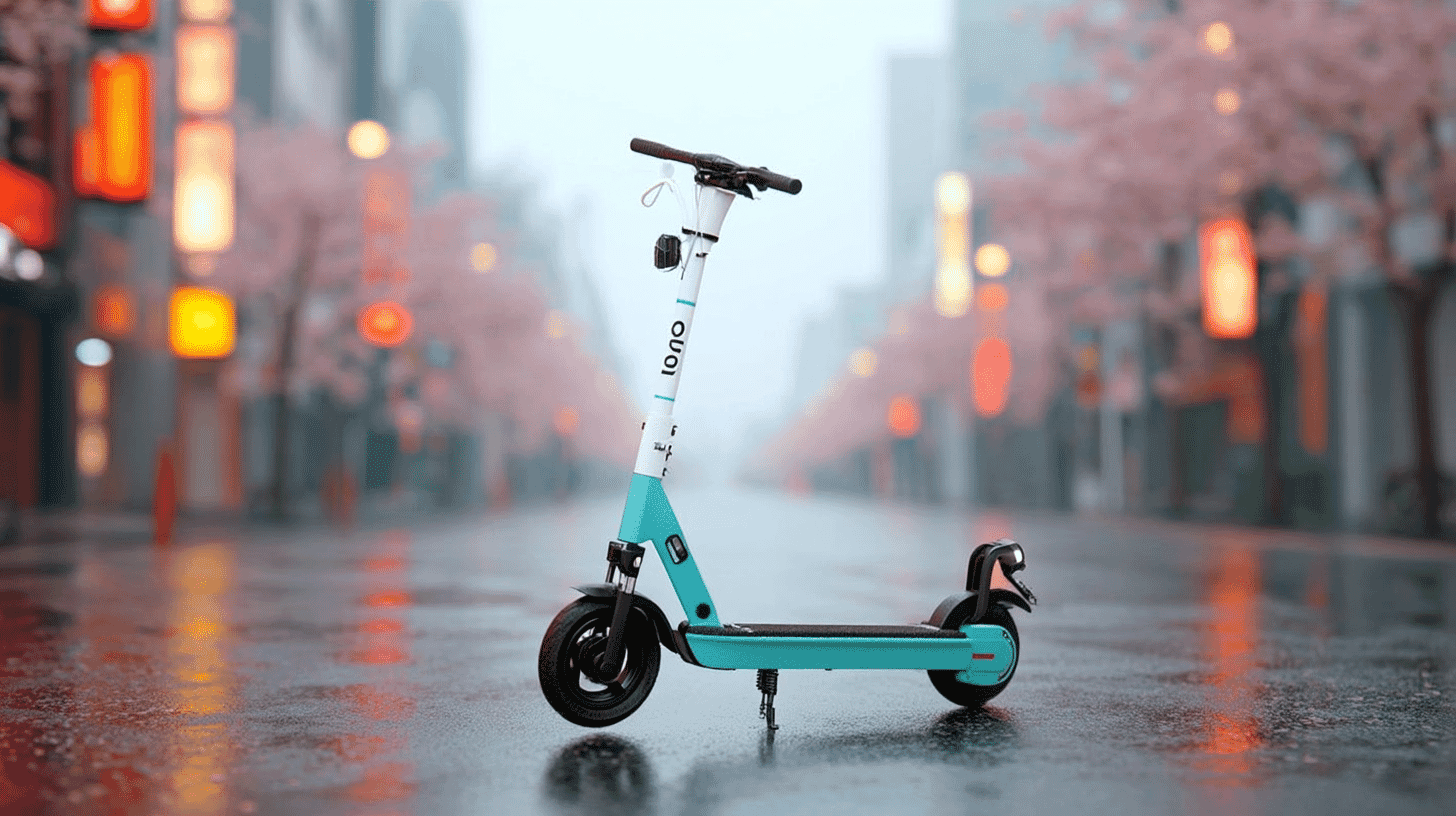
Electric scooters are zipping through Tokyo, and not everyone is happy about it. LUUP, Japan's largest e-scooter sharing service, just hit a milestone: full coverage across all 23 of Tokyo's special wards. With over 16,000 ports and 5 million app downloads, it's the biggest micro-mobility network in the country. But as Paris banned shared scooters and safety debates rage worldwide, how is Japan handling its own two-wheeled revolution?
From Shibuya to the Suburbs: LUUP's Citywide Expansion
On February 5, 2026, Luup Inc. announced the deployment of new ports in Edogawa, Katsushika, and Adachi wards, the final three of Tokyo's 23 special wards to receive the service. Starting February 9, riders across the entire metropolitan core can rent electric kick scooters, electric-assist bicycles, and the newly introduced electric seat boards through the LUUP smartphone app.
The expansion marks a significant chapter for a company that started with a handful of e-bikes in Shibuya back in May 2020. In less than six years, LUUP has grown from a small pilot project into a nationwide network spanning over 16,000 ports across Tokyo, Osaka, Yokohama, Kyoto, Nagoya, Kobe, Hiroshima, Sendai, Fukuoka, Sapporo, and several other cities. Vehicle count has surpassed 30,000 units, and the app has been downloaded more than 5 million times.
The newly served eastern Tokyo neighborhoods, characterized by residential communities, lively shopping streets, and limited north-south transit options, represent exactly the kind of area where LUUP sees the greatest potential. The company's stated mission is to "turn every neighborhood into a station front" by filling gaps in Japan's otherwise excellent public transportation network.
How LUUP Works: Quick, Cheap, and App-Based
Using LUUP is straightforward. Download the app, register a credit card and (for e-scooter users aged 16+) upload an age verification document, then pass an in-app traffic rules quiz. Find a nearby port on the map, scan the QR code on the vehicle, and ride to any other port in the network.
Pricing is simple: a base fare of about $0.35 plus roughly $0.10 per minute. A typical 15-minute ride to a train station costs around $1.85, cheaper than a taxi and faster than walking. Insurance covering personal injury and third-party liability is included in every ride.
The fleet includes three vehicle types: electric kick scooters (max 20 km/h, roughly 12 mph), electric-assist bicycles, and the newer electric seat boards, seated scooters with baskets designed for a broader range of riders, including those less comfortable standing.
The Safety Storm: Accidents, Backlash, and Reform
LUUP's growth has not been without controversy. In fact, it may be one of the most polarizing urban mobility topics in Japan right now.
When Japan's revised Road Traffic Act took effect in July 2023, it created a new vehicle category called "specified small motorized bicycles" (tokutei kogata gendōki tsuki jitensha). This allowed anyone 16 or older to ride e-scooters on public roads without a driver's license, a significant departure from Japan's traditionally strict traffic regulations.
The results were dramatic. In the first year after the law change (July 2023 to June 2024), police recorded 25,156 traffic violations and 219 accidents involving e-scooters, a 5.3-fold increase compared to 2022. Most disturbingly, 17% of e-scooter traffic accidents during the first half of 2024 involved drunk riding, compared to just 1% for bicycles and mopeds.
High-profile incidents fueled public anger: a rider ran onto an expressway, others blew through red lights in busy intersections, and pedestrians reported near-misses on sidewalks. On social media, LUUP became a lightning rod for criticism, with many Japanese people calling for stricter regulation or even an outright ban.
Luup responded with a comprehensive safety overhaul in early 2025. The company introduced LUDAS (LUUP Dangerous Action Detection System), a GPS-based system that monitors riding behavior and flags violations like riding in prohibited zones or going the wrong way on one-way streets. Riders caught violating rules receive warnings or account suspensions. The in-app traffic test was expanded from 11 to 14 questions with randomized order to prevent cheating, and all existing users were required to retake it by June 2025.
The company also partnered with the Shibuya Ward government on the "Shibuya Safe Ride Project" and began working with police on targeted safety awareness campaigns. Port placement standards were tightened after incidents where ports blocked fire equipment access points and water meter covers.
The Global Context: A Worldwide Tug-of-War
Japan's experience mirrors a global debate. Electric scooter sharing services have been both celebrated as green urban solutions and condemned as safety hazards in cities around the world.
The most dramatic case is Paris. After three fatalities and 459 injuries in the prior year, an April 2023 referendum saw about 90% of voters choose to end shared e-scooter rentals, though only about 7.5% of eligible voters took part. The service was scrapped that September, and Paris has since seen a surge in electric bike-sharing instead.
Singapore banned e-scooters from sidewalks entirely. South Korea requires helmets and licenses for riders. In Italy, accident statistics jumped 15% in a single year, prompting new rules treating scooters more like mopeds. Barcelona made helmets mandatory for all e-scooter riders in February 2025.
Meanwhile, the Netherlands, long skeptical of e-scooters, only began allowing them on public roads in mid-2025 under strict licensing and registration requirements.
In this global context, Japan's approach stands out for its relatively permissive regulation combined with industry-led safety measures. The no-license requirement and 16-year minimum age make Japan one of the more accessible markets, which both expands ridership and raises the stakes for safety.
Beyond Scooters: LUUP's Vision for Urban Infrastructure
LUUP positions itself not just as a scooter rental company, but as urban infrastructure. The "LUUP for Community" program, launched in 2024, allows municipalities and businesses to customize and operate LUUP fleets for their specific needs, setting their own pricing, coverage areas, and vehicle types.
This is particularly relevant for Japan's aging rural communities, where bus routes are being cut and elderly residents struggle with transportation. Luup is developing "universal vehicles", three- or four-wheeled seated models designed for riders of all ages and abilities.
The company's port-based model also sets it apart from the dockless systems that caused clutter problems in many Western cities. Every ride starts and ends at a designated port, typically located on private land with the property owner's consent, reducing the sidewalk chaos that contributed to backlash in cities like Paris.
The Numbers Behind the Debate
The contrast in Japanese public opinion is striking. A Yahoo News poll on the day of the 23-ward expansion announcement found that 87.9% of respondents said they had "absolutely no interest" in LUUP, while only 4.3% were "very interested." Yet the 5 million app downloads and growing ridership tell a different story, suggesting a vocal majority of non-users exists alongside a dedicated but quieter user base.
This disconnect highlights a broader tension in Japanese society between innovation and order. Japan's streets are famously well-regulated, and the sight of scooters weaving through traffic strikes many as fundamentally un-Japanese. At the same time, younger generations in Tokyo increasingly see e-scooters as a natural extension of their smartphone-centric lifestyles.
What's Next: Coexistence or Confrontation?
The coming months will be critical. With LUUP now covering all 23 wards, the sheer volume of scooters on Tokyo streets will increase, and with it, both the benefits and the problems. The effectiveness of LUDAS and other safety measures will face a real-world stress test. In June 2026, a LUUP user died in a collision with a car in Tokyo's Kita Ward, renewing questions about safety for this vehicle class.
Japan's approach represents something of a middle path in the global micromobility experiment: neither the permissiveness that led to chaos in some European cities, nor the heavy-handed regulation that stifled adoption elsewhere. Whether this balance holds will depend on whether safety improvements can keep pace with expansion.
One thing is clear: micromobility is here to stay, whether on two wheels, three, or four. The question isn't whether cities will have these vehicles, it's how they'll learn to share the road.
In your country, how are electric scooters regulated? Have shared e-scooter services changed how people get around in your city? We'd love to hear how different countries are navigating this global urban transportation challenge.









Global Discussion
14 comments