
Japan's semiconductor industry once controlled over 50% of the global market. Now the national project betting on its revival, Rapidus, has revealed a concrete timeline for full-scale production: 6,000 wafers per month in late FY2027, scaling to 25,000 by FY2028. Backed by $19 billion in cumulative government support, can Japan truly compete in the 2nm arena where TSMC and Samsung already hold the lead?
What Is Rapidus? A Challenge Starting From Zero
Rapidus was founded in August 2022 with investments from eight major Japanese corporations including Toyota, Sony Group, NTT, NEC, and SoftBank. With "Rapid" in its name, the company has set an ambitious goal: mass-producing the world's most advanced 2-nanometer (nm) chips domestically in Japan.
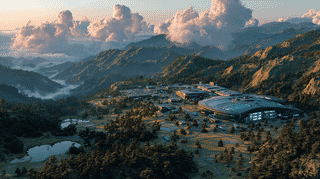
The manufacturing base is located in Chitose, Hokkaido, a sprawling facility called "IIM-1" built near New Chitose Airport. The four-story factory spans approximately 159,000 square meters and was constructed at what industry insiders describe as an astonishing pace.
A critical point often overlooked: while Rapidus is sometimes called a "Japan-only" semiconductor project, it's actually a U.S.-Japan-Europe collaboration. The core Gate-All-Around (GAA) transistor technology comes from IBM in the United States. Cutting-edge EUV (Extreme Ultraviolet) lithography processes are supported by Belgium's imec.
2nm Prototype Success: "Exceptionally Rare Speed"
On July 18, 2025, Rapidus announced it had successfully prototyped GAA transistors using its 2nm process. The transistors, fabricated on trial wafers at the IIM-1 plant in Chitose, were confirmed to operate normally, a milestone achievement that silenced many skeptics.
Just a year earlier, a common refrain in the industry was: "Japan can't even manufacture below 40nm, how could they possibly make 2nm chips?" Rapidus Chairman Tetsuro Higashi responded to the achievement by noting the project had progressed "at an exceptionally rare speed by global standards."
The timeline speaks for itself. ASML's EUV lithography equipment was delivered in December 2024. Pattern exposure and development succeeded just three months later in April 2025. By June, over 200 single-wafer processing tools had been installed. In July, prototype transistor operation was verified.
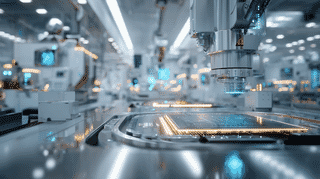
One distinctive feature of Rapidus's approach is its adoption of single-wafer processing across all manufacturing steps. While conventional semiconductor fabs typically process multiple wafers simultaneously in batches, Rapidus handles them one at a time. This enables finer process control, faster feedback loops, and shorter cycle times, a deliberate choice designed to differentiate from volume-oriented competitors.
Full-Scale Production by FY2028: The Complete Roadmap
As of February 10, 2026, the latest plan reveals that Rapidus's full-scale production will begin in FY2028.
The roadmap can be summarized as follows.
During FY2025, Rapidus was to release its Process Development Kit (PDK) to early customers, enabling them to begin prototype chip designs. From April 2026, the company is ramping up back-end R&D at "Rapidus Chiplet Solutions (RCS)," a facility adjacent to IIM-1 housed within Seiko Epson's Chitose campus.
Mass production begins in the second half of FY2027 at approximately 6,000 wafers per month. Over the following year, capacity will quadruple to roughly 25,000 wafers per month, establishing a full-scale production system by FY2028.
Looking further ahead, Rapidus plans to begin manufacturing next-generation 1.4nm chips around FY2029-30. The business plan targets operating cash flow profitability by FY2029, operating profit by FY2030, and an IPO by FY2031.
Rapidus's proposed business model, called "RUMS" (Rapid and Unified Manufacturing Service), differs fundamentally from traditional foundries. Rather than simply manufacturing chips designed by clients, RUMS manages everything from design support through front-end and back-end processing, aiming to deliver custom chips and chiplets at "the world's fastest cycle time", targeting a 60% reduction in conventional semiconductor manufacturing timelines.
$19 Billion and Counting: Unprecedented Government Support
Government backing for Rapidus has reached historic proportions in Japanese industrial policy.
Cumulative support through FY2025 stands at approximately ¥1.72 trillion ($11 billion). In November 2025, an additional ¥1 trillion was approved for FY2026-27, bringing the total to approximately ¥2.9 trillion ($19 billion).
The support includes R&D subsidies of roughly ¥630 billion for FY2026 and ¥300 billion for FY2027. The government will also invest ¥100 billion through the Information-technology Promotion Agency (IPA) in FY2025, with an additional ¥150 billion or more in FY2026. In FY2027-28, factory equipment built with government support will be converted into Rapidus shares through in-kind contributions.
The government has become Rapidus's largest shareholder and holds a "golden share", a special class of stock granting veto power over critical decisions. Any share transfers or technology partnerships require government approval, a safeguard designed to protect economic security.
Private investment has also accelerated dramatically. Initial private capital of just ¥7.3 billion ($48 million) has expanded to over ¥160 billion ($1 billion) in FY2025, with SoftBank and Sony Group each investing approximately ¥21 billion to become the largest corporate shareholders. IBM is also considering an equity stake. Shareholders have grown from 8 to over 30 companies, with a target of ¥1 trillion in total private investment by FY2031.
Total investment, combining R&D and mass production, is projected to exceed ¥7 trillion ($46 billion): approximately ¥4 trillion for the 2nm generation and over ¥3 trillion for 1.4nm and beyond.
TSMC and Samsung Already in Production: The 2nm Race Today
The 2nm battlefield Rapidus is entering is already fiercely contested.
Taiwan's TSMC began mass production of its N2 (2nm) process in Q4 2025. Production runs at two fabs in Baoshan and Kaohsiung, with all 2026 capacity already booked. Apple has secured more than half of initial output, with Qualcomm, MediaTek, AMD, and NVIDIA also in line. TSMC plans to scale to 100,000 wafers per month in 2026, with each wafer priced above $30,000, roughly double the cost of 4nm wafers.
Samsung Electronics announced the world's first 2nm mobile processor (Exynos 2600) in December 2025 and is targeting 21,000 wafers per month by late 2026. The Korean giant also landed a massive $16.5 billion deal with Tesla for AI autonomous driving chips and is pivoting its Taylor, Texas fab to 2nm production, aiming for 100,000 wafers per month by 2027.
Against TSMC's planned 100,000 wafers/month in 2026 and Samsung's 21,000, Rapidus will start at just 6,000 in late FY2027. The scale gap is unmistakable.
However, Rapidus's strategy focuses on "quality and speed" rather than volume. While TSMC and Samsung operate high-volume foundry models serving mass-market clients, Rapidus aims to carve out a niche in low-volume, high-mix custom manufacturing. For applications demanding customization, AI accelerators, supercomputer components, specialized defense and automotive chips, its integrated design-to-manufacturing RUMS model could offer compelling advantages.
Geopolitics adds another dimension. With tensions persisting across the Taiwan Strait, the concentration of advanced chip production at TSMC represents a strategic vulnerability that concerns security planners worldwide. Taiwan's "N-2 rule", which restricts overseas deployment of technology newer than two generations behind the cutting edge, means TSMC's latest processes remain on Taiwanese soil for the foreseeable future. If Rapidus achieves mass production, it would provide a strategically valuable alternative source for cutting-edge semiconductors.
The Remaining Challenges: Crossing the "Valley of Death"
Several formidable hurdles stand between Rapidus and commercial success.
The greatest technical challenge is "yield", the percentage of functional chips produced from each wafer. There's a well-known "valley of death" between confirming that prototype transistors work and achieving commercially viable yields at scale. Coordinating over 200 manufacturing tools in parallel while steadily improving yield rates is widely considered the hardest part of semiconductor mass production.
Customer acquisition is equally critical. Rapidus currently works with 30-40 potential clients, but the final customer base is expected to narrow to single digits. Foundry economics depend heavily on fab utilization rates, making stable order flows essential. The upcoming PDK release will allow customers to evaluate Rapidus's process for real designs, and those evaluations will largely determine whether orders materialize.
Funding remains a challenge despite massive government support. Of the ¥7 trillion-plus total investment needed, government support covers about ¥2.9 trillion. The remainder must come from private equity and loans. While private fundraising has accelerated, memories of Elpida Memory's bankruptcy in 2012, Japan's last major national semiconductor project, keep investors cautious.
The talent shortage presents yet another obstacle. Japan's semiconductor engineering workforce has declined dramatically over two decades. While Rapidus has sent engineers to IBM's New York research labs for training, the mass production phase will require far more skilled personnel than current staffing levels can support.
Japan's Semiconductor Revival: Rebuilding the Entire Ecosystem
Rapidus sits at the core of Japan's broader semiconductor revival strategy.
In November 2024, the government established the "AI and Semiconductor Industrial Foundation Strengthening Framework," pledging over ¥10 trillion in public support for AI and semiconductor sectors over the next decade. The plan aims to stimulate over ¥50 trillion in combined public-private investment and generate ¥160 trillion in economic ripple effects.
TSMC's presence in Kumamoto forms another strategic pillar. The JASM (Japan Advanced Semiconductor Manufacturing) joint venture, backed by Sony, Denso, and up to ¥476 billion in government subsidies, began mass production at its first factory in December 2024. The projected economic impact for the Kumamoto region is ¥4-5 trillion over ten years.
The strategy envisions a "two-pillar" approach: Rapidus handles cutting-edge 2nm and beyond, while TSMC's Kumamoto operations provide stable supply of mature-process chips. Together, they fill Japan's manufacturing gap while strengthening the country's already formidable position in semiconductor equipment and materials, sectors where Japanese companies like Tokyo Electron, SCREEN, and Shin-Etsu Chemical remain global leaders.
Japan's Minister of Economy has called Rapidus "a national project that must succeed for the sake of national interest." For an industry that dominated the world in the 1980s and spent 30 years in retreat, this is quite literally a last chance.
In Japan, reactions to this massive project are mixed, "a bet on the nation's future" on one hand, "will this just be another waste of taxpayer money?" on the other. How is your country approaching semiconductor independence and government investment in chip manufacturing?
References
- https://news.yahoo.co.jp/articles/70866f7409bbce734f5bf447d352b0921c2f2108
- https://newswitch.jp/p/46404
- https://xtech.nikkei.com/atcl/nxt/mag/ne/18/00001/00601/
- https://www.nikkei.com/article/DGXZQOUA218OG0R21C25A1000000/
- https://semi-engineers.com/information-rapidus/
- https://sammyguru.com/tsmc-begins-2nm-production-as-samsung-steps-up-foundry-challenge/
- https://semiwiki.com/forum/threads/tsmcs-2nm-chips-the-results-are-out.24329/







Global Discussion
15 comments