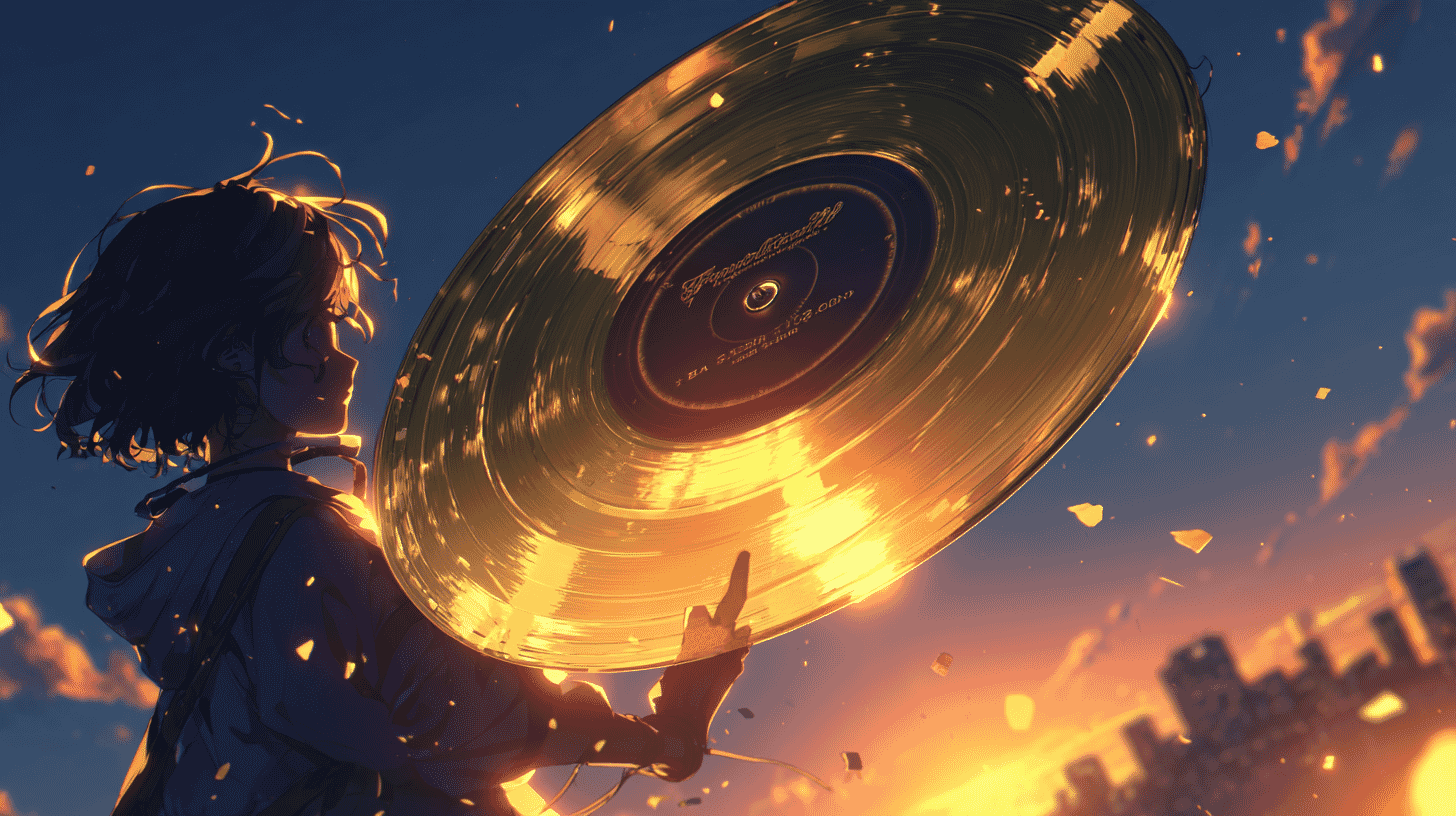
🎌 A nine-year-old song just broke the American wall. "Peace Sign," written by Kenshi Yonezu in 2017 as the opening theme for season two of My Hero Academia, was certified Gold by the RIAA in May 2026. It is Yonezu's third RIAA certification, a total no other artist has reached with Japanese-language songs.
"Peace Sign" Finally Crosses 500,000 Units
On May 12, 2026, the Recording Industry Association of America (RIAA) officially announced that Kenshi Yonezu's "Peace Sign" had been certified Gold. RIAA Gold certification recognizes tracks that have moved 500,000 units or more in the United States (where one unit equals one physical sale, one digital download, or 150 streams).
"Peace Sign" was released on June 21, 2017, as Yonezu's seventh single, written as the opening theme for the second season of the My Hero Academia anime. It scored the U.A. High School Sports Festival arc, one of the series' most iconic stretches, where Deku and his classmates first showcased their Quirks on a national stage. The single's jacket illustration was drawn by Yonezu himself, inspired by My Hero Academia.
The music video has surpassed 330 million views, and nearly nine years after release it is still picking up listeners worldwide, enough to finally cross the 500,000-unit threshold in the U.S. alone.
Three RIAA Certifications: A Category of One
With this Gold, Yonezu becomes the only artist in history to receive three RIAA certifications for Japanese-language recordings, breaking his own previous record.
Here's the timeline:
| Track | Anime | Certification | Date |
|---|---|---|---|
| KICK BACK | Chainsaw Man OP | Gold | August 2023 |
| KICK BACK | Chainsaw Man OP | Platinum (1M units) | September 2025 |
| Peace Sign | My Hero Academia S2 OP | Gold | May 2026 |
When "KICK BACK" went Gold in 2023, it was the first Japanese-language song ever to be certified by the RIAA, and it was named to the RIAA's Class of 2023. The Platinum certification in 2025 was another first for a Japanese-language track. Now, with "Peace Sign," Yonezu has rewritten his own record.
For context, here are the other Japanese-language RIAA-certified tracks to date:
- Creepy Nuts (2 certifications): "Bling-Bang-Bang-Born" (Gold, Feb 2025), "Otonoke" (Gold, Feb 2026)
- Fujii Kaze (1 certification): "Shinunoga E-Wa" (Gold, June 2024)
- King Gnu (1 certification): "SPECIALZ" (Gold, April 2026)
Put side by side, Japanese-language RIAA certifications are still rare enough to count on one hand, and Yonezu alone holds three of them.
A Symbolic Win for My Hero Academia's 10th Anniversary
The timing of this certification is almost cinematic: 2026 marks the 10th anniversary of the My Hero Academia anime adaptation.
The series first aired in April 2016 and has since become one of the defining shōnen franchises of the past decade. The original manga, by Kōhei Horikoshi, ended in August 2024, and the anime followed: FINAL SEASON ran for eleven episodes from October 4 to December 13, 2025, closing out eight seasons and nine years and eight months of broadcast.
The franchise has not gone quiet, though. A 10th-anniversary project, My Hero Academia The Animation 10th Anniversary, is running through 2026, and its centrepiece was an adaptation of "More," the bonus epilogue chapter from volume 42 that follows Class 1-A eight years after graduation. It aired on May 2, 2026. The Gold certification was announced ten days later.
In a video comment marking the certification, Yonezu said:
"It's a fortunate thing as a musician that so many people have enjoyed listening to this song, and I think it's entirely because of the wonderful work that is My Hero Academia."
Streaming was not yet the dominant format in Japan when the song came out in 2017. That it travelled abroad as "the My Hero Academia theme" and reached American Gold nine years later says as much about the route as about the song.
The JUNK World Tour That Reawakened the Song
Another major factor behind "Peace Sign's" U.S. resurgence is Yonezu's 2025 world tour, "Kenshi Yonezu 2025 TOUR / JUNK."
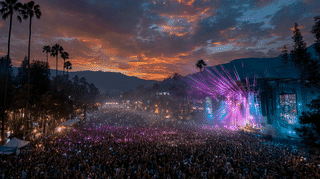
The domestic arena and dome leg ran through January and February and drew 350,000 fans. The international leg, "KENSHI YONEZU 2025 WORLD TOUR / JUNK," ran March to April and took him to Shanghai, Taipei, Seoul, London, Paris, New York, and Los Angeles. All 10 overseas shows sold out, drawing 90,000 fans abroad. Combined, the tour reached roughly 440,000 attendees, the largest of his career. Europe was new territory for him.
The New York date was held at the legendary Radio City Music Hall; the Los Angeles date at the YouTube Theater. The 24-song set drew mostly on his album LOST CORNER, with "Lemon," "KICK BACK," "Spinning Globe" and "M87" alongside "Peace Sign."
American attention had been building before he arrived. In early 2025 the Recording Academy, which runs the Grammys, named a global J-pop boom as one of the year's music trends and described Yonezu's world tour as an epoch-making event. Interest held after the tour ended, and the compounding U.S. stream count appears to be what finally pushed "Peace Sign" over the line.
What This Says About the Global Music Map
Yonezu's third certification reflects something larger: anime opening themes are quietly becoming their own category in the American market.
For decades, the path for Japanese music to reach U.S. listeners was narrow: sing in English, or sign with a Western label. That changed in the 2020s. Platforms like Crunchyroll, Netflix, YouTube, and Spotify began distributing anime and its soundtracks simultaneously worldwide, and Japanese-language songs started accumulating American streams natively, without translation.
"Peace Sign" is a 2017 release. When it dropped, streaming wasn't even counted toward RIAA certifications in the same way it is now. The fact that the song eventually crossed the threshold in 2026 is direct evidence that anime-driven discovery has kept pulling in new listeners year after year.
Look at the recent RIAA-certified Japanese-language tracks: "KICK BACK" (Chainsaw Man), "SPECIALZ" (Jujutsu Kaisen), "Otonoke" (Dan Da Dan), "Bling-Bang-Bang-Born" (Mashle: Magic and Muscles). Every single one is tied to an anime. The pipeline is unmistakable.
Nine years to arrive
It took a long time for any Japanese-language song to be certified in the United States. "Peace Sign" then took another nine years from release to certification. In an era when a hit is settled overnight, this one spread at the opposite speed, because the door anime opened never closed.
So we'd love to hear from you: How popular are My Hero Academia and Kenshi Yonezu in your country? What memories does "Peace Sign" bring back for you? Let us know in the comments.
References
- https://natalie.mu/music/news/671739
- https://www.thefirsttimes.jp/news/0000809615/
- https://www.oricon.co.jp/news/2454164/full/
- https://reissuerecords.net/2026/05/13/peacesign_us_riaa_goldaward/
- https://www.animenewsnetwork.com/press-release/2026-05-13/history-making-j-pop-phenom-kenshi-yonezu-secures-third-riaa-certification-for-track-peace-sign/.237313
- https://electricbloomwebzine.com/2026/05/kenshi-yonezu-peace-sign-riaa-gold-certification.html




Global Discussion
14 comments