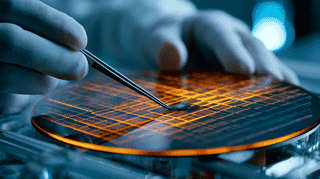
TSMC, the world's largest foundry, is quitting GaN power-chip manufacturing. ROHM, which built its flagship 650V parts inside TSMC's fabs, has licensed the technology and is racing to mass-produce in Hamamatsu by 2027. A look at the China-US rivalry and Japan's vertical-integration bet.
ROHM and Quanmatic put quantum annealing to work on a chip fab's front-end process, lifting output about 3%. Here's why a number that sounds small is actually a big deal on a factory floor.
Kyoto University associate professor Mitsuaki Kaneko is commercializing SiC-based mixed-signal LSIs that work where silicon fails. His complementary JFET approach targets ADC samples in 2028-2029, opening a niche the big five SiC power players have largely ignored.
Rohm posted a record 158.4 billion yen net loss for fiscal 2026 after writing down 193.6 billion yen on SiC power semiconductor assets. CEO Katsumi Azuma called it clearing out the pus, a blunt admission that Japan's biggest SiC bet was mistimed. With Wolfspeed out of Chapter 11 but smaller, Chinese rivals cutting wafer prices to a third, Denso's takeover approach withdrawn and a three-way merger under discussion, the silicon carbide gold rush has hit its reset moment.
On April 28, 2026, the day Denso formally withdrew its acquisition proposal for Rohm, Mitsubishi Electric CEO Kei Uruma declared he wants to spin off only the power semiconductor businesses of all three companies and form a joint venture. This proposes a different framework from Rohm and Toshiba's full semiconductor integration plan, adding a new wrinkle to the world No.2 alliance vision. We analyze competition with Wolfspeed, Infineon, and STMicroelectronics, the SiC market share battle, and the impact on the EV industry.