
We are ARASHI: 27 Years with the Storm, and What Comes Next [Part 4]
January 1, 2021. The world welcomed a new year, but for Arashi fans it was a morning with something decisively missing.
The five they could see on TV almost every week were gone. There would be no welcoming them home on Kohaku at year's end. Arashi had "paused," not "vanished." Fans knew that in their heads, but the sense of loss from Arashi disappearing from daily life was heavier than they had imagined.
Before the stopped clock, the five each began keeping their own time.
The Five Set Off on Their Own Paths
Kazunari Ninomiya: The Man Who Left Home
Kazunari Ninomiya took the boldest step. Having announced his marriage to former freelance announcer Ayako Ito in November 2019, he became a father of two, with his first daughter born in March 2021 and his second in November 2022. He also broke new ground professionally. In 2021 he launched the YouTube channel "Janino Channel" (later renamed "Yonino Channel") with Ryosuke Yamada, Fuma Kikuchi and Yuichi Nakamaru. It grew to around 4.5 million subscribers and pioneered the move of former Johnny's talent onto YouTube.
In October 2023, Ninomiya left SMILE-UP. (formerly Johnny & Associates) and founded his own agency, Office Nino. He is the only Arashi member to have left the agency. But this independence was not a "break with Arashi." As would later become clear, Ninomiya was listed as a shareholder of Arashi Inc. and took part in the final tour as a matter of course. It was a choice that balanced personal freedom with love for Arashi.
Sho Sakurai and Masaki Aiba: Married on the Same Day
On September 28, 2021, Sho Sakurai and Masaki Aiba announced their marriages on the same day, the first time two Johnny's stars announced marriages simultaneously. Sakurai's wife is a Keio University classmate he had dated for more than ten years, and their first child was born in February 2023. Aiba's wife, a non-celebrity he had dated for about ten years, gave birth to a son in October 2022. Sakurai continued as an anchor on "NEWS ZERO," and Aiba kept smiling on variety shows. Each quietly filled Arashi's absence in his own everyday life.
Jun Matsumoto: The Shogun and the Stage
Jun Matsumoto took on his biggest challenge as an actor. In the 2023 NHK period drama "What Will You Do, Ieyasu?" (48 episodes), he played Tokugawa Ieyasu, appearing in living rooms every Sunday night for a year. The household average rating of 11.2% was tough on paper, but the production drew attention for its ambitions, such as virtual production filming, unusual for a period drama. In 2024 he starred on stage for the first time in 13 years in NODA・MAP's "Seisankaku Kankei," including a successful London run. He is also the only unmarried member of the five. Remaining a "director" even outside Arashi led directly to his role producing the staging of the final tour.
Satoshi Ohno: The Man Who Disappeared
And Satoshi Ohno. As he had originally wished, he completely stopped working in entertainment. He was reported to be immersed in painting and fishing on Miyakojima in Okinawa, but he made no media appearances at all. The boy of 1999 who switched off his phone for two weeks now spent years living "freedom."
But Ohno had not abandoned Arashi. The proof would come in time.
November 3, 2021: The Only Day Four of Them Appeared Together
After the hiatus, Arashi members appeared together in public only once.
On November 3, 2021, the anniversary of Arashi's debut, a preview premiere stage greeting for the film "ARASHI Anniversary Tour 5×20 FILM 'Record of Memories'" was held at Marunouchi Piccadilly. Masaki Aiba, Jun Matsumoto, Kazunari Ninomiya and Sho Sakurai made a surprise appearance, astonishing the audience.
Satoshi Ohno was not there. But a letter he had entrusted to them was read aloud.
On TBS's "Kinsuma," Matsumoto explained how the day came about: "It was the release of a film we shot while the five of us were active, so I thought if we missed this, there wouldn't be another chance like it." The five met beforehand to discuss it, and Ohno agreed, saying, "Sure," and "Since it's a special occasion, I'll write a letter."
Matsumoto also revealed an important "unwritten rule": "We made sure the four of us were never seen together in public," to avoid giving fans half-hearted expectations. Because of that rule, the day the four appeared together took on special meaning as "the only exception."
After that, there was no occasion for the five to gather until May 6, 2025. Three and a half years of silence began.
Upheaval at the Agency and the Founding of "Arashi Inc."
While Arashi kept silent, the agency they had belonged to for so long was rocked.
In 2023, Johnny Kitagawa's sexual abuse became a major social issue, and the agency changed its name to "SMILE-UP." Its talent management functions moved to a new company, "STARTO ENTERTAINMENT." The world Arashi had worked in under the "Johnny's" name for a quarter century since their 1999 debut was overturned from its foundations.
Amid this upheaval, Arashi chose its own path.
On March 25, 2024, Arashi Inc. was established in Shibuya, Tokyo, with capital of ¥5 million. The representative director was lawyer Takashi Shinomiya, and all five members were listed as shareholders. Including Satoshi Ohno.
Ohno, who was supposed to have vanished from public view entirely, took part in Arashi as a shareholder in the company. That fact means a great deal. Ohno had left in search of freedom, but he had not abandoned Arashi itself. The person furthest from Arashi was Arashi to the end. That paradox was quietly proven here.
On April 10, 2024, coinciding with the full launch of STARTO ENTERTAINMENT, the existence of Arashi Inc. was made public. Arashi signed a "group agent contract" with STARTO (the second after TOKIO), meaning a relationship of equal business partners rather than the traditional hierarchy of agency and talent.
The five's joint comment read: "We want to be more independent than ever, make decisions more independently than ever and act more independently than ever. And above all, we want the fans who support us every day to feel closer to us."
Founding the company was a clear signal: Arashi would move in some form. The question was when, and how.
About a Year and a Half of Behind-the-Scenes Talks
From late 2023 to early 2024, talks had begun behind the scenes.
Would they act as a group again? If so, what would they do? And what lay beyond that?
Seven years after the talks in the Osaka hotel in 2017, the five again took their time and talked it through, just as before. Not rushing to a conclusion, talking until everyone was convinced: that was Arashi's way.
Eventually they reached a conclusion: "We couldn't imagine resuming activities only to go on hiatus again afterward."
In other words, if they moved again, it would mean a "complete ending." Not a revival. The end.
May 6, 2025: Satoshi Ohno After 1,587 Days
At around 6:30 p.m. on May 6, 2025, a video was posted on the fan club site.
On screen were the five. It was the first time Satoshi Ohno had shown his face since the hiatus, about 1,587 days. After more than four years, that easygoing expression was there.
The heart of the five's joint message was this: "In our last year before the hiatus, because of COVID-19, we were unable to perform in front of you. To thank all the fans who have supported us directly, the five of us will come together again and start preparing for a concert tour as Arashi, planned for around next spring. And with this tour, we will end our activities as Arashi."
Not a "hiatus," not a "breakup," but an "end of activities."
Consider the weight of that expression. A "breakup" implies severed ties. A "hiatus" leaves open the possibility of returning someday. An "end of activities" is neither. The name Arashi remains. The bond among the five remains. But they will never again stand on stage as a group. It is not a permanent farewell, but there is a place they will never return to. That is what it means.
On social media, "Arashi end of activities" and "Ohno-kun" immediately started trending. Taiwanese media reported it as a "shock." Fans reacted much as they had to the 2019 hiatus announcement: deep sadness, but no anger, because they trusted that all five had decided together.
Settling Accounts on a Quarter Century
On November 3, 2024, marking their 25th debut anniversary, Arashi settled accounts on a quarter century. Twelve concert video titles from 2003 to 2013 were released on Blu-ray at once, about 70 unreleased music videos were published on YouTube, and "MY BEST ARASHI" let fans choose their own best songs from all 423.
423 songs. A mass of 27 years of memories: "Sakura Sake" heard the night before an exam, "Love so sweet" played at a wedding, "One Love" cried to after a breakup. Every song is tied to the stories of millions.
On November 22, 2025, a new video arrived for the fan club. Aiba began, "We have an important announcement," Ohno read out the tour title and dates, Ninomiya explained the ticket information, and Sakurai hinted at a live stream. Finally, Jun Matsumoto said: "We'd be happy if you would keep running with us until the very moment our activities end."
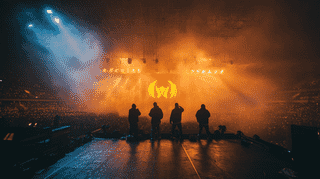
And so the prayers of millions of fans turned toward the final tour of the five major domes.
This article covers events up to the tour announcement in November 2025. The tour "ARASHI LIVE TOUR 2026 'We are ARASHI'" opened in Sapporo on March 13, 2026, ran through 15 shows in the five major domes including Tokyo, Nagoya, Fukuoka and Osaka, and ended with the Tokyo Dome show on May 31, 2026. Arashi ended its activities as a group that day. Part 5 covers the details.
Continued in Part 5, "The Last Storm: 2026, We are ARASHI, Now and Always"
Has an artist in your country ever returned after a long silence and moved fans all over again?








Global Discussion
15 comments