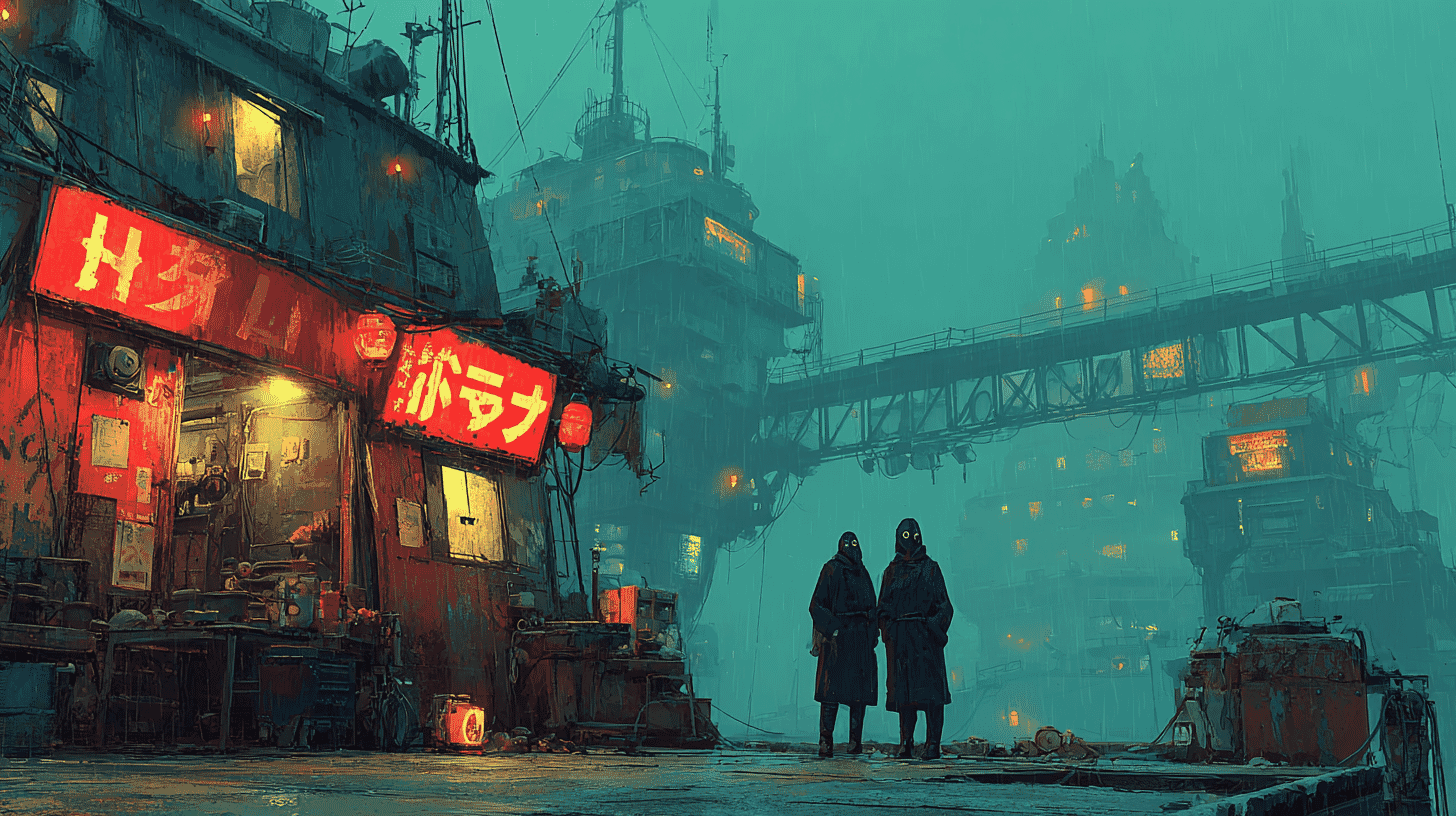
🦎 A lizard-headed amnesiac, a best friend who fries the best gyoza in town, and a world so filthy and strange that people spent two decades calling it impossible to animate. Six years after Season 1, Dorohedoro came back. The main PV, released March 8, 2026, finally gave faces and voices to the Cross-Eyes, the gang that drives the story's second act. Welcome back, chaos.
The Manga They Said Couldn't Be Animated
Dorohedoro is Q Hayashida's dark fantasy, drawn from 2000 to 2018 and collected into 23 volumes. It bounced across three Shogakukan magazines on the way (Monthly Ikki, Hibana, and Gessan), which tells you something about how hard it was to place.
The setting is Hole, a rotting city where sorcerers from another dimension use the residents as lab rats. Caiman, whose face was turned into a lizard's and whose memories went with it, hunts sorcerers one by one alongside his partner Nikaido, looking for whoever did it to him. Violence, black comedy, and, for reasons nobody can fully explain, gyoza. That refusal to sit in any genre is exactly what built the manga a devoted readership at home and abroad.
The gritty linework and chaotic storytelling had it written off as unadaptable for years. Then MAPPA adapted it anyway in 2020, mixing 2D and 3DCG into something that actually looked like Hayashida's pages, with an industrial score from the music unit (K)NoW_NAME. Netflix carried it internationally right as global lockdowns hit, and a lot of people found it from their couches. The cult following starts there.
The Cross-Eyes Step Into Frame
The PV runs about 100 seconds, packed with battle animation and the comic back-and-forth between characters that Season 1 fans missed.
Season 2 heads toward the mystery of Caiman's past. And for the first time in the anime, the PV shows the Cross-Eyes, a group with bad history involving both Caiman and the En Family. With the Cross-Eyes waiting on their boss to come back and the En Family circling, the story tips into deeper chaos.
Yuichiro Hayashi returns to direct, MAPPA stays on animation, and series composer Koji Seko, character designer Tomohiro Kishi, and world designer Shinji Kimura are all back. Season 1's crew basically stayed put.
Koki Uchiyama as Dokuga, Daiki Hamano as Tetsujo
Six Cross-Eyes cast members were announced alongside the trailer.
Uchiyama plays Dokuga, a Cross-Eyes executive whose saliva is poison. He said he tried to hold onto Dokuga's particular atmosphere while keeping the team chemistry with the rest of the gang in mind.
Hamano plays Tetsujo, an executive who fights with a katana and who, in a world with no functioning common sense, is the closest thing to a reasonable person. Hamano introduced him with a joke about Tetsujo "hustling piecework, er, I mean scrambling for the budget," then told viewers to enjoy the muddy, funky mess of a story.
The other four: Yuichi Koshimura as Saji, the group's money man; Katsuhito Nomura as Ton, a knife-throwing specialist; Atsushi Imaruoka as Ushishimada, the muscle; and Sara Matsumoto as Natsuki, the new recruit. Koshimura's comment was the standout. Characters with clashing goals and values, all jumbled together and wrapped in an epic story, he said, add up to one thing: Dorohedoro is gyoza. Which would make the new cast the soy-vinegar dipping sauce.
(K)NoW_NAME Is Back on Music Duty
The unit behind Season 1's sound returned for the themes and score. The opener is "Zettai MUST Danmen," the ending is "Return To Head."
Ayaka Tachibana led with "Welcome back, chaos!" and said she packed the songs with the truths swirling around inside that chaos. NIKIIE wrote and sang the ED, going all-in on wordplay and phrasing. R・O・N, who worked on the opening, ending, and score, closed with a note to fans worldwide telling them to look forward to it.
A Hibiya Screening, Then the World
On March 22, TOHO Cinemas Hibiya screened the first three episodes early. Wataru Takagi (Caiman) and Reina Kondo (Nikaido) joined Uchiyama and Hamano for a talk show, beamed live to four more theaters in Shinjuku, Yokohama, Namba, and Nagoya. Tickets ran 2,700 yen (about $17) at the main venue and 2,200 yen (about $14) at the satellites. Everyone went home with "Noi's Magic Powder," a bath salt named after a fan-favorite character, which is roughly the correct level of seriousness for this franchise.
Streaming began April 1, Wednesdays at 11 p.m. JST, near-simultaneously worldwide across several platforms. That is a real change from Season 1, which was Netflix-exclusive outside Japan. Season 1's twelve episodes also widened to Amazon Prime Video, d Anime Store, U-NEXT, Disney+, and others on March 8, giving newcomers just under a month to catch up. The April 1 start landing on April Fools' Day was presumably a coincidence, but given the show, it's a little too on the nose.
Season 2 Has Already Come and Gone. Season 3 Is Next
Season 2 ran eleven episodes and finished on May 27, ending at a point that leaves you wanting the next part badly. The following day, Season 3 was confirmed. Director Hayashi released an illustration to mark it, and an anime music video for "Zettai MUST Danmen" went up the same day. No streaming window yet. Hole's chaos isn't wrapping up any time soon.
In Japan, the appeal is how comfortably this show holds grotesque horror and real warmth in the same frame. What about where you are? Do shows like Dorohedoro, the ones that openly filter their audience, get any traction, or does everything get crowded out by the big shonen titles?





Global Discussion
15 comments