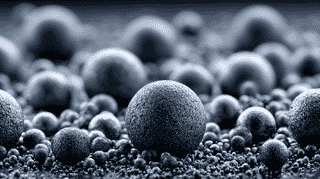
Sinfonia Technology, better known for semiconductor robots, has paired a cold crucible melting furnace with a disk atomizer to make highly spherical powder from high-melting metals like titanium and molybdenum. A look at the unglamorous powder that feeds metal 3D printing, and Japan's stake in it.
Researchers at Yokohama National University built a photocurable resin that hardens with light and melts back to liquid with heat. Using anthracene photodimerization, it recycles 10-plus times with no initiators or additives.
Nikon posted a record net loss of 86 billion yen (about $548 million) for the year ended March 2026, dragged down by a 90.6 billion yen writedown on its German SLM Solutions metal 3D printer acquisition. As Canon attacks the lithography market and TSMC Kumamoto ramps up 3nm production, Japan's optics giant is missing its own country's semiconductor boom. We unpack the ASML technology gap, the diversification bets that went wrong, the EssilorLuxottica stake, and the new mid-term plan built around "near-leading-edge" ArF immersion tools.
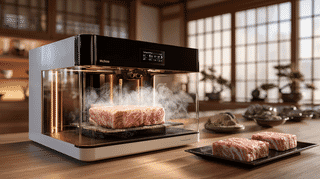
TOPPAN, a 120-year-old Japanese printing company, is applying the thin-film layering know-how it built in semiconductors to 3D-printed cultured meat, targeting revenue from 2031. The plan: a countertop 'Meat Maker' that prints marbled wagyu from data and a recipe. We cover the NEDO consortium with Shimadzu and Itoham Yonekyu, Integriculture's rival cellular agriculture platform, where cultivated meat is legal today, and the cost wall still in the way.
Researchers at Kobe University have achieved the world's first inkjet printing using structural color nanoparticle ink — no dyes, no pigments, just silicon nanoparticles that produce color through light resonance. The result: vivid prints that never fade, with applications from eco-friendly packaging to anti-counterfeit security.
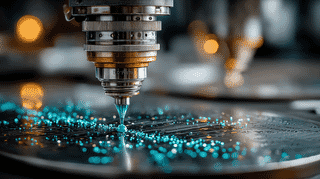
Seiko Epson and Taiwan's Manz Asia have formed a strategic partnership to develop inkjet-based semiconductor manufacturing. Their 'additive' approach prints functional materials directly onto substrates without photomasks, cutting costs and environmental impact versus traditional photolithography. We explore their Lab-to-Fab equipment roadmap and Japan's edge in printed electronics.
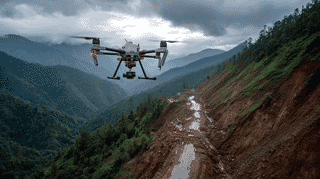
Aizawa Concrete's F3DP is a gasoline-powered drone with a robotic arm and nozzle that extrudes concrete in flight. It is aimed at printing formwork for floating offshore wind platforms by the end of 2028. A machine born from Japan's construction math: 4.77 million workers, 36.6% of them over 55.