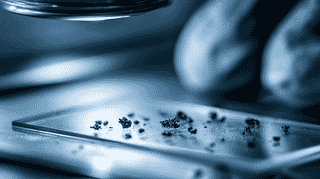
A University of Tokyo-led team finds Ryugu's sodium in clay and about 90% of its chlorine in serpentine, implying water a hundred times less salty than the sea. A Kyoto-led team had read a brine.
A Japan-led team corrected the single-letter mutation behind the inherited nerve disease HMSN-P without cutting DNA, with effects in model mice and in patient-derived organoids, plus the 40 years of work behind it.
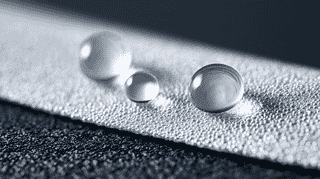
Kyoto University's deep foam photolithography makes white out of air instead of titanium dioxide, prints it at about 20,000 dpi and repels water without PFAS. Why the timing is European, and what Japan tried before.
An experiment at Japan's SPring-8 finds davemaoite holds 0.08 wt% water at most, a tenth of past estimates, and points Earth's deep water to subducted crust instead.
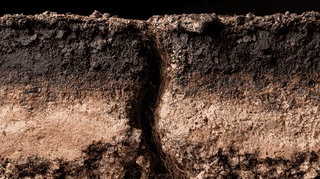
Glassy radioactive particles called cesium balls were thought to stay in Fukushima's topsoil. A Kyoto University team found them inside 39 of 52 earthworms, and one 15.5 centimeters down.
The first commercial transplant of AMCHEPRY, the world's first approved iPS cell-derived medicine, is set for October in Kyoto. Why proving it takes 35 patients and six years, and why the US and EU have no equivalent product.
Keio University reports up to four years of follow-up on four patients given iPS-derived cells for spinal cord injury: no tumors, no serious harm. What it means, and how Japan's path compares to the US and Europe.
Kyoto and Hiroshima University researchers found that grains Hayabusa2 brought back from asteroid Ryugu begin altering within weeks on Earth. Here is how the decay starts with an iron sulfide, what it means for Bennu and Phobos samples, and how Japan is reacting.
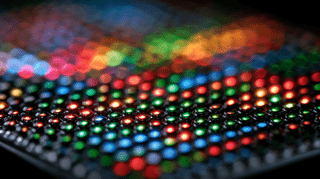
Kyoto University's Takuji Hatakeyama and colleagues linked multiple-resonance units to reach a 5.5nm emission band in solution, pushing spontaneous emission toward laser-like color purity. Published in Science, it points to purer, more efficient next-gen displays.