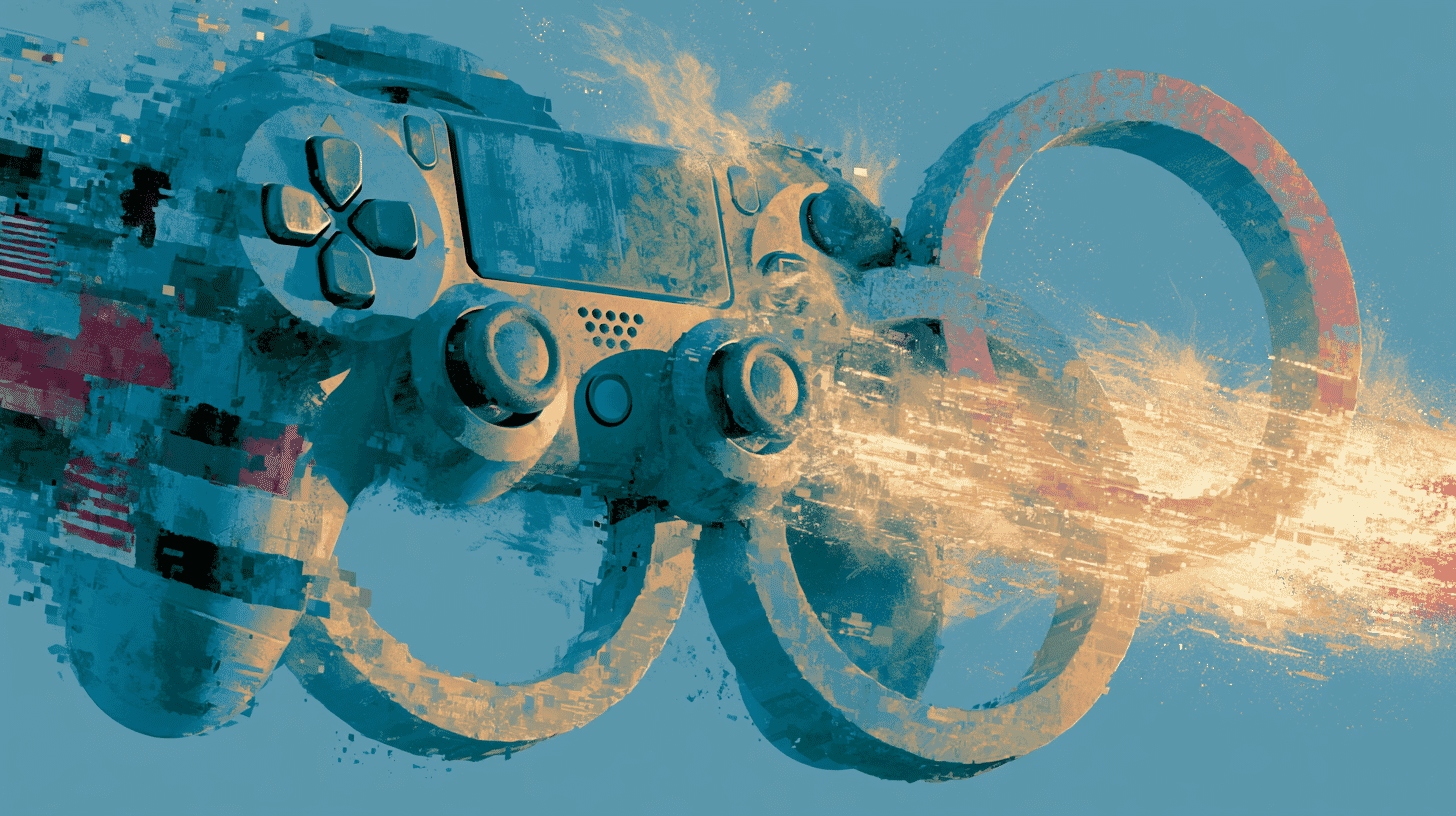
🎮 KONAMI just became an official supplier for the 20th Asian Games. A line of corporate news, easy to scroll past, but pull on that thread and you find the most ambitious esports program any multi-sport event has ever attempted: 11 disciplines, 13 titles, fighting games stitched into a three-game team event, four MOBAs running in parallel, even Puyo Puyo. And looming behind all of it, the IOC's Olympic Esports Games for 2027 just fell apart. Here's the lineup, what's strange about it, and why this might be esports' peak inside the traditional sports world, at least for now.
A Supplier Deal That Says More Than It Sounds
On May 14, 2026, the organizing committee for the 20th Asian Games, Aichi-Nagoya 2026, announced it had signed Konami Digital Entertainment as a Tier 4 Official Supplier under the "esports games" sponsorship category. On paper, it's the kind of partnership announcement that lives and dies in trade press. In context, it's a small confirmation of something bigger: esports is no longer an experiment at this scale of event. It's infrastructure now.
The Games open September 19 in Aichi and Nagoya, the first time Japan has hosted the Asian Games since Hiroshima in 1994. And esports, which debuted as a demonstration sport at Jakarta 2018 and became a full medal discipline at Hangzhou 2022, is bigger than ever.
How big? Eleven disciplines. Thirteen titles. The most ambitious esports program ever staged at a multi-sport event sanctioned by an Olympic-aligned body.
The Full Lineup: 11 Disciplines, 13 Titles
The Olympic Council of Asia confirmed the slate in February 2025. Japan Esports Union (JESU) and the Aichi-Nagoya organizing committee finalized titles in July 2025. Here's the complete program:
Competitive Martial Arts (Team Event): a single medal contested by national three-player teams across three titles:
- Street Fighter 6 (Capcom)
- Tekken 8 (Bandai Namco)
- The King of Fighters XV (SNK)
MOBA (the largest category, four titles): each contests its own medal.
- League of Legends (Riot Games)
- Honor of Kings (Tencent)
- Mobile Legends: Bang Bang (Moonton)
- Pokémon UNITE (Pokémon / TiMi Studios)
Battle Royale
- PUBG Mobile (Krafton / Tencent), running a tournament-adjusted version
Asymmetric Multiplayer
- Identity V (NetEase), also in a tournament-adjusted version
Action-Adventure
- NARAKA: BLADEPOINT (24 Entertainment / NetEase)
Racing
- Gran Turismo 7 (Polyphony Digital / Sony)
Football
- eFootball (Konami), hence the Konami supplier deal
Puzzle
- Puyo Puyo Esports (Sega)
The numbers tell their own story. Hangzhou 2022 ran seven titles. Aichi-Nagoya doubles that with 13. And the genre spread is the widest any Asian Games has attempted: fighting, MOBA, battle royale, asymmetric multiplayer, action-adventure, racing, football, and puzzle. Of the 11 events, seven feature a Japanese team.
What's Strange, and What's Smart, About This Lineup
A few things jump out.
Japanese IP is everywhere, but the choice is deliberate. Street Fighter, Tekken, KOF, eFootball, Gran Turismo 7, Pokémon UNITE, and Puyo Puyo Esports are all Japanese-published or Japanese-IP titles. That looks like home-cooking, but it isn't quite. The OCA's selection brief favors titles with broad pan-Asian competitive scenes, and Japanese franchises happen to dominate fighting games and arcade-style competition globally. Pokémon UNITE is co-developed with Tencent's TiMi Studios and is a legitimate top-tier MOBA in Southeast Asia. Puyo Puyo is the outlier, a charming flag-plant for puzzle games as a competitive genre.
The fighting game team event is genuinely strange. Three games, three players, one medal. No other discipline in any Olympic-aligned competition has ever combined separate titles from separate publishers under one event. Capcom, Bandai Namco, and SNK had to agree to share a podium. Japan's roster is already locked in: Higuchi (SF6, ZETA DIVISION), NOBI (Tekken 8, Team YAMASA), and SCORE (KOF XV, Amaterasu Gaming). Pakistan's notoriously strong Tekken contingent and South Korea's MOBA-and-FGC depth make this the hardest medal in the program to predict.
The Chinese mobile ecosystem dominates the rest. Honor of Kings, Mobile Legends, PUBG Mobile, Identity V, NARAKA, five of the 13 titles are operated by Tencent or NetEase, the two giants of the Chinese live-service ecosystem. China alone runs domestic leagues for most of these with prize pools that dwarf almost any Western esports league outside of LCS and the Counter-Strike majors.
What's not here is the louder story. No Counter-Strike. No Valorant. No Dota 2. No EA Sports FC. No Rocket League. No Apex Legends. The exclusions follow a pattern the OCA telegraphed years ago: avoid titles that look like first-person military violence on broadcast, prefer publishers that can sign clean licensing deals with the host, and steer away from anything where the IP holder is locked in a fight with a competing federation.
Korea's Stakes Are Different From Everyone Else's
There's a sub-plot worth knowing. South Korean men under 28 are subject to mandatory military service of around 18 months, a stretch that effectively ends most esports careers. But South Korean law grants exemption to athletes who win gold at the Asian Games or any Olympic medal.
This is not theoretical. League of Legends superstar Faker (Lee Sang-hyeok), arguably the most accomplished player in any esport, won gold at Hangzhou 2022 and was exempted on those grounds. Footballer Son Heung-min earned his exemption the same way at Jakarta 2018.
For Korean esports athletes between 19 and 28, an Asian Games gold isn't just a trophy. It's the difference between a career that continues and a career that pauses for a year and a half at its peak. Expect every Korean team, MOBA especially, to treat Aichi-Nagoya as a career-defining event.
The Asterisk: This Might Be the Last Time
Here's the part that doesn't fit the celebration.
In late 2023, Japan's Kyodo News reported that the OCA had decided to remove esports from future Asian Games as a standalone medal category. The plan: spin off a separate competition that combines esports with so-called "mind sports" like chess and bridge. Aichi-Nagoya, in that framing, is the swan song. The 2030 Asian Games in Doha, Qatar, won't have esports on the main medal table.
The reasons are familiar. Esports straddles uncomfortable lines for the OCA, competing international federations (the International Esports Federation, the Global Esports Federation, the Asian Electronic Sports Federation, none of which has clear sovereignty), publisher control over IP that means the "rules of the sport" can change overnight, and a culture that doesn't always fit Olympic protocol. The OCA wants the audience. It doesn't want the governance headaches.
So the lineup at Aichi-Nagoya may be the high water mark for esports inside the Olympic-aligned multi-sport tradition, not the beginning of an upward curve.
And the Olympic Esports Games? That Plan Just Collapsed
The other half of this story is what happened to the IOC's parallel ambition.
In July 2024, the 142nd IOC Session unanimously approved the creation of the Olympic Esports Games, a separate, esports-only Olympic-branded event. In February 2025, the IOC announced the inaugural edition would be held in Riyadh, Saudi Arabia in 2027, partnered with the Saudi Arabian Olympic and Paralympic Committee and the Esports World Cup Foundation (EWCF), a 12-year partnership running through 2036.
Then it unraveled. On October 30, 2025, the IOC announced it would end the partnership with the Saudi Arabian Olympic Committee on mutual terms after talks with the Esports World Cup Foundation broke down. Reports pointed to several flashpoints: incoming IOC President Kirsty Coventry's hesitation about the format, disagreements over which game publishers to involve, and the difficulty of reconciling IOC governance norms (which assume a single international federation per sport) with esports, where the recognized federations have limited financial and IP authority.
The situation moved again in 2026. The IOC's Esports Commission stopped work, with sources telling Kyodo News that its activities had "come to a close." After the Executive Board meeting on May 7, Coventry confirmed the commission had been disbanded and said esports now sits directly under her Executive Office, adding that the project is "very much alive." For now, though, the IOC is prioritising what she called its core business, and no replacement host or date has been named. The same board meeting paused the host election process for the Youth Olympic Games.
Saudi Arabia, meanwhile, isn't waiting. The EWCF launched the Esports Nations Cup, its own nation-versus-nation competition on a two-year cycle, with the inaugural edition set for Riyadh in November 2026, just weeks after Aichi-Nagoya closes. Co-developed with Electronic Arts, Krafton, Tencent, and Ubisoft, ENC is a clear attempt to claim the "esports Olympics" mantle without the Olympic rings.
Which Genres Are Trying to Be Olympic, and Why
If you ask which genres are positioning themselves for Olympic-style recognition, the pattern is fairly clear:
Sports simulations win on appearance. eFootball, Gran Turismo 7, NBA 2K, FIFA/EA Sports FC, these map cleanly onto traditional sports. The IOC has historically preferred them precisely because they look like virtual versions of real disciplines. Gran Turismo even has the FIA on its side: motorsport's world governing body has co-sanctioned the GT World Series for years.
Fighting games punch above their weight. Visually contained, individual versus individual, no political controversy, fighting games slot into Olympic-friendly framing with surprising ease, even though they're nominally about combat. The Aichi-Nagoya team format suggests OCA wants the fighting game audience without the awkwardness of putting three competing IP holders on rival podiums.
MOBAs are the audience problem. League of Legends, Honor of Kings, Mobile Legends, these are by far the biggest esports by viewership. They're also the games most likely to be flagged as too commercially controlled, with publishers as gatekeepers and balance changes shipping mid-tournament. The IOC and Asian Games are taking the audience while the publishers retain the steering wheel.
FPS titles keep getting filtered out. Counter-Strike, Dota, League of Legends and Valorant have been considered "too violent" for inclusion in an Olympic-style esports competition, per reporting on the IOC's internal deliberations. The first three are debatable as violent, Dota is high-fantasy combat, LoL is cartoon spell-slinging. But "looks like a soldier with a gun" remains the third rail for IOC programming, and Valorant and CS sit squarely in that visual category. Expect them to remain Olympic-adjacent at best, hosted by EWCF events rather than IOC ones.
Puzzle and racing are quiet winners. Puyo Puyo and Gran Turismo are stylistically clean, family-broadcast-safe, and have clear individual-skill narratives. Don't be surprised if these, not League of Legends, are the genres that end up most durable in the Olympic-adjacent tournament circuit.
The Picture for September
For three weeks beginning September 19, esports at Aichi-Nagoya will be the most-watched competitive gaming event in the Olympic-aligned tradition. South Korean MOBA squads playing for military exemption. Pakistan's Tekken brigade hunting their first Asian Games gold. Japan's fighting game three-piece chasing home soil glory. Chinese Honor of Kings dominance facing rare international tests. Indonesia and Vietnam in Mobile Legends and PUBG Mobile finals against teams of star players they normally only see in club tournaments.
And quietly, in the background, the bigger argument continues. The OCA wants to phase out the format. The IOC wants the format but can't agree with anyone on how. The Saudis are building their own version. Game publishers are deciding which federation to dance with. None of this will be settled by October 4 when the Aichi-Nagoya cauldron is extinguished.
But for a brief window in early autumn, one of esports' oldest unanswered questions, is it really a sport?, gets a partial answer in the form of medals around the necks of 20-something gamers, broadcast in a venue 25 kilometers from Nagoya Castle. That's not a small thing.
How does esports look from where you watch it? Are tournaments at the Asian Games and the Olympic Esports Games the future you want to see, or are they a sideshow next to the real money in the Esports World Cup, LCS, and the publisher-run global circuits? We'd love to hear how the scene reads from your country.
References
- https://jesu.or.jp/contents/news/news-250723/
- https://www.aichi-nagoya2026.org/news/detail/1275
- https://jesu.or.jp/contents/news/news-260220/
- https://en.wikipedia.org/wiki/Olympic_Esports_Games
- https://www.olympics.com/ioc/news/inaugural-olympic-esports-games-to-be-held-in-riyadh-in-2027-road-to-the-games-to-start-this-year
- https://www.sheepesports.com/en/all/articles/ioc-suspends-esports-commission-operations-raising-uncertainty-over-olympic-esports-games/en
- https://esportsadvocate.net/2025/10/esports-breakup-why-the-ioc-backed-out-of-saudi-esports-deal/
- https://www.4gamer.net/games/635/G063504/20250723040/








Global Discussion
5 comments