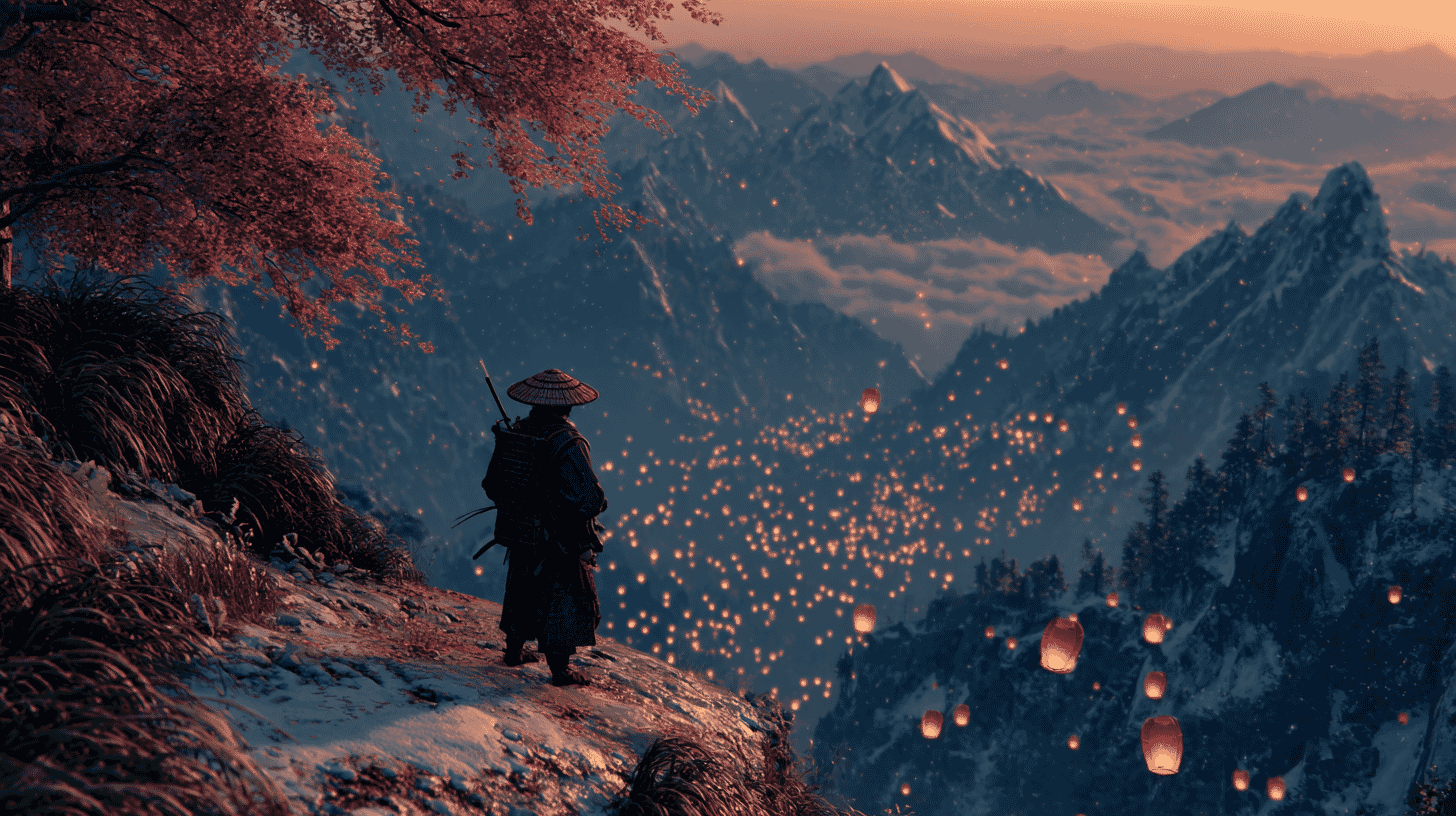
At Sucker Punch Productions, the studio behind Ghost of Yotei, every scrapped idea got a round of applause. Every single week. The roughly 160-person team built one of 2025's biggest open-world games by making the act of cutting something the studio celebrated out loud.
The Weekly Cut Ceremony
Ghost of Yotei launched on October 2, 2025 as a standalone sequel to Ghost of Tsushima, set roughly 300 years later in 1603 Ezo (historical Hokkaido). Players take the role of Atsu, a mercenary hunting the six warriors who slaughtered her family sixteen years earlier. It sold more than 3.3 million copies by November 2025.
At GDC 2026 (the Game Developers Conference "Festival of Gaming"), co-creative director Jason Connell revealed a fascinating piece of the studio's internal culture: a weekly ritual the team called the "Cut Ceremony."
Here's how it worked. Once a week, the entire studio gathered. Each team member who had cut a feature during that week stood up and announced what they had removed. Then everyone else in the room applauded. No shaming, no mourning.
Why Celebrate What You Throw Away?
The psychology is simple. According to Connell, developers become attached to their ideas. Spend days building something and the last thing you want to hear is that it needs to go. That attachment is human, but it also bloats games with features that don't serve the core vision.
Connell compared cutting to "sharpening" the game. If your team is working on four things and you eliminate one, the remaining three get more people and more time. Cutting isn't loss; it's refinement.
The ceremony format leans on a basic truth: people love being applauded. By turning a demoralizing moment into public recognition, Sucker Punch made "letting go" something you report as an achievement.
A Lean Team Building a Massive World
Context matters here. Sucker Punch operates with roughly 160 developers, well under peer PlayStation studios like Naughty Dog, Santa Monica Studio, or Guerrilla Games, many of which field teams of 200 or more. Building a historically researched open world at Ghost of Yotei's scale with a smaller crew leaves no room for misallocated time.
"Frankly, there's too many ideas," Connell said. A studio brimming with ambition is a healthy one, but without disciplined prioritization that ambition becomes its own enemy. The Cut Ceremony worked as a pressure valve, keeping the team aligned on what mattered.
The Ideas That Didn't Make It
The GDC talk also detailed several ambitious features that were ultimately scrapped.
The most dramatic was a dual-timeline system that would have let players switch between young and adult Atsu at any point during gameplay. It would have required building the entire map in two seasonal versions, spring and winter, a scope that proved too large. Traces survive in the final game's flashback mechanic, where visiting specific locations triggers memories from Atsu's past.
Another cut was free-form rock climbing inspired by The Legend of Zelda: Breath of the Wild. Co-director Nate Fox was impressed enough by Nintendo's climbing system to start a prototype. But Ghost of Yotei's world contained too many surfaces that weren't built for climbing, and reaching the top only to find nothing would have trained players to stop looking up. The guiding question, "does that make you feel like a wandering ronin?", sealed its fate.
The team also tested dual hatchets, a combat shield, and a folding fan as weapons. The odachi (a large, sweeping sword) in the final game began as a kanabo, a heavy war club, before the combat system settled into its final rhythm. Two additional explorable regions were planned but cut, as the team couldn't fill them with enough content in time.
The Art of Subtraction
There's something fitting about a Western studio making a game set in Japan arriving at a working method that rhymes with a Japanese design instinct: strip away the excess and the essentials read more clearly. Whether Sucker Punch was channeling that consciously is beside the point.
The result held up. Sucker Punch announced the game had gone gold on August 28, 2025, roughly a month before its October 2 launch, and it shipped on schedule. It has kept expanding since, with the free "Legends" DLC in March 2026 adding two-player story missions and four-player survival battles.
The wider lesson isn't really about games. Rather than having leadership axe ideas from above, a top-down move that breeds resentment, the Cut Ceremony made the person doing the cutting the one getting applauded. The message wasn't "your idea wasn't good enough." It was "thank you for sharpening our game."
In your workplace or country, how do you handle letting go of ideas in a project? Does your team celebrate the cuts, or mourn them?
References
- https://automaton-media.com/articles/newsjp/ghost-of-yotei-20260318-430243/
- https://www.gamesradar.com/games/open-world/ghost-of-yotei-dev-says-cutting-features-from-games-is-really-important-so-sucker-punch-had-weekly-meetings-where-people-would-clap-every-time-something-got-deleted/
- https://www.gamespot.com/articles/from-zelda-like-climbing-to-multiple-worlds-the-cut-content-of-ghost-of-yotei/1100-6538760/







Global Discussion
14 comments