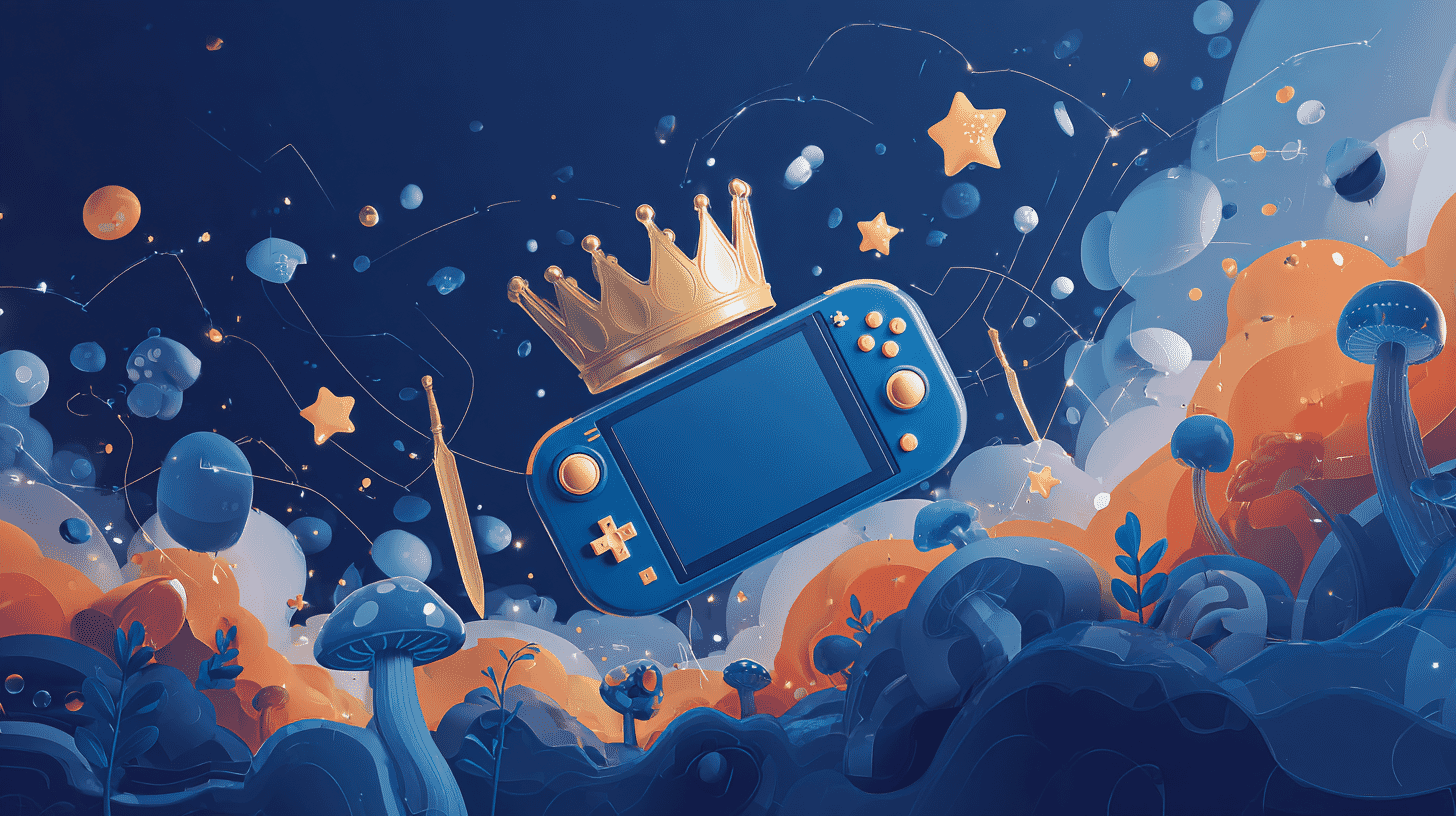
Nearly nine years after its 2017 launch, the Nintendo Switch has reached 155.37 million units sold worldwide, officially surpassing the Nintendo DS (154.02 million) to become the best-selling console in Nintendo's 136-year history. Born from the ashes of the Wii U's commercial failure, the Switch's "play anywhere" hybrid concept has redefined what a gaming console can be. Here's the story behind one of gaming's greatest comebacks.
A Record-Breaking Milestone: The Numbers Behind Switch's Legacy
On February 3, 2026, Nintendo announced in its fiscal year Q3 earnings report that the Nintendo Switch had reached cumulative sales of 155.37 million units as of December 31, 2025. This surpasses the Nintendo DS's longstanding record of 154.02 million units by 1.35 million, making the Switch the most successful hardware platform in Nintendo's history.
The software numbers are even more staggering. Total Switch software sales have reached over 1.5 billion units, far exceeding the DS's 948.76 million lifetime total. This translates to roughly 10 games per console on average, demonstrating exceptionally high platform engagement that has persisted more than eight years after launch.
For context, the all-time best-selling console record is still held by Sony's PlayStation 2 at over 160 million units. Whether the Switch can close that gap remains uncertain, but the fact that it continues selling alongside its successor, the Nintendo Switch 2, keeps the possibility alive.
Five Key Factors Behind the Switch's Historic Success
1. The Hybrid Concept That Changed Everything
The Switch's defining innovation was its ability to function seamlessly as both a home console connected to a TV and a portable handheld device. The late Nintendo President Satoru Iwata envisioned "a compact gaming device that could be carried anywhere while having enough power for cinematic gaming experiences." This concept evolved from the Wii U's idea of off-TV play, but the Switch made it truly mobile, merging the home console and handheld markets into a single platform for the first time.
2. An Unmatched First-Party Software Library
The Switch launched alongside The Legend of Zelda: Breath of the Wild, which was immediately recognized as one of the greatest games ever made. This was followed by a relentless stream of system-selling titles: Super Mario Odyssey, Splatoon 2, Super Smash Bros. Ultimate, Animal Crossing: New Horizons, and Mario Kart 8 Deluxe (70.59 million copies sold). Crucially, these titles spanned genres and demographics, appealing to everyone from casual players to hardcore gamers.
By unifying handheld and console development resources onto a single platform, Nintendo was able to deliver software at a density and pace that was previously impossible.
3. Third-Party and Indie Game Ecosystem
Learning from the Wii U's weak third-party support, Nintendo actively courted developers from the Switch's earliest stages. The software development kit was priced at approximately $450, significantly lower than competitors, making it accessible even to small indie studios. What was initially projected to be 60 indie titles by the end of 2017 exploded into over 320 releases, establishing the Switch as the go-to platform for indie gaming.
4. The Pandemic-Era Boost
The global COVID-19 pandemic in 2020 created unprecedented demand for home entertainment. Animal Crossing: New Horizons launched at the perfect moment, becoming a global cultural phenomenon with 49.32 million copies sold. Ring Fit Adventure, a fitness game that let players exercise at home, also became an unexpected mega-hit. This "stay-at-home" demand gave the Switch a massive sales surge that extended its commercial peak.
5. Strategic Hardware Evolution
Rather than following its typical 6–7 year console cycle, Nintendo deliberately extended the Switch's lifespan through iterative hardware updates. The battery-improved model and the portable-focused Switch Lite arrived in 2019, followed by the OLED Model in 2021. Each variant attracted new buyers while encouraging existing owners to upgrade, sustaining sales momentum across more than eight years.
How the Wii U's Failure Gave Birth to the Switch
Understanding the Switch's success requires acknowledging its predecessor's struggles. The Wii U sold approximately 13.56 million units over its lifetime, a sharp decline from the Wii's 101 million. Poor third-party support, a confusing marketing message, and the limited portability of its tablet controller all contributed to its underperformance.
Yet this failure proved essential. It pushed Nintendo to fully commit to the vision of a truly portable home console. President Iwata had spoken about "the alliance and fusion of home and portable gaming" as early as 2002, and that philosophy ultimately manifested in the Switch under its original "NX" development codename.
Passing the Torch: Switch 2's Record-Breaking Start
The Nintendo Switch 2 launched on June 5, 2025, selling 3.5 million units in just four days, the fastest start for any Nintendo console. By December 31, 2025, cumulative sales had reached 17.37 million units, outpacing the original Switch by 75%.
The Switch 2 preserves the hybrid concept while introducing 4K output support, magnetic Joy-Con 2 controllers, and improved performance. Critically, it maintains backward compatibility with original Switch games, enabling a smooth transition from the 150+ million unit installed base.
Impact on Japan's Gaming Industry
The Switch's success has had profound implications for Japan's gaming industry. Nintendo's market capitalization has more than tripled since the Switch's launch, reinforcing its status as one of Japan's leading global companies.
Perhaps more significantly, the Switch proved that dedicated gaming hardware still had a place in an era dominated by smartphone gaming. When many industry observers were predicting the end of game consoles, the Switch demonstrated that players craved premium, buy-to-own gaming experiences, offering an alternative to the fatigue many felt toward heavy microtransaction models in mobile gaming.
The Switch's record is about more than sales figures. It represents a fundamental rethinking of where, how, and with whom we play games. In Japan, many view the Switch as a symbol of gaming culture at its finest.
What does the Nintendo Switch mean in your country? Do you have a favorite Switch memory, or thoughts on what made it so special?
References
- https://www.nintendo.co.jp/ir/finance/hard_soft/index.html
- https://news.denfaminicogamer.jp/news/2602032b
- https://www.nintendolife.com/news/2026/02/its-official-the-switch-is-nintendos-best-selling-console-of-all-time
- https://automaton-media.com/articles/newsjp/nintendo-switch-20250204-327309/
- https://game.watch.impress.co.jp/docs/news/1567036.html






Global Discussion
15 comments