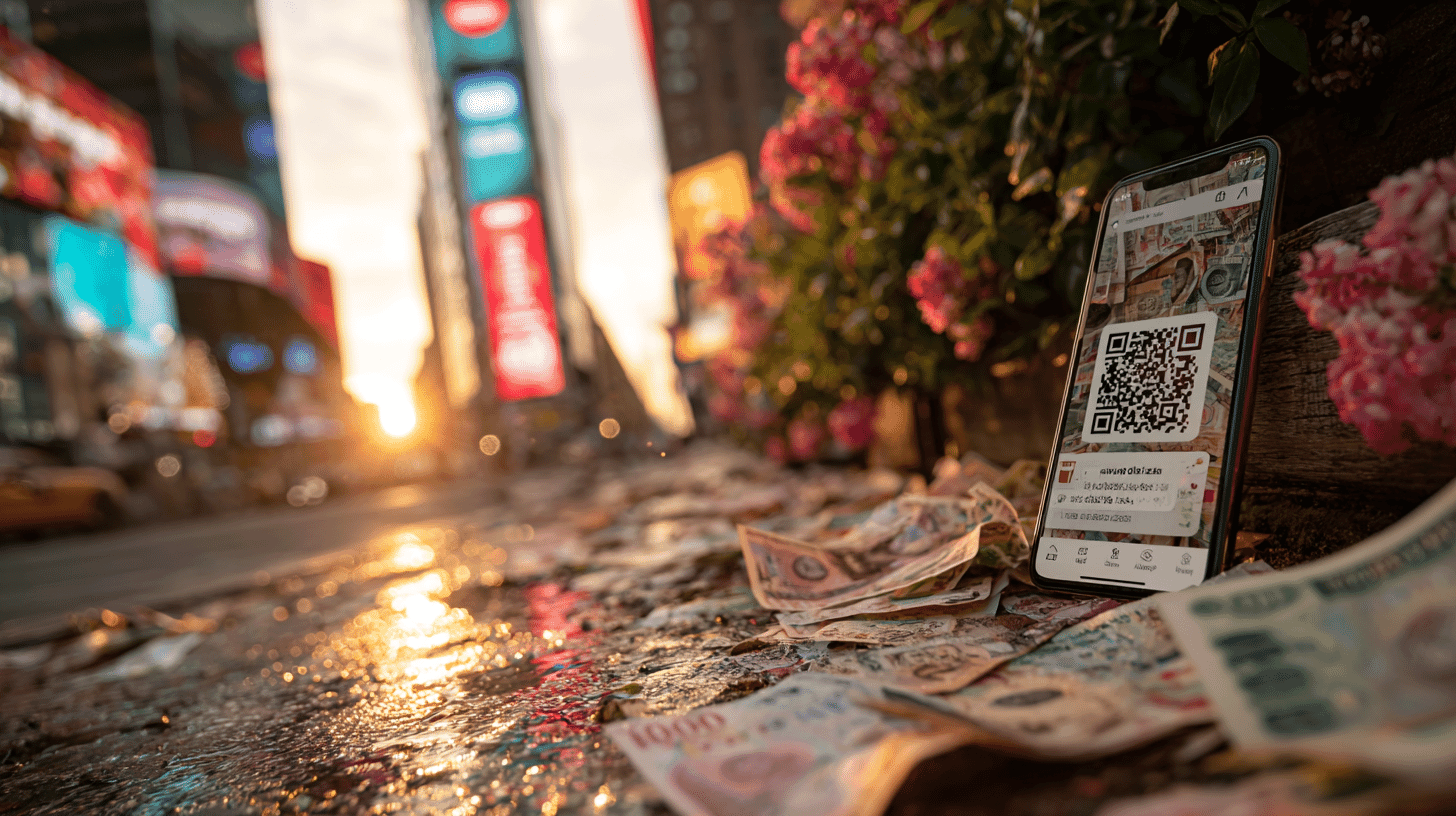
Imagine a payment app used by more than half of Japan's population. That app just went public on Wall Street. PayPay, with 73 million registered users and a 65% share of Japan's QR code payment market, listed on Nasdaq on March 12, 2026. The offer price was a cautious $16 a share, set amid Middle East tensions and volatile markets. Here is why this IPO matters far beyond Japan.
Japan's Payment Giant Arrives on Wall Street
On March 12, 2026, PayPay officially listed on the Nasdaq Global Select Market under the ticker symbol "PAYP." The company sold approximately 55 million American Depositary Shares (ADS) at an offer price of $16 each, raising around $880 million and achieving a diluted market capitalization of roughly $10.8 billion. This makes it the largest US IPO by a Japanese company in a decade.
What makes the pricing notable is that $16 came in below the initial marketed range of $17 to $20 per share. Despite institutional demand exceeding five times the number of shares available, PayPay and its underwriters, Goldman Sachs, J.P. Morgan, Mizuho Securities, and Morgan Stanley, opted for a conservative price point.
The reason? Geopolitical turbulence. Tensions in the Middle East had sent oil prices surging and triggered risk-averse sentiment across global markets. Several planned US IPOs were postponed outright. PayPay itself had to delay its roadshow (the series of presentations to institutional investors) before eventually pushing forward. Adding to the complications, a US government shutdown in 2025 had already disrupted SEC regulatory processes, further delaying the timeline.
Rather than risking a below-offer first-day close, a fate that has plagued most recent fintech IPOs, PayPay chose the "defensive pricing" approach: start lower, prove the business, and let the stock price rise on fundamentals.
A Star-Studded Investor Roster
The IPO attracted a remarkable lineup of cornerstone investors, entities that commit to purchasing shares before the public offering begins.
Abu Dhabi Investment Authority (ADIA), Qatar Holding (the investment arm of Qatar Investment Authority), and Visa International together indicated interest in up to $220 million worth of shares, representing approximately 25% of the total offering. These are among the world's most influential sovereign wealth funds and financial institutions.
The prospectus also notes that Visa is exploring a collaboration with PayPay in both Japan and the United States, which puts its stake somewhere between a financial bet and a business partnership. About 16% of the IPO was set aside for Japanese investors.
SoftBank Group, PayPay's parent company, will retain majority control after the listing. The IPO structure involved PayPay selling approximately 31 million new shares, while SoftBank Vision Fund II offloaded around 24 million existing shares.
From "Give Away ¥10 Billion" to National Infrastructure
To understand PayPay, you need to understand the cultural moment it emerged from.
When PayPay launched in October 2018, Japan was overwhelmingly a cash society. The country's cashless payment ratio sat at a modest 24.1%, far behind South Korea (nearly 99%), China (urban areas above 90%), and even the UK or Sweden. Japanese consumers trusted physical banknotes. Splitting bills with friends meant carefully counting coins and notes. The notion of paying for a ¥150 (about $1) can of coffee with a smartphone felt unnecessary to many.
PayPay entered this environment as a latecomer, Rakuten Pay, d-barai, and LINE Pay were already in the market. But PayPay did something audacious: it launched the "¥10 Billion Giveaway Campaign" (100億円あげちゃうキャンペーン), returning 20% of every purchase as points. The campaign was so popular that the entire ¥10 billion budget (approximately $66 million at the time) was consumed in just 10 days.
Simultaneously, PayPay offered zero transaction fees to small and medium-sized merchants for up to three years. In a country where mom-and-pop shops had long resisted card payment terminals due to cost, this was transformative. Suddenly, the local ramen shop, the neighborhood fish market, and even street festival vendors could accept digital payments with nothing more than a printed QR code.
By March 2026, PayPay has over 73 million registered users, meaning roughly 1 in every 2 people in Japan has an account. In QR code payment usage surveys from January 2025, PayPay commands a 65.1% share, far ahead of second-place Rakuten Pay (36.0%) and d-barai (28.6%).
The business has also matured financially. In the nine months from April to December 2025, PayPay reported revenue of approximately $1.8 billion and profit of roughly $680 million, a dramatic turnaround from its early years of deliberate losses. PayPay has expanded beyond payments into credit cards (PayPay Card), banking (PayPay Bank), securities trading (PayPay Securities), and in October 2025, acquired a 40% stake in Binance Japan, the country's licensed cryptocurrency exchange.
Japan's Cashless Journey: Where Things Stand
PayPay's US listing puts a spotlight on Japan's ongoing cashless transformation.
According to Japan's Ministry of Economy, Trade and Industry (METI), the country's cashless payment ratio reached 42.8% in 2024, with total transaction value of approximately $930 billion. This exceeded the government's target of 40% by 2025 a full year ahead of schedule. Credit cards account for the lion's share at 82.9% of cashless transactions, with QR code payments at 9.6% and electronic money (such as Suica transit cards) at 4.4%.
While 42.8% represents significant progress, up from around 20% a decade ago, Japan still trails global leaders. South Korea sits at approximately 99%, China's urban areas exceed 90%, and Sweden is around 80%. The US mobile wallet adoption rate is above 40%.
What makes Japan's case interesting is the cultural dimension. Japan has historically been a society that values cash deeply. The quality of Japanese banknotes is renowned worldwide, counterfeit rates are almost nonexistent, ATMs are abundant and reliable, and handing over crisp bills is considered a form of courtesy in many social contexts. Overcoming this cultural attachment to physical currency has required not just technology, but also changing deeply rooted habits.
The 2025 Osaka-Kansai World Expo served as a milestone, operating entirely on cashless payment systems and demonstrating to both domestic consumers and international visitors that a cash-free experience could work in Japan. The government now targets an eventual 80% cashless ratio, though no specific deadline has been set.
How PayPay Compares to Global Payment Giants
PayPay's Nasdaq listing invites comparison with payment platforms around the world.
Alipay & WeChat Pay (China): Alipay (operated by Ant Group) and WeChat Pay (by Tencent) dominate China's market with over a billion users combined. They function as true "super apps", handling everything from restaurant bills to hospital appointments to investments. Their influence is so total that even street vendors in rural villages rely on QR codes. However, their international expansion has primarily focused on serving Chinese tourists abroad, with limited penetration into local user bases overseas.
GrabPay (Southeast Asia): Singapore-based Grab started as a ride-hailing service before expanding into payments, food delivery, and financial services across multiple Southeast Asian countries. GrabPay benefits from operating across diverse markets but faces intense competition from GoTo's GoPay, ShopeePay, and others.
Paytm (India): India's digital payments landscape exploded after the government's 2016 demonetization policy, with Paytm, Google Pay (formerly Tez), and PhonePe competing for dominance in a market of over 1.4 billion people. India's Unified Payments Interface (UPI) has become a global model for real-time payment infrastructure.
PayPay's unique position: Unlike these multi-market players, PayPay's strength lies in its extraordinary depth within a single advanced economy. Achieving 73 million users in a country of 125 million is remarkable saturation. PayPay's IPO is not about expanding into overseas markets, it's about tapping global capital markets to fund continued domestic dominance and diversification into banking, insurance, and cryptocurrency.
For SoftBank Group, this listing follows the blockbuster 2023 IPO of chip designer Arm Holdings and is part of a broader strategy to unlock value from portfolio companies to fund massive AI investments, including its backing of OpenAI.
The Defensive Pricing Strategy Explained
The decision to price below the marketed range deserves closer attention, as it reflects broader trends in the global IPO market.
In early 2026, escalating tensions between the US, Israel, and Iran sent shockwaves through financial markets. Oil prices spiked, equities fell, and investor appetite for new listings dried up. Several high-profile IPOs were shelved entirely. PayPay's initial roadshow was postponed, and the company had already experienced delays in 2025 when a US government shutdown disrupted SEC processes.
Despite the order book being oversubscribed more than five times, PayPay chose $16, a price that implies the company was willing to leave money on the table to ensure a positive first-day trading experience. In the fintech sector, where most 2025 IPOs ended up trading below their offer price, this was a calculated bet on long-term credibility over short-term proceeds.
The strategy also reflects a lesson from SoftBank's own history. The group has experienced both spectacular IPO successes (Arm) and painful public market struggles (WeWork). For PayPay, entering the market with realistic expectations and room for upside may prove wiser than an aggressive valuation that collapses under market pressure.
In Japan, life without PayPay is already hard to imagine. From convenience stores to izakaya pubs, from taxis to vending machines, the signature "PayPay♪" chime has become part of the soundtrack of daily life. What about in your country, which payment app dominates your daily routine? Is cash still king where you live? We'd love to hear your perspective.
References
- https://www.bloomberg.com/jp/news/articles/2026-03-11/TBQZPFKGCTK900
- https://www.renaissancecapital.com/IPO-Center/News/117600/Japanese-fintech-PayPay-prices-$880-million-IPO-at-$16-below-the-range
- https://www.japantimes.co.jp/business/2026/03/12/companies/softbank-paypay-us-ipo/
- https://www.meti.go.jp/press/2024/03/20250331005/20250331005.html
- https://finance.yahoo.com/news/softbanks-paypay-plans-price-us-005743281.html
- https://www.pymnts.com/news/ipo/2026/paypay-eyes-lower-ipo-price-amid-market-turbulence/









Global Discussion
15 comments