
🎬 On paper, the Summer 2026 anime season looks the same whether you open it in Tokyo or São Paulo: Ghost in the Shell, Code Geass, a fistful of isekai sequels, the return of Bleach. Look a little closer and the two audiences are watching completely different seasons. One of the biggest titles reaches the rest of the world before it airs in Japan. Another is "new" in Japan but has been finished overseas for two years. Here's where Japanese and international expectations pull apart.
The one the world sees first
The headline act is Ghost in the Shell: THE GHOST IN THE SHELL, a fresh TV anime from Science SARU, the studio behind Dandadan, Devilman Crybaby and the film Inu-Oh. It starts July 7 on the KanTele / Fuji TV national late-night block, streams same-day at 11:30 p.m. on Prime Video in Japan (with other domestic services following from July 8), and goes out simultaneously as a Prime Video exclusive across more than 240 countries and territories (mainland China, Russia and Vietnam excepted).
What makes this one unusual is the order of operations. The show had a special screening at the Annecy International Animation Festival in France in June, a premiere panel at Anime Expo in Los Angeles in early July, and a worldwide Prime Video rollout, all before or alongside its Japanese broadcast. For a franchise this deeply woven into global pop culture, the global-first rollout is telling. Ghost in the Shell is cyberpunk scripture in the West. Its fingerprints are on The Matrix, on decades of sci-fi design, on the way a whole genre imagines the near future. Amazon is betting on that global reverence, not on domestic ratings.
In Japan the anticipation is high; it topped a summer most-anticipated poll, just ahead of Bleach's finale. But the mood is also split, because the staffing looks like a genuine gamble. The director, credited as Mokochan, is helming a series for the first time after working as assistant director on Dandadan. Series composition and scripts come from Toh Enjoe, an Akutagawa Prize-winning novelist whose previous anime, Godzilla Singular Point, was so densely science-fictional that plenty of viewers admitted they lost the thread. The key art hews close to Shirow Masamune's original manga rather than the cool, heavy Production I.G look most fans grew up on, hinting at something more playful. Japanese fans are excited and nervous in equal measure. Overseas, the reverence is doing most of the talking, and the worries have barely registered.
The show Japan is "finally" getting, and the West already finished
Then there's Code Geass: Rozé of the Recapture, which lands on the Animeism block in Japan on July 11. In Japan this reads as an event: a mecha franchise celebrating its twentieth anniversary, finally getting a proper TV airing.
For most of the world, it's a rerun. Rozé first ran in Japanese theaters as a four-part film series back in 2024, then went out globally on Disney+ (under the Star and Hulu brands) as twelve weekly episodes starting that June. International fans watched the whole thing, ending included, two years ago. So the July 2026 broadcast that feels fresh in Japan is, for a Brazilian or French or Filipino fan, a nostalgia trip at best. Same title, same week in the seasonal charts, two completely different relationships to it.
The girls'-school comedy with a secret weapon
The reverse gap is just as interesting. Young Ladies Don't Play Fighting Games (Tai Ari Deshita) is, on its surface, a low-key comedy about students at an elegant all-girls academy who sneak off to play fighting games where games are banned. In Japan it's a pleasant mid-tier premiere. Abroad it has a hook that punches well above that.
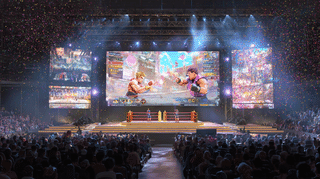
The anime, from studio Diomedéa, features a real in-game collaboration with Capcom's Street Fighter 6. The fictional game the characters obsess over is being replaced on screen by actual SF6 footage. For the global fighting-game community, that's a magnet. This is the crowd that fills EVO, argues about frame data and treats the genre as a lifestyle. Add an opening theme by Hanabie., a Japanese band with a real international touring following, and Crunchyroll carrying it worldwide, and a modest domestic title becomes a sleeper overseas pick. It premieres July 7.
Old favorites, split down the middle
The rest of the season keeps drawing the same line. The globe-spanning heavyweights are the long-running sequels: Bleach: Thousand-Year Blood War returns on July 25 with its fourth and final cour, subtitled Kashintan, and isekai juggernauts Mushoku Tensei III (July 5) and Saga of Tanya the Evil II arrive with enormous, loyal overseas fanbases that dwarf the casual domestic audience. The Elusive Samurai and Grand Blue Dreaming season 3 round out the crowd-pleasers.
Some titles run the other way. Iron Wok Jan!, a cult cooking manga getting its very first TV adaptation after decades, carries real weight for a certain Japanese reader but limited name recognition abroad, where Food Wars owns the culinary-battle lane. Magical Girl Lyrical Nanoha EXCEEDS is pure nostalgia for veteran Japanese otaku but a far smaller story internationally.
Underneath all of it runs a fragmented streaming map that didn't exist a decade ago. Prime Video has Ghost in the Shell. Disney+ had Code Geass. Netflix took worldwide exclusives on Baki-dou and Kyoto Animation's new original Nijusseiki Denki Mokuroku (roughly, "20th Century Electric Catalogue"). Crunchyroll carries much of the rest. Where a title lands now decides who gets to build expectations around it, and when.
What the gap really tells you
None of this means one audience is right and the other wrong. It's that a single seasonal chart hides two different clocks. Japan's is set by broadcast slots and theatrical runs. The world's is set by streaming deals, festival premieres and licensing windows that increasingly ignore the domestic calendar entirely. When Ghost in the Shell greets Los Angeles and Annecy before it greets Tokyo, the old assumption that anime flows outward from Japan on a delay is breaking down.
Which season are you watching this July, and does your streaming lineup match a friend's on the other side of the world?
References
- https://www.famitsu.com/article/202607/79761
- https://theghostintheshell.jp/news/the-ghost-in-the-shell-streaming
- https://en.wikipedia.org/wiki/Code_Geass:_Roz%C3%A9_of_the_Recapture
- https://en.wikipedia.org/wiki/Young_Ladies_Don%27t_Play_Fighting_Games
- https://en.wikipedia.org/wiki/Bleach:_Thousand-Year_Blood_War








Global Discussion
5 comments