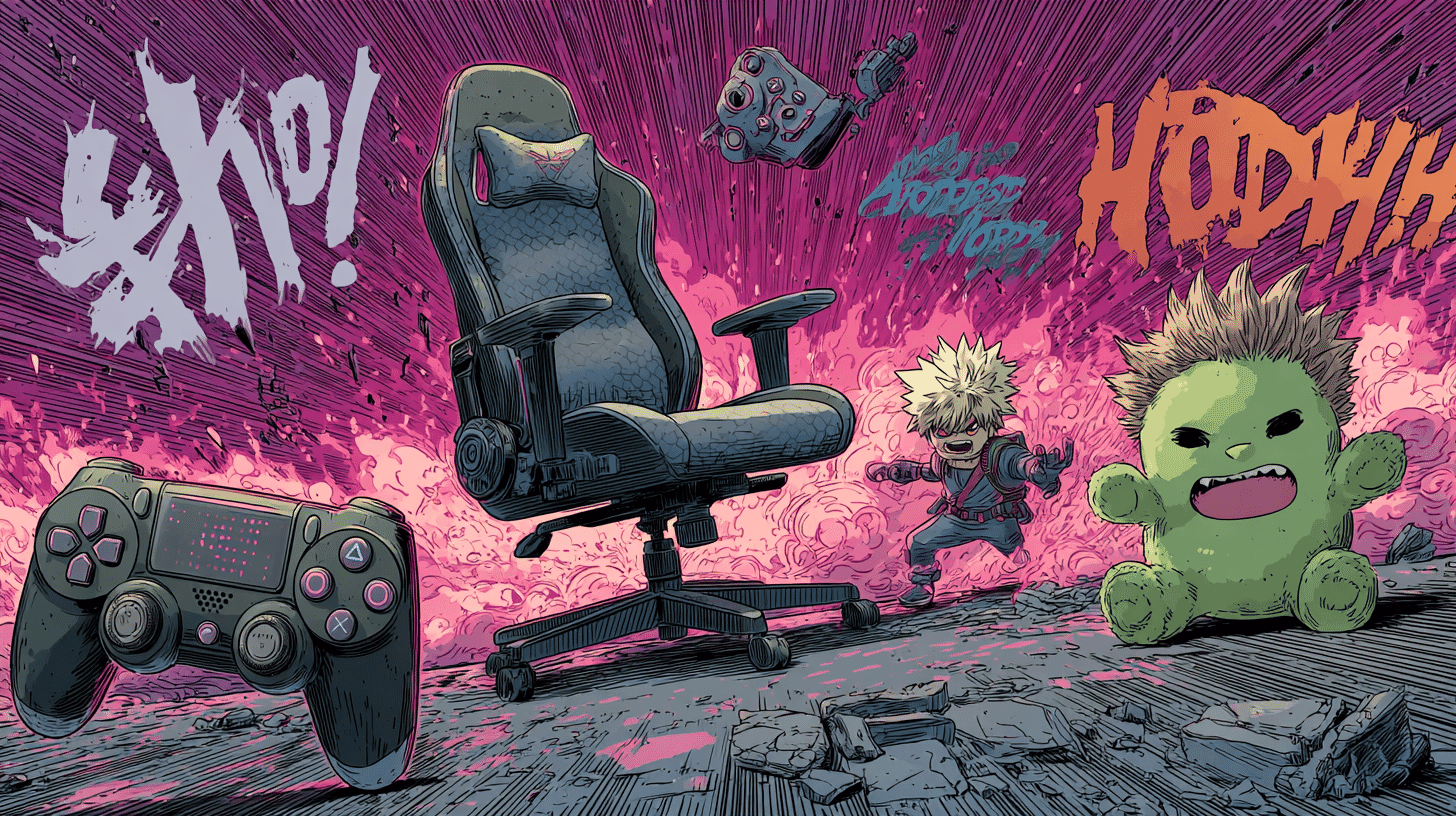
Baseball gloves. Golf clubs. Track spikes. For nearly 120 years, Mizuno has outfitted Japanese athletes across every traditional sport. Now, the legendary sports manufacturer is stepping into a new arena: fighting games. And not as a side gig, Mizuno is launching a Street Fighter 6-themed leverless controller and a dedicated gaming chair, built around the philosophy that "gamers are athletes of body movement." Here's what the global FGC needs to know about this unusual crossover.
Three Products: The Street Fighter 6 x Juri Collaboration
On April 27, 2026, Mizuno announced its full-scale entry into esports gear. Pre-orders begin May 1, 2026 at 8:00 AM JST on the crowdfunding platform Makuake, with shipping starting mid-July 2026.
The lineup includes three products:
- Gaming Chair "Hagibis", ¥121,000 (approx. $761)
- Gaming Controller "Hagibis", ¥99,000 (approx. $623)
- Blanka-chan Doll Vibrating "Borurecchi", ¥8,800 (approx. $55)
All three feature an official collaboration with Street Fighter 6 (Capcom). The chair's headrest and two buttons on the controller's right side feature character art of Juri. The Blanka-chan doll, meanwhile, is exactly what it sounds like, a vibrating massage toy shaped like the iconic green-furred Brazilian fighter.

https://corp.mizuno.com/jp/news-release/2026/20260427
The Philosophy: Gamers Are Body-Movement Athletes
Founded in 1906, Mizuno is a global sports manufacturer best known for baseball gloves, golf equipment, and track and field gear. Its accumulated expertise centers on one thing: the science of athlete body mechanics. With this announcement, the company stated it will "develop esports gear that focuses on the body-movement mechanisms unique to game players."
The Hagibis controller's design philosophy reflects this athletic heritage:
Asymmetric ergonomic surface, The left side curves convex; the right side is concave. The reasoning: the left hand handles directional commands and benefits from a raised surface for precise inputs, while the right hand needs flexibility for button-to-button movement and is supported by a slight depression. This is the kind of biomechanical thinking Mizuno applies to baseball pitching forms.
Separated button layout, Most existing leverless controllers cluster buttons in the center, which forces players to bring their hands close together and gradually slouch into a hunched posture during long sessions. Hagibis intentionally separates the left and right button clusters, encouraging an open-chest posture that reduces fatigue.
The body is photopolymer resin, buttons are ABS, and dimensions are 400mm wide × 200mm deep × 75mm tall, weighing about 1.3kg. Importantly, the controller is made in Japan, a fact likely to resonate with the global FGC.
Context: Where Hagibis Sits in the Leverless Market
The fighting game controller world is firmly in the "leverless era." Beginning around 2019, top players like Daigo Umehara and Tokido moved away from traditional arcade sticks to button-only controllers led by the original Hit Box (USA). Modern champions including Kawano (SFV EVO 2022 winner) and Higuchi (Capcom Cup 12 top 4) all play on leverless.
Here's how the leverless market is currently priced globally:
- Hit Box (USA, official): ~$200+
- Snack Box Micro (Junk Food Arcades, USA): $200–300
- Razer Kitsune: ~$300
- Victrix Pro KO (PDP, USA): $300–500
- Haute42 (China, value brand): $80–150
- High-end custom builds (Furin Arcade etc.): $500–700+
At $623, the Hagibis controller is clearly aiming at the premium tier. Mizuno isn't competing with budget Chinese imports, it's targeting buyers who would otherwise consider boutique custom builds. The pitch is "Made in Japan + heritage sports brand + official Juri collab + unique ergonomics," wrapped in a 119-year reputation for athletic equipment.
What r/Fighters Will Probably Argue About
Reddit's r/Fighters is the global FGC's primary English-language hub, and this announcement hits on multiple discussion points the community loves debating.
1. The "Made in Japan" appeal. Despite cheap Chinese alternatives flooding the market, competitive players still associate Japan with premium FGC hardware. Sanwa pushbuttons are the world standard. A fully Japan-built controller from a legacy brand carries weight.
2. The novel ergonomic claims. Asymmetric surfaces and separated buttons aren't standard among current major leverless controllers. When prototypes were shown at TGS 2025, Japanese reactions ranged from genuinely curious ("this curve might reduce thumb strain") to humorous ("looks like a butt").
3. The price debate. Expect a split between "$623 for plastic is highway robbery" and "Japan-made + brand premium + IP collab justifies the cost." Same conversation that happens around every premium leverless launch.
4. EVO Japan 2026 hands-on. Mizuno will demo all three products at EVO Japan 2026 (Tokyo Big Sight, May 1–3, 2026). EVO Japan draws top international pros, and their first impressions on social media will likely make or break the controller's competitive reputation.
5. Official IP collaboration. Licensed character art on a serious-tier leverless is still rare. Juri has a strong global fanbase and could drive collector interest beyond the FGC.
The Blanka-chan Vibrator: Wellness, or Wonderfully Strange?
And then there's the Blanka-chan Doll Vibrating Borurecchi, a product name that will absolutely trend on FGC Twitter.
Mizuno's "Borurecchi" line is a series of vibrating massage tools originally marketed for athletic recovery. The Blanka-chan version is the line's first vibrating model: press the button on the doll's right hand, and it vibrates for muscle release. Players are meant to press it against the chest, neck, or shoulders while seated in the gaming chair to relieve tension from extended play. It weighs 525g and stands 300mm tall.
It's easy to laugh at the concept. Blanka, the electric Brazilian wild man from Street Fighter 2, repackaged as a plush vibrating massager. But this fits the broader Mizuno thesis: if esports really is sport, then player conditioning is a real product category, and a sports manufacturer is uniquely positioned to address it.
Mizuno's Makuake Track Record
This isn't Mizuno's first crowdfunding rodeo. Past Makuake launches include:
- 2022: "THE MIZUNO ENERZY ULTRA LIGHT" (lifestyle running shoes)
- 2021: Mizuno Driving Shoes (driving footwear)
Both crossed beyond Mizuno's traditional athlete customer base, hit their funding goals quickly, and went on to perform well in retail. Makuake has become Mizuno's preferred channel for products without internal precedent, the lifestyle shoe was reportedly difficult to push through internal approval as a "non-athlete" product, but customer pre-orders validated the concept.
The timing is also strategic. With EVO Japan 2026 in May, EVO Las Vegas in June, and the inaugural Esports Nations Cup in Saudi Arabia in November, fighting game visibility will be at a multi-year high. And following Sahara's $1 million Capcom Cup 12 win in March, Japan's competitive scene has fresh momentum.
What's it like in your country?
Sports brands launching dedicated esports hardware is genuinely uncommon. Nike and Adidas sponsor individual esports teams in the US and Europe, but neither develops its own gaming peripherals. Mizuno's move, built on the premise that "gamers are athletes", feels distinctly Japanese in its earnestness.
If a 100+ year-old sports manufacturer in your country launched gaming gear tomorrow, would you buy it? Or would you stick with "specialists only"?





Global Discussion
14 comments