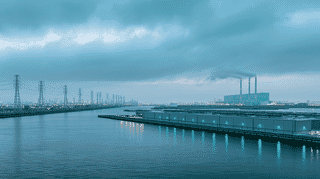
JERA, Dell and RHAELM plan a 400 MW AI data center at JERA's Chiba gas plant, powered without the public grid. Why there, what gas means, and the US case regulators blocked.
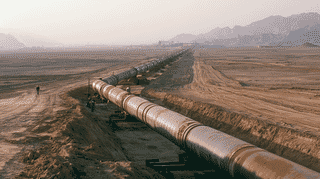
Transits through the Strait of Hormuz have fallen from 21.6 to 4.9 million barrels a day, and Gulf producers are building seven bypass pipelines. Japan restored procurement, but July brought a 634.5 billion yen deficit.
On August 24 Takaichi pledged continued aid to Ukraine and sanctions on Russia at the Kyiv summit. Japan also draws 8.9% of its LNG from Russia, and a US Senate bill counts it among the top five buyers of Russian gas.
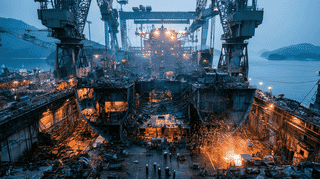
Imabari Shipbuilding posted 600.5 billion yen in fiscal 2025, and with Japan Marine United the group now sits at roughly 1 trillion yen, about $6.1 billion. The bigger news of July 23 was a deleted clause: LNG carriers are back in scope.
On May 4 in Canberra, PM Takaichi and PM Albanese signed five joint documents including the Economic Security Joint Declaration. Six critical mineral projects backed by $1.2B. How Japan's approach differs from the US IRA and EU CRMA, and what it means for global supply chains.
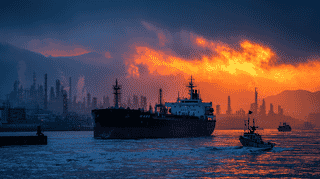
Two months into the de facto closure of the Strait of Hormuz, Japan took its first Russian crude cargo since the blockade began. Taiyo Oil bought Sakhalin-2 barrels on a spot contract at the request of Japan's energy agency, and the tanker reached Imabari on May 4. How the "Sakhalin exception" to the G7 and EU price cap works, how Germany, South Korea and India have played the same shock differently, and what it all reveals about Japan's structural exposure.
Tokyo Gas raises its monthly base fee by ¥150 ($0.94) starting October, the first hike since 1980. But in Japan, many are reacting with 'isn't 46 years of NO change the weird part?' A look at how Japan compares to US, UK, and Sweden gas bills, what yen weakness and LNG imports mean, and why this signals the end of Japan's deflation era.