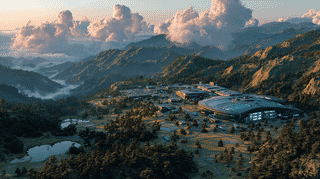
Japan's government has asked Japan Display Inc. (JDI) to run a $13 billion advanced display factory in the US — part of a $550 billion investment deal to ease Trump tariffs. We break down the defense angle, China dependency risks, and what it means for a company that's been on life support for years.
Japan's government has set an ambitious target of ¥40 trillion ($260B) in domestic semiconductor sales by 2040, announcing plans for cutting-edge AI research hubs. From Rapidus's 2nm chips in Hokkaido to TSMC's $17B 3nm fab in Kumamoto and JDI's $13B US display plant, we break down Japan's full semiconductor strategy—and compare it with the US CHIPS Act, EU Chips Act, and South Korea's and Taiwan's chip policies.
Japan's government has set a cap of 1.23 million foreign workers by fiscal 2028, replacing its widely criticized Technical Intern Training Program with the new "Ikusei Shūrō" (Development and Employment) system. The reform introduces job-switching freedom, but raises concerns about brain drain from rural areas and Japanese language education challenges. We analyze this historic policy shift alongside comparisons with South Korea's EPS, Singapore's levy system, and Germany's integration model.
The Bank of Japan held its policy rate at 0.75% at its March 18-19, 2026 meeting, as oil prices and yen weakness from the late-February Iran conflict weighed on the case for a hike. We cover Deputy Governor Himino and hawk Takata, the reflationist board nominees, the rate gap with the Fed and ECB, the yen carry trade, and the road to the June hike to 1.0%.
BOJ's most hawkish board member Hajime Takada urged further rate hikes in a Kyoto speech, using a "gear shift" metaphor to describe Japan's monetary policy normalization. With the 2% inflation target nearly achieved and wage growth accelerating for a fourth year, we analyze what this means for global markets, the yen carry trade, and how Japan's path diverges from the Fed and ECB.
Japan's government nominated two pro-easing "reflationist" academics to the BOJ policy board, reflecting PM Takaichi's dovish stance. The move sent rate hike expectations tumbling and the Nikkei to an all-time high of ¥58,583 (+2.20%). We analyze the yen impact, bond market reaction, and how this compares to the Fed and ECB's approach to central bank independence.
Japan's PM Takaichi pushes for a cross-party "National Council" to eliminate food consumption tax for two years. We break down the $32 billion revenue impact, risks to fiscal balance, yen depreciation concerns, and how Japan's 10% rate compares to VAT systems in the EU, UK, and Canada.
China's Commerce Ministry banned dual-use exports to 20 Japanese defense entities including Mitsubishi Shipbuilding, Kawasaki Heavy's aerospace arm, IHI Aerospace and JAXA, while adding 20 more firms such as Subaru and TDK to a watch list. Seen as a response to PM Takaichi's Taiwan remarks, the move puts rare earth and semiconductor material supply chains at risk. The list was expanded again in June 2026.
Japanese PM Sanae Takaichi reportedly pushed back against BOJ Governor Ueda's rate hike plans, sending the yen to 156 per dollar. The clash between political power and central bank independence echoes Trump versus the Fed and Erdogan versus Turkey's central bank. The BOJ went on to raise its policy rate to 1.0% in June 2026 and held there in July. Inside the US-Japan rate gap, carry trades, and how the story resolved.
A field-by-field breakdown of the 17 strategic sectors PM Takaichi named in her February 20, 2026 policy speech: AI and semiconductors, fusion, content, defense and the rest, with current standing, plans and key players, plus the public-private investment roadmap released in June 2026 that runs to over 370 trillion yen through fiscal 2040.
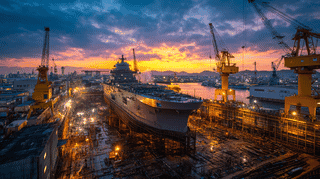
Japan, where 99.6% of trade moves by sea, is trying to rebuild its shipbuilding industry. The Takaichi government is putting $6.5 billion of public and private money into doubling capacity by 2035. From Mitsui E&S's world-first ammonia-fueled engine to Furuno Electric's 43% global share in marine radar, and the frigate export to Australia that was formally contracted in April 2026, here is where Japanese shipbuilding stands against China and South Korea.
Both the US and Japan are undergoing historic shifts in digital asset regulation in 2026. From Trump's GENIUS Act and Bitcoin Strategic Reserve to Takaichi's 20% flat tax and financial instruments law reform, explore how the world's two largest crypto-friendly economies are reshaping the future of digital finance.
Japan's Cabinet Office now projects a ¥800 billion primary balance deficit for FY2026, reversing an earlier ¥3.6 trillion surplus forecast. What the Takaichi administration's ¥18 trillion supplementary budget did to the fiscal-consolidation target, and to interest-rate risk.
Prime Minister Takaichi asked Keidanren to diversify supply sources for critical materials. With China tightening export controls on Japan, Tokyo is pushing seabed rare earth mining trials at Minamitorishima alongside international partnerships. In July 2026 the recovered mud was reported to be about 54% medium and heavy rare earths.
In January 2026, the Nikkei 225 closed above 54,000 yen for the first time in history. The "Takaichi Trade" reignites amid speculation of snap elections, with foreign investors buying large-cap stocks. Driven by yen weakness and expectations of expansionary fiscal policy, the index may reach 60,000. Explore Japanese reactions and market outlook.
In the February 8, 2026 general election, the LDP won a historic landslide with 316 seats on its own. This analysis covers why Prime Minister Takaichi called the snap election and what the ruling bloc's victory means for Japan's economy and financial markets.
Japan's 2025 Buzzword of the Year went to PM Sanae Takaichi's "Work, Work, Work, Work, Work" quote, sparking debate on work-life balance. Explore reactions to Japan's first female Prime Minister's controversial statement and the awards' selection process.