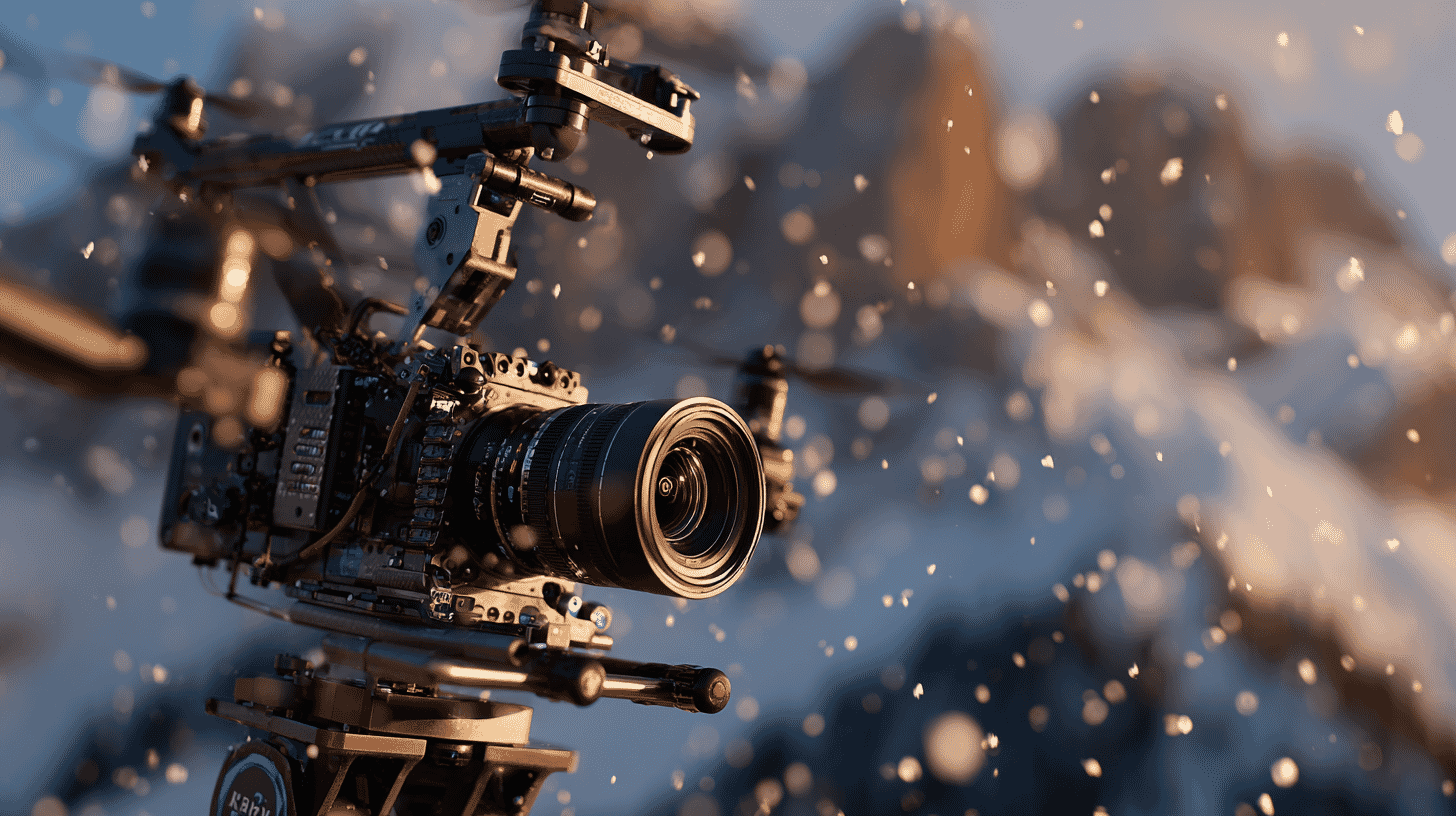
The top speed recorded in Alpine downhill skiing is about 160 km/h (100 mph). Chasing those athletes from a first-person view are drones, backed by more than 810 cameras and AI-powered 360-degree replays that render in just five seconds. At the heart of the technology behind the 2026 Milano Cortina Winter Olympics broadcast were Japanese companies: Sony, Canon, and Panasonic. Here is a closer look at the Japanese imaging technology that is reshaping how the world watches sports.
The Biggest Broadcast Operation in Winter Olympics History
The Milano Cortina Winter Olympics, which opened on February 6, 2026, was the largest broadcast production in the history of the Games. Olympic Broadcasting Services (OBS) deployed more than 810 cameras, along with 1,800 microphones, 50 jibs and cranes, and 12 cablecam rigs.
In 1956, the Winter Games held in the same Cortina d'Ampezzo were the first ever to be televised, using fewer than 10 cameras. Seventy years later, that number has grown more than 80-fold.
OBS delivered over 6,500 hours of content to broadcasters worldwide, including more than 900 hours of live coverage. To connect venues scattered across hundreds of kilometers of mountainous terrain, from Milan and Cortina d'Ampezzo to Val di Fiemme and Anterselva, OBS built an IP-based remote production system.
FPV Drones: Chasing Skiers at Over 140 km/h
The biggest talking point of the Games was the full-scale rollout of FPV (First Person View) drones. OBS deployed 25 drones in total, of which 15 were FPV units.
An FPV drone is a high-speed craft flown by a pilot wearing goggles who sees through the "drone's eye." The units used at these Games weighed about 243 grams and topped 140 km/h. With Alpine downhillers approaching 160 km/h, the FPV drones trailed athletes from behind, giving viewers the sensation of skiing down the slope themselves.
Each FPV drone is run by a three-person team: a pilot focused on flying, a director calling angles and timing, and a technician managing the aircraft. They coordinate over a dedicated channel to adjust flight paths and swap batteries quickly, since the batteries drain fast enough to need replacing after roughly two athlete runs.
Notably, some pilots are former athletes. Jonas Sandell, who covered ski jumping, is a former member of Norway's national team who used his competitive experience to anticipate athletes' movements.
FPV drones were used in nearly every sport except ice hockey, figure skating, and curling. In luge and skeleton, they even flew inside the ice walls for short stretches.
Cable Cameras vs. Drones
While FPV drones drew the spotlight, traditional rigs still played a key role. The cablecam, in which a camera travels at high speed along a wire strung parallel to the course, was used across 12 rigs at these Games.
The two have distinct roles. Because a cablecam is held by a wire, the risk of it falling onto athletes or spectators in a failure is extremely low, so it is more readily permitted directly above or close to competition, where safety is paramount.
FPV drones, by contrast, follow strict rules: keep a set distance from athletes, and never shoot from directly ahead or overhead. Their flight paths are designed so that even a loss of control would not disrupt the competition.
Japan's Camera Makers and the "Cinelive" Approach
No account of these Games is complete without Japan's camera makers. OBS technology partners included Sony, Canon, Panasonic, and Fujinon (part of the Fujifilm group).
Japanese firms hold about 88 percent of the world market for camera bodies, and nearly all the cameras used in Olympic press and television coverage are Japanese-made.
The big leap this time was an approach called "Cinelive." Coined by Panasonic, it replaces the traditional broadcast camera (a 2/3-inch sensor) with Super 35mm and full-frame cinema cameras in live coverage.
Traditional broadcast cameras are sharp and reliable, but their images tend to look flat and documentary. Large-sensor cinema cameras deliver the shallow depth of field of film, making athletes stand out crisply while the background blurs beautifully.
NBC Sports deployed more than 100 Sony cameras, anchored by HDC-series broadcast system cameras. It also mounted Cinema Line cameras such as the Sony FX6 on gimbals to produce cinematic close-ups.
Canon supplied NBC Sports with 115 UHD broadcast lenses, offering optics from high-ratio zooms to super-telephotos to capture ice and snow events in fine detail.
Panasonic fielded large-sensor broadcast cameras led by the AK-PLV100, which drives the "Cinelive" concept, along with deep-learning auto-framing and other tools built for AI-era production.
AI and the "Five-Second Replay"
Another revolution was the use of AI. These Games introduced next-generation real-time 360-degree replays. Working with Alibaba Cloud's AI algorithm, the system replays a decisive moment from any angle. Rendering a 360-degree replay once took days; it was cut to 30 minutes, and at these Games it was completed in just five seconds. OBS CEO Yiannis Exarchos said this speed would have been impossible without AI.
In figure skating, computer vision instantly measures and displays jump height, airtime, and speed. In biathlon, AI cameras automatically track each nation's featured athletes and deliver shooting-lane data and split-screen views in real time.
AI-based audio processing was also introduced. It emphasizes the signature sounds of a venue, such as ski edges carving snow and skate blades cutting ice, while keeping the crowd's cheers natural. This "sound design" is also changing the viewing experience.
The Noise Debate
New technology drew more than praise. Some worried the shrill whine of FPV drones might break athletes' concentration; on broadcasts, a high-pitched propeller sound reminiscent of an F1 engine was frequently audible.
On social media, some compared it to the "vuvuzela," the noisemaker that stirred controversy at the 2010 FIFA World Cup in South Africa. Games organizers responded that they had run repeated test flights beforehand and had received no complaints from athletes.
Private 5G Linking Mountain Venues
With venues spread across hundreds of kilometers of mountainous terrain, infrastructure to transmit huge volumes of video reliably became essential.
The solution was the latest communications technology, including private 5G. Footage from each venue was gathered over an IP network to the International Broadcast Center (IBC) in Milan. The IBC covers about 25,000 square meters, 20 percent more compact than the Beijing 2022 facility, yet handles more through highly virtualized workflows.
Japan's Olympic Imaging Legacy Since Tokyo 1964
Japan's camera technology first made its mark at the Olympics at the 1964 Tokyo Games, when the Nikon F took over the photographers' seats and Japanese single-lens reflex cameras became the standard for Olympic photography. For more than 60 years since, Canon, Nikon, and Sony have competed for share in Olympic press photography.
In broadcast cameras too, Sony, Panasonic, and Canon hold the top positions worldwide. In image sensors, Sony commands a majority of the global market, and many of the sensors in the world's smartphones and digital cameras are Japanese-made.
What these Games delivered was the sensation of "the same speed, the same eye level" as the athletes. As technology advances this far, sports broadcasting shifts from a record of results to an experience.
How do people in your country enjoy Winter Olympics coverage?
References
- https://news.yahoo.co.jp/articles/8ea69373265daaa6b7db2dbcbadcd6c3e5590b56
- https://www.olympics.com/ioc/news/innovative-broadcast-coverage-bringing-fans-closer-to-action-than-ever-before-at-milano-cortina-2026
- https://www.cined.com/milano-cortina-2026-camera-technology-810-cameras-cinematic-live-workflow-ai-replays-and-fpv-drones-redefine-olympic-broadcasting/
- https://www.redsharknews.com/2026-winter-olympics-broadcast-tech-cameras
- https://www.nbcuniversal.com/article/drone-innovation-transforms-coverage-2026-milan-cortina-olympics








Global Discussion
15 comments