Nintendo and Sony once built a console together. In the early 1990s the two companies were co-developing a CD-ROM drive for the Super Famicom, the machine that fans call the Nintendo PlayStation. The development unit used in the earliest phase of that project has now surfaced after more than thirty years, and the only known surviving example has gone into an American game museum.
The Sony MSF-1: A Ghost from Gaming's Greatest "What If"
On March 4, 2026, the National Videogame Museum (NVM) in Frisco, Texas, made an announcement that sent shockwaves through the retro gaming community. The museum had acquired the "Sony MSF-1," the earliest known development unit built for Sony's planned CD-ROM attachment for the Super Nintendo Entertainment System (SNES).
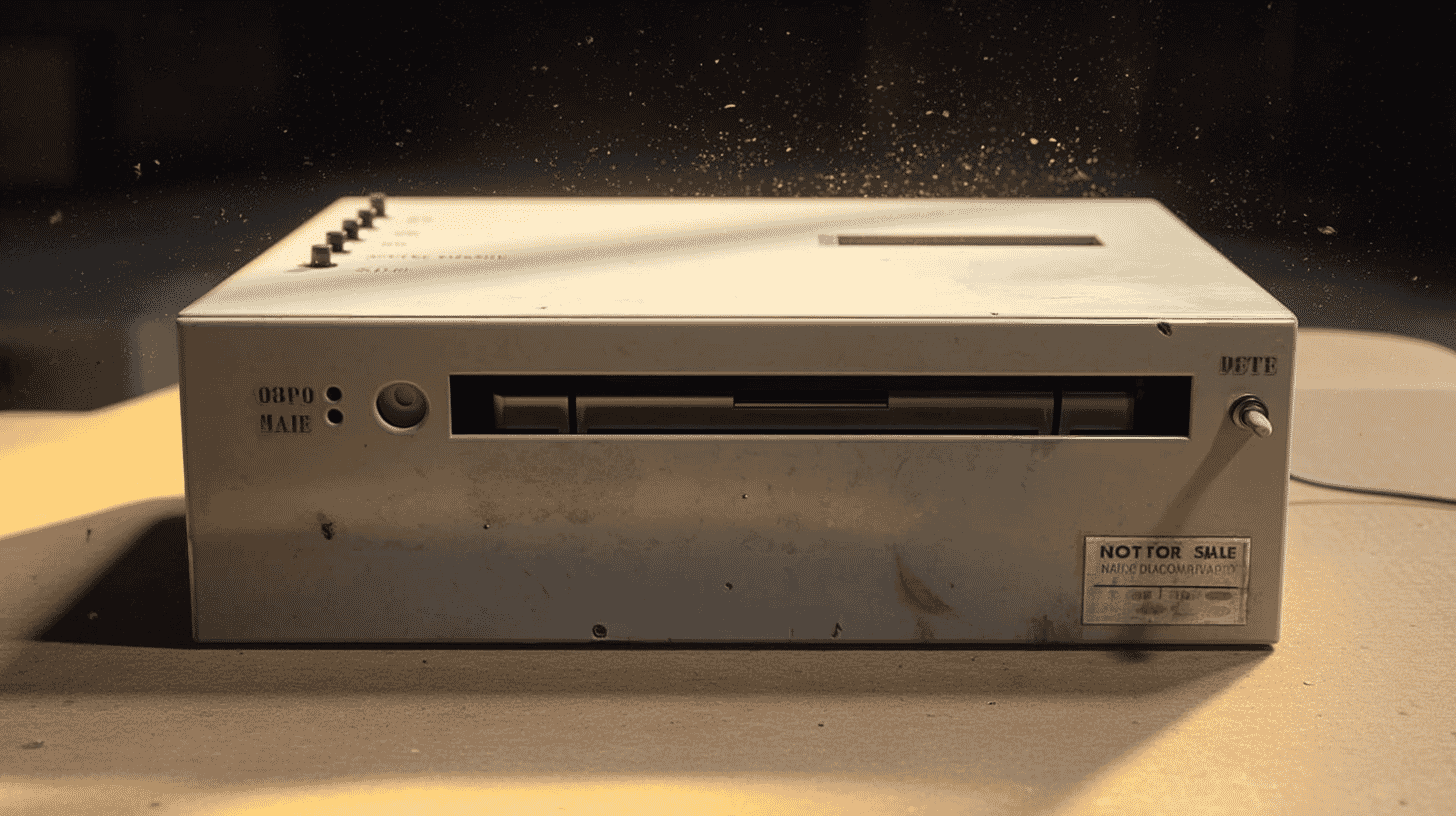
The NVM described the unit as the oldest surviving Nintendo PlayStation hardware artifact in existence and the only known unit of its type anywhere in the world. Unlike previous Nintendo PlayStation prototypes that resembled a retail product, the MSF-1 is a raw, unfinished piece of engineering hardware, covered in "Not For Sale" stickers and clearly designed for internal testing, not consumer eyes.
What Is the MSF-1? A CD-ROM Drive That Plugs into Your SNES
The MSF-1 is an attachment-style CD-ROM drive that connects to the SNES via its cartridge slot. The front panel features a CD insertion slit, while the top is lined with buttons for mode switching, fast-forwarding, and a mysterious "remain" function whose purpose remains unclear.
A pass-through cartridge slot on top allowed developers to load standard SNES cartridge data into memory alongside CD-ROM content. The unit also includes a parallel connector for data transfers. Notably, it doesn't run a full operating system, it was essentially a testing rig built to verify whether CD-ROM technology could work with the SNES hardware.
According to the NVM, the unit was used by Sony's ImageSoft division in Santa Monica, California, placing it at the very heart of Sony's early gaming ambitions.
The Nintendo-Sony Breakup: Gaming's Biggest "What If"
To understand why this boxy development kit matters so much, you need to know the story behind it, one of the most dramatic falling-outs in entertainment history.
In the late 1980s, CD-ROM technology was emerging as the next frontier for gaming. Discs offered vastly more storage than cartridges at a fraction of the manufacturing cost, and NEC had already entered the market with the PC Engine CD-ROM² system. Sony, eager to leverage its expertise in optical disc technology, approached Nintendo, then the undisputed king of home gaming thanks to the NES (Famicom in Japan). By 1990, the two companies had formally agreed to co-develop a CD-ROM adapter for the Super Nintendo.
Leading the charge at Sony was Ken Kutaragi, an engineer who would later be known as "the father of PlayStation." The project progressed smoothly, and at the Consumer Electronics Show (CES) in Chicago in June 1991, Sony officially unveiled the "PlayStation" prototype, a CD-ROM add-on for the SNES.
The very next day, Nintendo dropped a bombshell. The company announced it was scrapping its deal with Sony and would instead partner with Philips of the Netherlands to develop a CD-ROM peripheral. Sony had been completely blindsided.
The reasons for this dramatic reversal remain debated, but the most commonly cited factor is that Sony's contract gave it control over all CD-ROM software licensing, a clause that reportedly alarmed Nintendo's U.S. division. There are also accounts suggesting that Sony had begun developing software independently without Nintendo's approval, reportedly infuriating Nintendo president Hiroshi Yamauchi.
Ironically, the Nintendo-Philips partnership also failed to produce a CD-ROM adapter for the SNES. Philips did release a handful of Mario and Zelda games for its CD-i multimedia player, but these are widely regarded as some of the worst games ever made. Meanwhile, Sony channeled its frustration into building a standalone gaming console. In 1994, the PlayStation launched and went on to sell over 100 million units worldwide, fundamentally reshaping the gaming industry.
It is worth adding that Nintendo was not the only company to turn Sony down. Sega of Japan reportedly passed on a similar proposal. Both of the era's console giants waved off the partner that would sit on top of the industry a few years later.
How This Differs from the 2020 Auction Prototype
This isn't the first time a Nintendo PlayStation prototype has made headlines. In 2020, a later-stage prototype, one that resembled a retail console with both a cartridge slot and a built-in disc drive, sold at Heritage Auctions for $360,000 (approximately ¥38 million at the time). That unit was believed to be a survivor from a pre-production run of around 200 consoles.
The MSF-1, however, predates those 200 units by a significant margin. It's not a mock-up of what the consumer product might look like, it's the tool that engineers used to figure out whether the concept was even feasible in the first place. In archaeological terms, if the 2020 prototype was a polished artifact from a civilization's peak, the MSF-1 is the foundation stone.
Why Preservation Matters
Gaming history is notoriously fragile. Cartridges degrade, optical discs rot, and prototype hardware is almost always destroyed when projects are canceled. The fact that the MSF-1 survived over three decades is nothing short of remarkable. Its acquisition by a museum dedicated to game preservation ensures that this piece of history will be properly maintained and made accessible to future generations.
The NVM has indicated plans to make the MSF-1 a centerpiece of its collection, giving visitors a tangible connection to a moment that changed the course of the gaming industry. Researchers also hope to study the unit's internal components and determine whether it can still power on.
It's worth noting that Ken Kutaragi, the co-creator of PlayStation, reportedly owns a similar Super Nintendo CD unit, but those prototypes are different from the extremely early MSF-1 development hardware.
If Nintendo and Sony's partnership had survived, gaming history would look radically different. There might never have been a standalone PlayStation, no PS2, no PS5, or perhaps the SNES would have dominated the CD-ROM era in ways we can only imagine. The MSF-1 is a physical reminder of that fork in the road, and it's fascinating to think about the alternate timeline it represents.
What does your country's gaming history look like? Are there any "what if" moments or lost prototypes that you wish had survived? Share your thoughts!
References
- https://www.4gamer.net/games/999/G999903/20260313039/
- https://x.com/nvmusa/status/2029301026482979305
- https://nvmusa.org/
- https://www.notebookcheck.net/Retro-s-holy-grail-Sony-s-Nintendo-PlayStation-prototype-acquired-by-the-National-Video-Game-Museum.1244921.0.html
- https://videocardz.com/newz/national-videogame-museum-acquires-sony-msf-1-nintendo-playstation-prototype
- https://www.engadget.com/gaming/the-national-videogame-museum-has-acquired-the-mythical-nintendo-playstation-173529085.html







Global Discussion
15 comments