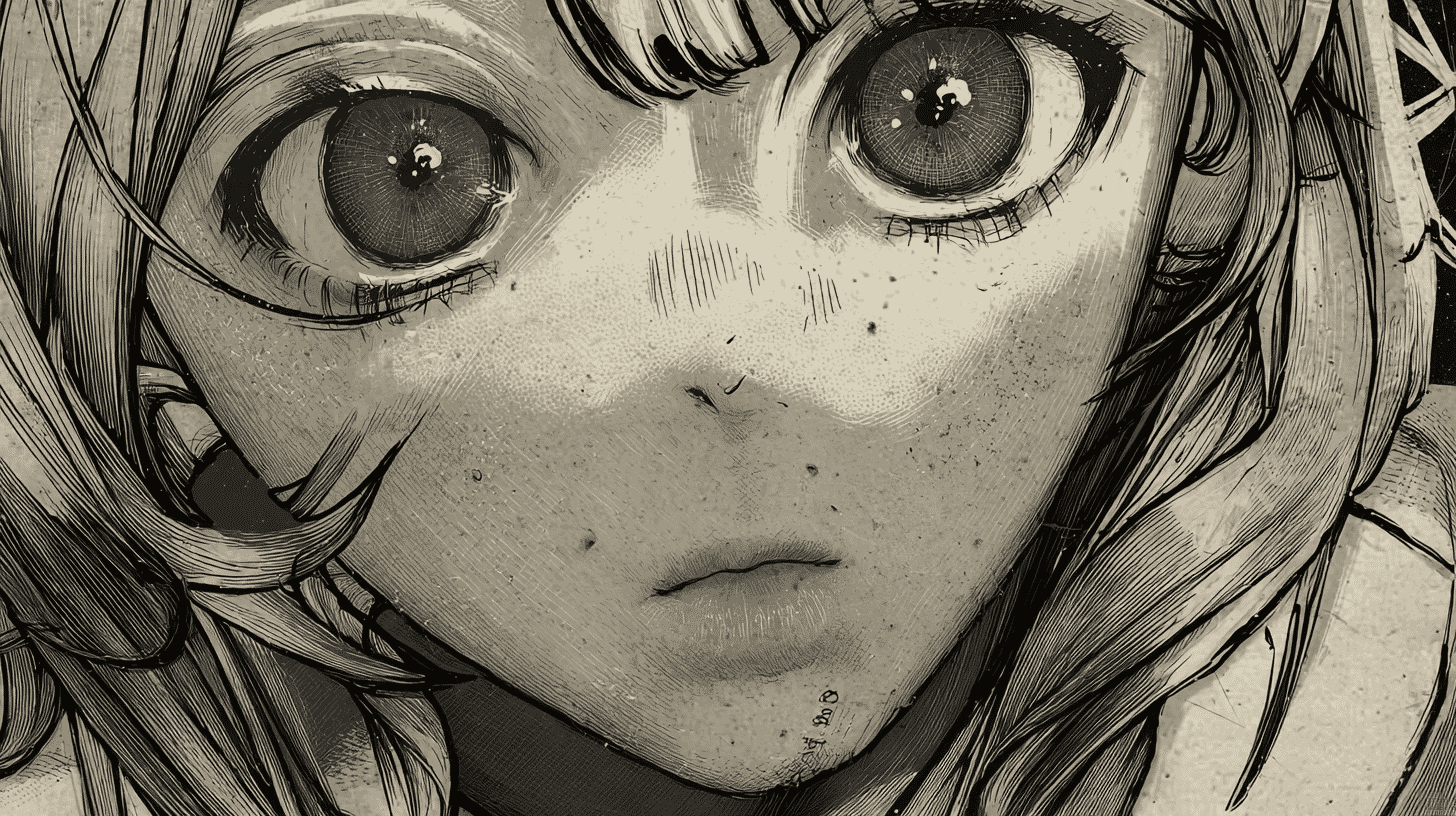
Dragon Ball, Sailor Moon, Precure, Kamen Rider: Toei holds some of the most iconic anime IPs on the planet. And yet, for its brand-new games label, it chose a completely different path, no legacy IP at all. Instead, three original indie titles: a ballpoint-pen horror odyssey, a dark murder-mystery on a nightmare island, and a game where you don't kill enemies, you "debug" them. Welcome to Toei Games' opening move.
Toei Games drops its first 3 titles
On April 24, 2026, Toei Games, the newly established games division of legendary Japanese film company Toei, officially announced its first three published titles: "KILLA" (developed by Black Tangerine / Kenkitsudan), "HINO" (developed by UnGloomStudio), and "DEBUG NEPHEMEE" (developed by Nephemee Studio). All three are confirmed for Steam, with "KILLA" scheduled for release sometime in 2026.
These titles share one striking feature: none of them use any of Toei's existing IP. Despite sitting on a treasure chest that includes Dragon Ball, One Piece's theatrical arm, Sailor Moon, Precure, Kamen Rider, and Super Sentai, franchises adored by fans worldwide, Toei Games deliberately chose not to reach for them. The label is instead publishing entirely fresh, original works from independent creators across Japan and abroad.
That strategic choice is the real story here.
"KILLA": nine suspects whose names contain "Ra"
"KILLA" is a dark, atmospheric mystery adventure from Japanese indie studio Black Tangerine (Kenkitsudan). The protagonist is Valhalla, a young woman whose orphanage was destroyed by war, and whose beloved mentor, a figure she considered more than family, is brutally murdered. With the dying words "Kill Ra" as her only clue, Valhalla sets out on a revenge quest.
Her journey leads to a mysterious island, where an otherworldly tea party promises to grant any wish. Nine suspects gather, each with "Ra" somewhere in their name. Using a power called "Resonance," players dive into the suspects' memories, piecing together fragments of dreams to reconstruct the truth.
A playable demo is already available on Steam, and the game will be showcased at Tokyo Game Dungeon 12 on May 3, 2026, one of Japan's largest indie game events. As Toei Games' flagship launch title, "KILLA" is scheduled for full Steam release within 2026.
With its multiple-ending structure and memory-dive mystery mechanics, "KILLA" sits in a space familiar to fans of Danganronpa, Master Detective Archives: Rain Code, and Return of the Obra Dinn, all genres with devoted Western audiences.
"HINO": a horror adventure drawn entirely in ballpoint pen
"HINO," developed by UnGloomStudio, is a horror adventure with an utterly distinctive visual identity. The game's artwork is based entirely on ballpoint-pen illustrations by artist Yatara, a Japanese illustrator who has built a devoted SNS following for dense, intricate fantasy worlds rendered in a single medium.
The setting is a world swallowed by darkness. The young girl Hino awakens in an abandoned nursery, wielding a single "lightbulb staff" that gives her life-force. Setting out in search of a safe haven, she's joined by an eccentric companion named "Monimoni Skeleton", a cafe-au-lait-can-obsessed bone creature. Together, they cross a landscape infested with monsters, and edge closer to a shocking truth about their own identities.
Toei Games has confirmed the game will tell a parallel narrative distinct from Yatara's original work, giving existing fans something new even if they know the source material. A Steam page is live, but a release date hasn't been set.
The ballpoint-pen aesthetic moving in real time is unlike anything else in the current indie scene, it's the kind of visual hook that tends to go viral the moment a trailer drops.
"DEBUG NEPHEMEE": where combat means understanding, not killing
The third title, "DEBUG NEPHEMEE" from Nephemee Studio, has the most unusual design philosophy of the three. The world is infested by "bugs", glitches that have begun consuming reality, and the creatures who live there, called Nephemees, are trapped inside these bugs. Your goal isn't to defeat them. It's to save them. To debug them.
Combat only begins once you deeply understand your opponent. Every Nephemee has distinct values and ways of thinking, and their attacks directly manifest these inner lives. Players engage in four types of mini-games, dodging, blocking, glitching, and healing, to "bug out" the opponent. Once that happens, the player enters a "debug" phase, hacking into the Nephemee's personality and memories. The more you learn, the more the story itself shifts shape.
If that design philosophy sounds familiar, it should. "DEBUG NEPHEMEE" shares DNA with UNDERTALE, OMORI, and other indie titles that reshaped what RPG combat could mean. For Western indie communities already attuned to that lineage, this one has serious potential.
Why did Toei lock away its biggest guns?
Toei Company was founded in 1951 and celebrates its 75th anniversary this year. Its catalog is staggering: Dragon Ball, One Piece theatrical films, Sailor Moon, Precure, Kamen Rider, Super Sentai, Digimon, IPs with ferociously loyal global fanbases. By pure business logic, licensing these out for games should be the safest bet imaginable.
So why original indie titles instead?
Toei Games' official statement declares the goal as "creating entirely new IPs that will captivate the world, starting from games." Licensed adaptations carry built-in ceilings, they tend to become fan-service projects, which attracts existing fans but rarely expands the audience, and stepping outside the original's comfort zone risks alienating those fans.
Original IP, on the other hand, can flow in the opposite direction. A character or world born in a game can be ported to film, anime, or television, the direction Toei knows best. President and CEO Fumio Yoshimura described games as "an extraordinarily global form of entertainment that continues to spread beyond language and national borders." Read between the lines, and the strategy becomes clear: build IP from games, feed it into the Toei media ecosystem.
The Japanese film industry's gaming gold rush
What makes this particularly interesting is that Toei isn't alone. Japan's other major film companies have all pivoted toward games recently. Toho established "TOHO Games." Shochiku launched "Shochiku Games." Publishing giant Shueisha runs "Shueisha Games." Even Parco, a Japanese department store chain, launched "PARCO GAMES" for indie publishing. With Toei's entry, a clear pattern has crystallized: Japan's film, publishing, and retail giants are all making serious moves into gaming.
Each has a slightly different angle. TOHO Games and PARCO GAMES lean toward arthouse and experimental indies. Shueisha Games leverages its manga catalog. Toei Games has now staked out a unique position: "no legacy IP, only original new IP creation." As these strategies diverge, a new segment of the Japanese games industry is taking shape.
One charming detail: Toei Games' brand logo was designed by Kairosoft, the studio behind Game Dev Story and other pixel-art management sims beloved by international players. Even Toei's iconic "wave on the rocky shore" film opening got a pixel-art remix, signaling clear respect for gaming culture.
What Western gaming communities are likely to discuss
Western coverage has been fast. Gematsu, Nintendo Life, and CBR have all already reported on the lineup. Expect the following threads to play out across Reddit's r/JRPG and r/patientgamers, ResetEra, and NeoGAF: First, disappointment, "Why not Dragon Ball? Why not One Piece?" Second, the counter-argument, "A AAA company funding indies is genuinely good for the ecosystem." Third, strategic analysis, "Building original IP is probably the smarter long-term play than another licensed franchise game."
"DEBUG NEPHEMEE" especially has strong odds of resonating with the UNDERTALE-descended philosophical-RPG community. "HINO" is the kind of visually distinctive title that dominates Steam Next Fest discussions. And "KILLA" will find its audience wherever mystery-adventure fans gather.
A new frontier for the Japanese games industry
Something genuinely new is happening. Nintendo, Sony, Capcom, Square Enix, the established Japanese gaming titans, now have company in the form of publishers from entirely different industries. Film companies, publishers, retail chains, all businesses that have spent decades learning how to deliver stories.
When these companies team up with independent developers to target the global market, the ripple effects for Japan's indie scene could be significant. Financial muscle, marketing reach, and distribution infrastructure from established giants, combined with sharp creative vision from individual creators, that combination could push Japanese game culture into its next phase.
Toei Games is starting with Steam, but consoles, Switch, PlayStation, and Xbox, are explicitly in the roadmap. "KILLA" arrives in 2026, opening the first chapter of this grand experiment.
Does anything like this happen in your country, major film studios or broadcasters making serious plays into game publishing? And what do you think of Toei's choice to lock away legacy IP in favor of new creators? Bold vision, or a missed opportunity?
References
- https://automaton-media.com/articles/newsjp/20260424-439509/
- https://automaton-media.com/articles/newsjp/20260421-438750/
- https://games.toei.co.jp/en/
- https://www.gematsu.com/2026/04/toei-games-announces-first-three-published-titles-killa-hino-and-debug-nephemee
- https://store.steampowered.com/app/2524200/KILLA/
- https://store.steampowered.com/app/3946090/HINO/
- https://store.steampowered.com/app/3965750/DEBUG_NEPHEMEE/




Global Discussion
14 comments