Hello Kitty. Kuromi. Cinnamoroll. The Japanese company that owns more than 450 character IPs is about to become a game publisher in its own right. On April 21, 2026, Sanrio announced a new brand called Sanrio Games, with roughly 10 titles planned over the next three years. The first is a worldwide Switch release in fall 2026, and it's aimed squarely at the same cozy-game and party-game audiences that have made Animal Crossing and Hello Kitty Island Adventure global hits. Here's what's changing and why it matters.
Sanrio Is Becoming a Game Publisher
Sanrio Games
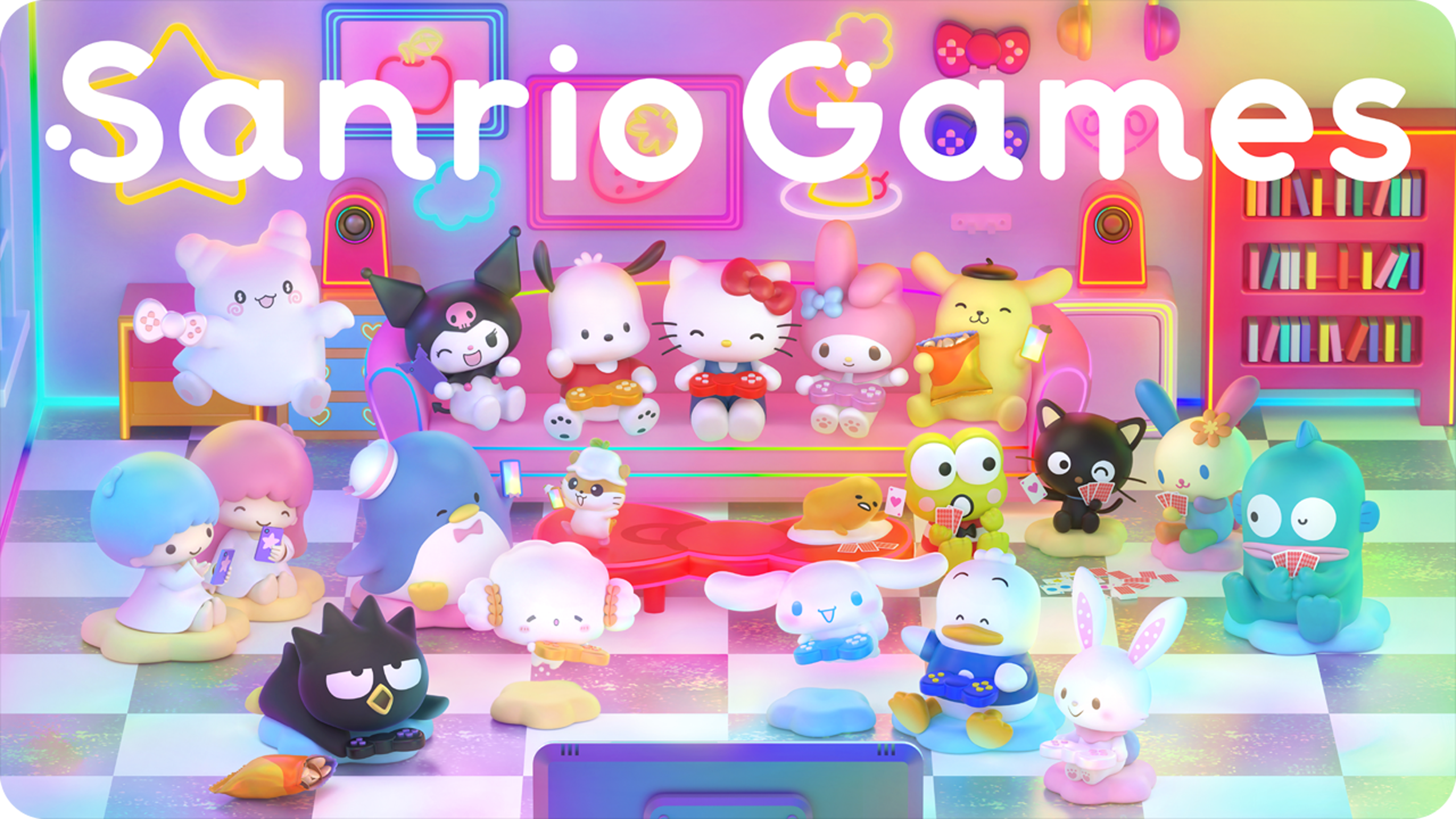
On April 21, 2026, Sanrio announced the launch of Sanrio Games, its first-ever self-publishing game brand. The first title, Sanrio Party Land, is a party game for Nintendo Switch and Nintendo Switch 2, scheduled for a simultaneous worldwide release in fall 2026 (later dated October 29, 2026).
Until now, virtually every Sanrio-character game was made by an outside studio under license. The most visible recent example is Hello Kitty Island Adventure, developed by Sunblink and released on Apple Arcade in 2023, with a Switch version following in 2025. Under the new Sanrio Games brand, Sanrio itself takes the lead on planning and development.
The company plans to release roughly 10 titles by March 2029, with a second game already lined up for this fiscal year. This isn't a one-off experiment, it's a continuous pipeline backed by the stated vision "One World, Connecting Smiles."
Why Go In-House Now?
The move is tied to Sanrio's longer-term strategy. In May 2025, the company set out a vision of evolving into what it calls a "Global IP Platformer." Games are one of the core pillars of that plan.
Sanrio's traditional revenue mix has been merchandise, licensing, and its physical theme park Sanrio Puroland in Tama, Tokyo. Adding in-house game publishing lets the company connect its character IPs directly and more deeply with fans around the world.
Licensing has two structural downsides: it limits how much control Sanrio has over how its characters are used in games, and it caps how much revenue reaches Sanrio itself. Going in-house is an attempt to fix both at once. Specifically, self-publishing gives Sanrio:
- Brand control over game design, with experiences tuned to each character's world
- Cross-asset loops, where new characters or stories born in games can flow into merchandise and the theme park
- Direct data and customer relationships, via integration with the Sanrio+ membership service
Sanrio Party Land: What's Actually in It
Sanrio Party Land is set in a town populated by Sanrio characters. Players create original avatars and join the likes of Hello Kitty, Kuromi, and Cinnamoroll in minigames and board games.
If you're trying to place it in the Nintendo landscape, think of it as the structural cousin of Mario Party, filtered through Sanrio's kawaii aesthetic. The Switch and Switch 2 release plus same-day global launch makes it clear this is built for the international market from day one, not adapted for it later.
The Cozy Game Boom Is Already Fertile Ground
The timing is shrewd. Over the past few years, the cozy game genre has gone from niche to central in Western gaming culture. Titles that emphasize relaxed life-sim mechanics, relationships, and gentle exploration (rather than combat or competition) have found especially strong audiences in North America and Europe.
The flagbearers are Animal Crossing: New Horizons and Stardew Valley. Sanrio's own Hello Kitty Island Adventure landed firmly in this space when it launched in 2023, drawing reviews that repeatedly described it as "Animal Crossing meets Hello Kitty." The game holds an 81 on OpenCritic, proof that cozy-game players and Sanrio fans overlap meaningfully.
The core formula (Sanrio characters plus cozy or party-game mechanics) already has commercial validation overseas. What's changing is that Sanrio is now positioning itself to own more of that formula.
International Reaction: Simultaneous Launch Is the Signal
English-language games press picked up the news within hours. Nintendo Life, Gematsu, GoNintendo, and AUTOMATON WEST all ran coverage the same day.
Several things stand out to overseas observers:
- Switch 2 commitment out of the gate: Fall 2026 lines up with the new console's software-growth phase
- No region lag: Japanese and Western players get the game on the same day
- Scale of the plan: 10 titles in three years means this isn't a novelty; it's a sustained publishing schedule
- IP depth: 450+ characters to work with: Hello Kitty, Kuromi, Cinnamoroll, Pompompurin, Gudetama, Pochacco, and more
For r/NintendoSwitch and r/gaming audiences, this slots into three converging lanes: Mario Party fans who love competitive party games, cozy gamers who came in via Hello Kitty Island Adventure, and longtime Sanrio merchandise collectors looking for new entry points.
The Merch / Park / Game Triangle
What separates Sanrio from many character-IP companies is its physical theme park. Sanrio Puroland has been a real-world hub for fans for decades. On top of that, the annual Sanrio Character Ranking drew over 63 million votes in 2025, a scale of fan participation few IP holders can match.
Add games to that mix and a feedback loop emerges:
- A game introduces a new character
- That character becomes eligible for the Character Ranking
- Ranking winners become Puroland signage and anchor merch
- Merch buyers choose that character in the next game
Sanrio is one of the few Japanese companies positioned to run that entire loop in-house. Under a licensing model, chunks of that revenue and engagement leak out to partners. Sanrio Games is, in a real sense, an effort to keep the circle closed.
What to Watch Next
The remaining nine titles haven't been detailed yet. Without overpromising, here are the threads most worth tracking:
- Whether a full cozy-game successor appears: Can Sanrio make the next Island Adventure-scale title in-house?
- A Kuromi-led game: With Kuromi's rising Gen Z popularity, a solo title with darker or edgier tone would be a logical swing
- Game-original IP: Sanrio has explicitly said it wants to create new characters through games, potentially the strategy's biggest long-term payoff
- Platform expansion beyond Switch: Mobile and Steam are plausible next targets
Ten titles in three years is the cadence of a mid-sized publisher, not a side experiment. Sanrio is serious about wearing a second hat as a game company.
In Japan, the announcement is being received as a natural next step for a company with decades of character-business credibility. In your country, how do you see moves like this (character companies going directly into game publishing)? And which Sanrio character would you most want to star in a full game? Let us know in the comments.
References
- Sanrio Launches New Brand "Sanrio Games" (English press release)
- Sanrio's New Game Brand "Sanrio Games" Begins | Official Site
- Sanrio Party Land announced for Switch 2, Switch - Gematsu
- Sanrio Party Land Announced For Switch 1 & 2, More Sanrio Games Teased - Nintendo Life
- Hello Kitty and Kuromi company Sanrio announces its own game brand - AUTOMATON WEST
- Sanrio Party Land revealed for Nintendo Switch 2 and Switch - Nintendo Everything


Global Discussion
14 comments