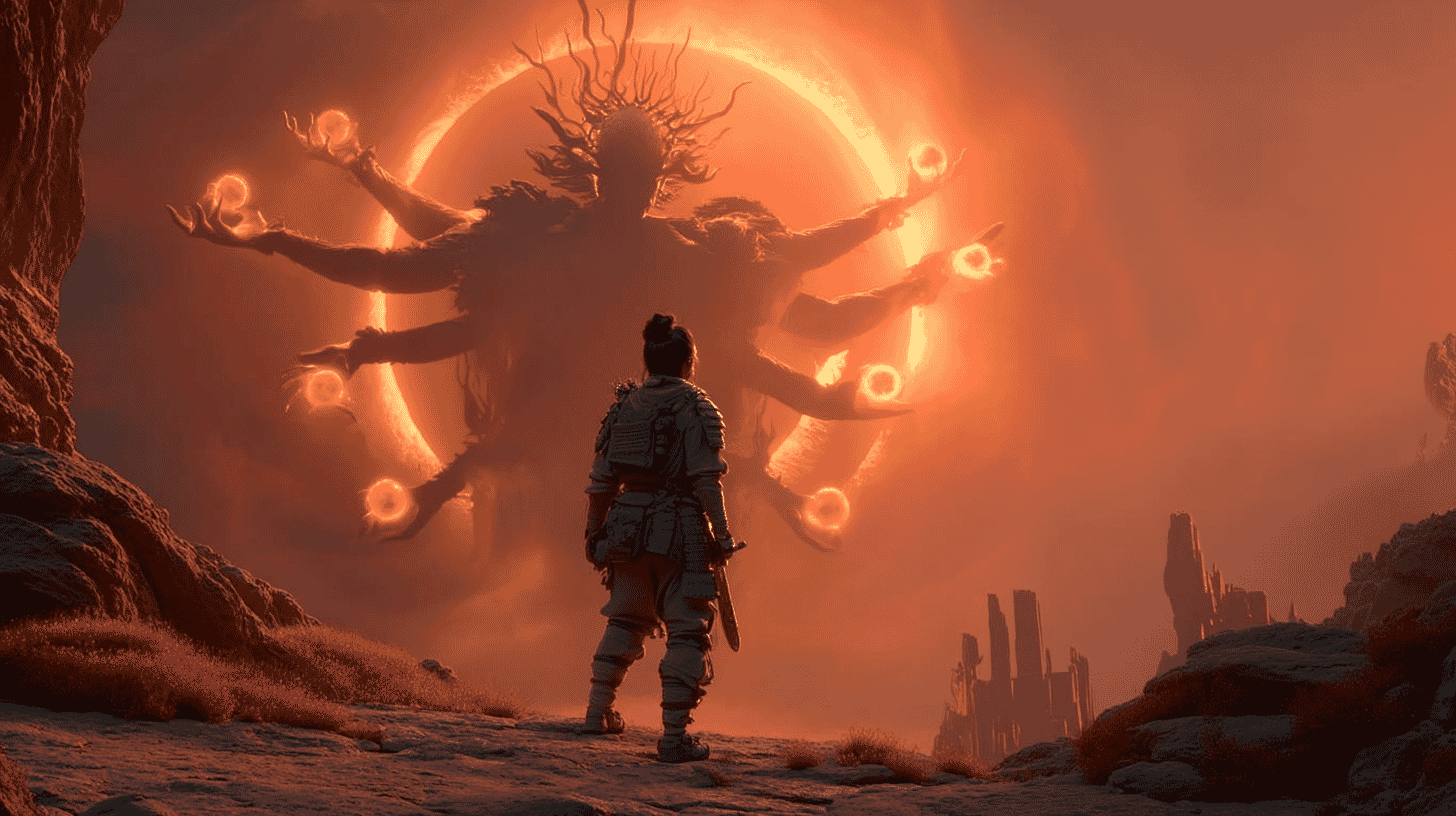
Finnish studio Housemarque's PS5 exclusive SAROS launched on April 30, 2026. Just before release, Japanese gaming outlet Game*Spark published a Japan-exclusive interview with Creative Director Gregory Louden and Associate Design Director (Game Design) Matti Häkli, discussing the studio's "gameplay first" philosophy, how the DualSense conveys the weight of a solar eclipse, and how they designed protagonist Arjun Devraj. Since this interview isn't easily accessible outside Japan, here's a summary of its key points for international readers.
Who Is Housemarque? The Finnish Studio Behind Returnal
Founded in 1995 and based in Helsinki, Housemarque is one of Northern Europe's oldest surviving game studios, with a 30-year history. International readers who have followed indie and AA gaming may remember earlier titles like Resogun (2013) and Nex Machina (2017), modern takes on arcade-style shooters that defined the studio's DNA.
The studio broke into mainstream AAA visibility in 2021 with Returnal, a PS5 launch-window title combining third-person shooting with roguelite death loops, anchored by the unusual choice of a middle-aged woman, Selene, as protagonist. It earned multiple Game Awards nominations. Later that year, Housemarque was acquired by Sony Interactive Entertainment and folded into PlayStation Studios, which is why SAROS is a fully first-party Sony published title.
What Is SAROS? Planet Carcosa and the Eclipse
SAROS, the subject of this interview, is a third-person action game released April 30 for PS5 and PS5 Pro. The setting is Carcosa, a lost off-world colony shrouded under an eclipse. Players control Arjun Devraj, a Soltari Enforcer searching for the truth about what happened there. The standard edition is $69.99, with Digital Deluxe buyers getting 48-hour early access from April 28.
Pre-launch reviews have now lifted, with SAROS scoring around 88 on Metacritic and 92 on OpenCritic. IGN gave a more tempered 7/10 while Game Informer scored it 93/100. The consensus skews positive, with critics highlighting Housemarque's signature gunplay and kinetic movement.
Gameplay First: Housemarque's Design Philosophy
The central theme of the interview is Housemarque's "gameplay first" philosophy. According to Louden, while story and visuals matter, everything ultimately loops back to immersion, and the entrance to that immersion is gameplay.
Häkli frames it through the concept of "the zone", an extreme concentration state players enter during play. The article notes they aimed for a state where players don't have to consciously think about which inputs to press, but can simply translate intent into action immediately. Intuitive controls and deliberate streamlining (read: simplifying information) were used to reduce cognitive load during play.
For anyone who has played Housemarque's previous titles, this "zone" orientation will feel familiar. The studio's games carry bullet-hell DNA, where the correct way to play is by reflex, not deliberation, that throughline runs through everything they make.
DualSense and Immersion: Feeling the Eclipse Through Vibration
The interview discusses how the PS5 DualSense's haptic feedback and adaptive triggers are used throughout SAROS. Louden says they used haptics to convey information like "the atmospheric pressure of when an eclipse occurs," "the satisfaction of firing weapons," and "the tension of cutscenes", on top of what players see and hear.
What stands out is that Housemarque appears to treat haptic feedback as a genuine information channel, on par with music and sound design, rather than a gimmick. It reads most naturally as the DualSense being positioned not just as a controller but as a way to feel Carcosa itself through your hands.
Since SAROS is PS5-exclusive, this haptic-centered design likely explains part of why multi-platform release isn't on the table, at least for now, the hardware choice is part of the creative choice.
The Depth of Arjun: A Hero Full of Flaws
The interview devotes considerable space to protagonist Arjun Devraj. Where Returnal was led by Selene, a rare middle-aged female protagonist, SAROS takes the opposite approach with a middle-aged man. Louden explains the reasoning: middle-aged characters bring life experience, which creates more room for depth.
The phrases Louden uses for Arjun, as recorded in the original text, are striking: "almost real as if he existed," "not a perfect human," "has many flaws," and "makes mistakes many times." He also says "there will probably be moments where you become disappointed in Arjun," but that "in the end, you'll find yourself somehow able to empathize with him."
That's almost a full inversion of the currently popular "likeable, easy-to-empathize-with" protagonist model common in social-media-era storytelling. Designing a hero players are expected to dislike at points, and only come around to by the end, feels closer to American auteur-driven screenwriting than to mainstream game protagonism.
Pull Forward: Design That Moves Players Ahead
Häkli introduces a design concept called "Pull Forward", guiding players to the next objective through indirect systems rather than direct instructions.
Two concrete examples appear in the interview. First, the Shield can't be held up indefinitely; extended use drains a power resource, forcing players to think about when to deploy it. Second, "Loot" dropped by defeated enemies vanishes quickly, pushing players to move forward and grab it rather than hanging back.
Instead of the game telling players "go pick that up" or "don't over-rely on the shield," the rules of the systems themselves make the optimal behavior emerge. According to Häkli, these mechanics are the doorway into the "zone" state.
Karakos Modifiers: Building In Replay Value
SAROS is built around repeat play, not single-run completion. The interview highlights the "Karakos Modifier" system as a key pillar, letting players adjust individual game systems' difficulty to match their skill and taste.
Häkli explains that newcomers can start with accessible options and gradually move toward more demanding weapons, skills, and parry-heavy play. Compared to Returnal, which was notoriously stoic and uncompromising, SAROS aims to widen the door while keeping the game tight, a clear evolution of the studio's design stance.
Why This Interview, Why Now
The timing of a Japan-exclusive interview less than a week before global launch reads as layered strategy. First, with international reviews now public and skewing positive, showing Japanese players the faces and philosophy behind Housemarque deepens attachment at a critical purchasing moment. Second, since SAROS is a full-price ($69.99) PS5-exclusive, Japanese gamers deciding whether to pre-order benefit from this kind of context.
Notably, SAROS is positioned not as a direct Returnal sequel but as a spiritual successor, which is a distinction that probably needed careful explaining in the Japanese market.
What This Summary Couldn't Fully Cover
The full original interview also contains replayability details, developer messages to players, and closing remarks referencing Housemarque's 30-year history. For readers who want to see the specific wording and additional details, the original Game*Spark article is worth reading directly. Louden and Häkli's closing note, that if SAROS resonates with you, the studio's back catalog is worth exploring, is a warm pitch from a studio with three decades of arcade-to-AAA evolution behind it.
How Is It in Your Country?
A Japanese game outlet conducting an exclusive developer interview days before release, focused on philosophy and character design, reflects something distinctive about Japanese games journalism. Western outlets often tilt toward business, sales forecasts, or franchise strategy in pre-launch coverage, while Japanese media tends to dig into design thinking and character craft.
How often do you read developer interviews right before a game launches in your country? And how do you feel about a protagonist who's deliberately flawed, who disappoints you before you forgive him, in games, in films, in novels? Let us know.
References
- https://news.yahoo.co.jp/articles/6f7eb710b37eb119a3b3a56b84cb1257b77bfb78 (Original Game*Spark Japan-exclusive interview)
- https://www.playstation.com/en-us/games/saros/ (PlayStation official SAROS page)
- https://en.wikipedia.org/wiki/Saros_(video_game)
- https://www.gamespot.com/articles/saros-release-date-trailer-story/1100-6529491/
- https://www.resetera.com/threads/saros-review-thread.1500388/









Global Discussion
14 comments