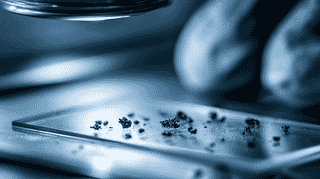
A University of Tokyo-led team finds Ryugu's sodium in clay and about 90% of its chlorine in serpentine, implying water a hundred times less salty than the sea. A Kyoto-led team had read a brine.
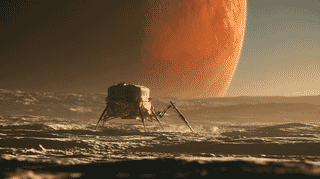
JAXA has set MMX for launch at 4:41:03 a.m. on October 20, 2026. The probe lands on Phobos, collects at least 10 grams and returns in fiscal 2031, chasing a first from the Martian system.
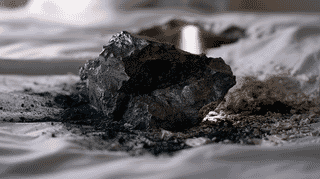
A rock punched through a New Jersey ceiling on July 16, 2024. The homeowner sealed the pieces in jars within minutes, letting a team with the Institute of Science Tokyo and JAMSTEC read traces of ancient asteroid brine.
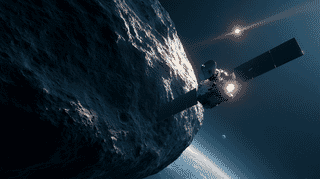
On July 5, Hayabusa2 passed 800 meters from asteroid Torifune at 5 km/s, its first major win since 2020. A look at why Japan keeps flying a retired probe, the road to 1998 KY26, and how it compares to NASA's OSIRIS-APEX.
Kyoto and Hiroshima University researchers found that grains Hayabusa2 brought back from asteroid Ryugu begin altering within weeks on Earth. Here is how the decay starts with an iron sulfide, what it means for Bennu and Phobos samples, and how Japan is reacting.
On July 5, 2026, at 6:30 p.m. Japan time, JAXA's Hayabusa2 passed asteroid Torifune at roughly 5.3 km per second, crossing the 500-meter body in about 0.1 seconds. Here's why this ultra-fast flyby was so hard, how a body-fixed camera caught it, and why it matters for planetary defense after NASA's DART.