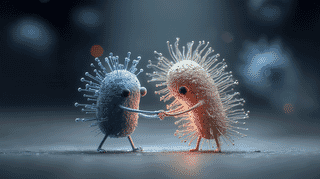
JAMSTEC-led researchers isolated Heimdallarchaeia from a gas well in Chiba. The cells have no nucleus and survive oxygen only with help from bacteria, at odds with a US study suggesting the ancestor used oxygen.
An experiment at Japan's SPring-8 finds davemaoite holds 0.08 wt% water at most, a tenth of past estimates, and points Earth's deep water to subducted crust instead.
Waseda University and NTU Singapore gave a live cockroach a tiny diving suit that lets it work underwater for up to three hours. A genuine rescue breakthrough wrapped in the least reassuring messenger imaginable.
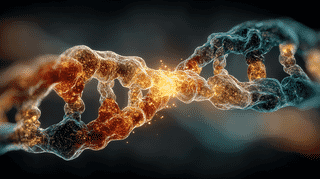
A Japanese-led team has resolved the first atomic-level structure of a metabolon, the elusive enzyme cluster that hid from biology for 40 years, revealing a new control principle called the GATE mechanism.
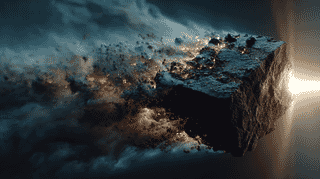
Kyoto and Hiroshima University researchers found that grains Hayabusa2 brought back from asteroid Ryugu begin altering within weeks on Earth. Here is how the decay starts with an iron sulfide, what it means for Bennu and Phobos samples, and how Japan is reacting.
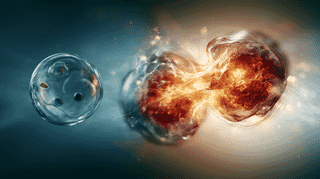
Over 100 researchers across six Asian countries, led by the Shenzhen Institute of Advanced Technology and including Japanese institutions such as RIKEN and Waseda, have published a 10-year roadmap to build a synthetic cell from scratch. Their two-stage ProtoCell-to-AutoCell plan and AI-driven central biofoundry mark a new approach to a question Europe and the US have chased for 20 years.
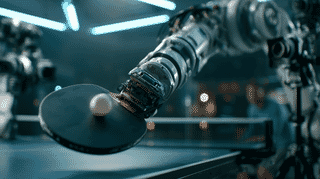
Sony AI's autonomous robot Ace beat elite table tennis players and made the cover of Nature. From its Gran Turismo Sophy roots to the fast-ball wall that stumped DeepMind and a 20.2-millisecond reaction loop, here's how Sony's robot reached elite-competitive level in a real, physical sport.