Rohm posted a record 158.4 billion yen net loss for fiscal 2026 after writing down 193.6 billion yen on SiC power semiconductor assets. CEO Katsumi Azuma called it clearing out the pus, a blunt admission that Japan's biggest SiC bet was mistimed. With Wolfspeed out of Chapter 11 but smaller, Chinese rivals cutting wafer prices to a third, Denso's takeover approach withdrawn and a three-way merger under discussion, the silicon carbide gold rush has hit its reset moment.
Honda reported a 423.9 billion yen net loss for the year to March 2026, its first since listing in 1957, alongside 1.58 trillion yen in EV-related charges, most of them non-cash. The same day it unveiled a turnaround plan: 15 new hybrids by FY2029 and a 1.4 trillion yen operating profit target. We set it against Toyota's multi-pathway bet, the Tesla and BYD lead changes of 2026, and Hyundai-Kia's quiet rise.
On the afternoon of May 14, Japan's 10-year government bond yield hit 2.625%, the highest since 1997. OIS markets now price a 74% probability of a rate hike at the June 15-16 BOJ meeting. BOJ board member Kazuyuki Masu, previously considered cautious, said in a Kagoshima speech that 'early rate hikes are desirable.' With US PPI surprise, USD/JPY near 158, and 'long rates at 3% in sight,' we map where Japan's FX, bond, and rate-hike expectations stand right now.
Capcom announced FY2026 results with record net sales of 195.3 billion yen and operating profit of 75.3 billion yen, marking nine consecutive years of record profits across all earnings categories and eleven straight years of 10%-plus operating profit growth. Resident Evil Requiem sold 6.91 million units at series-fastest pace, while total annual game sales hit a record 59.07 million units. The dual-engine strategy of new releases plus catalog repeat sales is working remarkably well.
SoftBank Group has posted a record 5 trillion yen ($32 billion) net profit for the fiscal year ended March 2026, becoming the first Japanese company to ever cross the 5 trillion yen line. We unpack the 6.7 trillion yen OpenAI windfall, the Vision Fund comeback, the role of Arm as collateral, and how the figure stacks up against US Big Tech.
SEGA Sammy officially confirmed the cancellation of its 'Super Game' initiative in its FY2026 earnings, ending a 5-year plan to build a live-service mega-title aimed at 100 billion yen in lifetime sales. We break down why Sonic Rumble Party underperformed, why Rovio took another impairment hit, how 100+ developers were shifted to mainstay IP full games like Like a Dragon and Sonic, and how this fits the broader collapse of the GaaS gold rush following Concord, Suicide Squad, and Sony's own cancellations.
SEGA Sammy Holdings reported its FY2026 results: record revenue of 487.5 billion yen ($3.1B, +13.7% YoY) was wiped out by 58.8 billion yen in special losses tied to Rovio Entertainment (Angry Birds) and Stakelogic, producing the company's first net loss in 11 years. We unpack the impairment, the international community's skepticism about the 776 million-dollar Rovio acquisition, the deprioritization of F2P, the redeployment of 100+ developers onto full-game projects, and SEGA's bet on four new mainstay-IP titles ahead of Sonic's 35th anniversary.
Subaru cut its FY2026 operating profit forecast by 900 billion yen to just 40 billion yen, a 90% year-on-year plunge announced May 11. Beyond US tariffs, a North American cold wave, Middle East shipping disruptions, and EV asset impairment from Trump's environmental rollback all hit at once. Why does Subaru—with 80% North America sales reliance—suffer most among Japanese automakers?
Konami Group reports record-breaking FY2026 results—revenue ¥493.6B, net income ¥100B, third consecutive year of record highs—and unveils a stacked 2026 lineup: Castlevania: Belmont's Curse, Silent Hill Townfall, Metal Gear Solid Master Collection Vol. 2, Suikoden revival, and aggressive Switch 2 deployment.
Nikon posted a record net loss of 86 billion yen (about $548 million) for the year ended March 2026, dragged down by a 90.6 billion yen writedown on its German SLM Solutions metal 3D printer acquisition. As Canon attacks the lithography market and TSMC Kumamoto ramps up 3nm production, Japan's optics giant is missing its own country's semiconductor boom. We unpack the ASML technology gap, the diversification bets that went wrong, the EssilorLuxottica stake, and the new mid-term plan built around "near-leading-edge" ArF immersion tools.
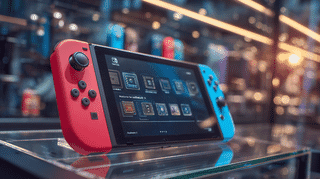
Nintendo sold 19.86 million Switch 2 units in about ten months, the fastest start of any hardware it has made. On the same day, it announced a 10,000 yen price hike for Japan effective May 25, plus $50 increases in the US and Canada from September 1. Japan's 20% jump beats the 11% in the US and lands nearly four months sooner. Why Japan went first and hardest: AI-driven memory prices, a weak yen, and an arbitrage gap that made the domestic model a reseller target.
At a Fireblocks event in Tokyo, SMBC Group CDIO Kazuho Isowa and Mitsui & Co.'s Shinsuke Waka outlined Japan's on-chain finance strategy. January 2028 will bring simultaneous tax and financial-law reforms. ZipangCoin is going cross-border on public chains. And 95% of JPYC trades are now executed by AI. We compare Japan's cooperative model with JPMorgan's $5 billion-a-day Kinexys.
Sony Group's FY2025 results: record $9.2B operating profit on $79.5B in sales, but net income fell 3.4% as the Honda EV joint venture imploded. PS5 cumulative sales hit 93.6M units, the memory crunch forced Sony to throttle PS5 production, and a fresh TSMC deal cements its image-sensor empire. With Crunchyroll, Demon Slayer's $750M global hit, and a $3.2B buyback, this is the IP conglomerate Disney should be watching.
Reuters reported that Japan conducted multiple yen-buying interventions during the May Golden Week, exploiting thin holiday liquidity. Market estimates put the total at roughly 10 trillion yen including the April 30 operation; the Ministry of Finance later confirmed 11.7349 trillion yen, a record for a yen-buying episode. Vice Finance Minister Mimura said IMF rules do not constrain intervention frequency. Within a month the effect had faded and the yen was back at 161 to the dollar.
The BOJ released its March 18-19 meeting minutes on May 7. The deliberation sections are anonymous, but votes and dissenting opinions are published with names attached. The 8-1 split? Hajime Takata alone dissented. We trace the 9 members behind the March meeting, the shift to a 6-3 split in April, and the rebalancing coming when Nakagawa's term ends in late June.
On May 7, 2026, the Nikkei 225 closed 3,320 yen higher at 62,833, the largest single-day point gain in its history, surpassing the 3,217 yen record of August 6, 2024. Hopes of a U.S.-Iran ceasefire and an AI semiconductor rally drove it. Yet the 5.58% gain does not crack the all-time top 20, a sign that a higher index level has changed what a record means. Inside the 10.8 trillion yen session, the link to Korea's KOSPI passing 7,000, and how the index reached 70,000 by June.
Sanrio, the global owner of Hello Kitty and Kuromi, is investigating whether a managing director who also led its U.S. subsidiary received hundreds of millions of yen in undisclosed compensation over multiple years. A special probe has been launched and the full-year earnings announcement postponed. The case exposes a structural gap in Japan's corporate governance: the parent's compensation committee never had jurisdiction over subsidiary CEO pay.
Private estimates put Japan's April 30 yen-buying intervention at 5 to 5.4 trillion yen, derived from the gap between the BOJ's current-account forecast and money brokers' projections. What that bazooka means in practice: a 190bp US-Japan rate gap, a yen carry trade starting to unwind into emerging markets, and the political constraint of the US Treasury's monitoring list.
Haruhiko Kuroda, the governor who ran Japan's decade of extraordinary easing, now calls the weak yen excessive and wants 130 per dollar, plus rate hikes to 1.5%. Japanese social media responded with a collective 'look who's talking.' The rate-gap mechanics, the carry trade, and why the yen kept sliding even after the BOJ went to 1.00% in June 2026.
JPX CEO Hiromi Yamaji says listing crypto ETFs on the Tokyo Stock Exchange is something the exchange can do anytime once the law and tax treatment are settled, with 2027 the earliest window. How Japan compares with the US, Hong Kong and the EU, the shift from a 55% top rate to a flat 20.315%, and the TOPIX rule that shows how cautiously Tokyo is still moving.