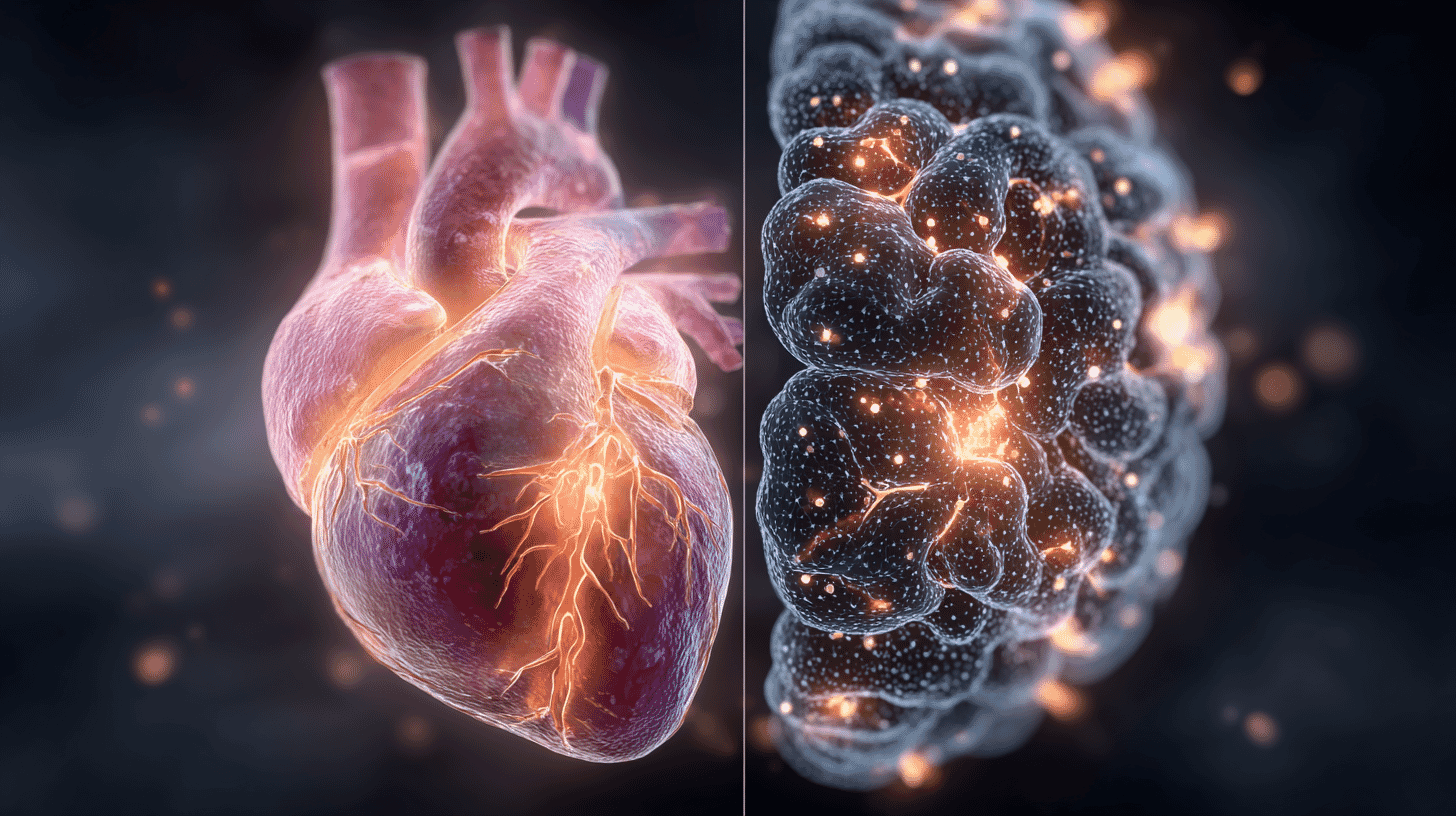
In 2006, Professor Shinya Yamanaka at Kyoto University created the world's first iPS cells from mouse tissue. Twenty years later, products made from those cells are finally about to reach real patients. On February 19, 2026, a Japanese government health panel cleared two iPS cell products for conditional approval: a "sheet" that repairs damaged hearts, and transplanted cells that restore lost brain function. A new phase of regenerative medicine is opening, and it starts in Japan.
What Are iPS Cells? The "Do-Anything" Cells
iPS cells, short for "induced pluripotent stem cells", are created by reprogramming ordinary cells like skin or blood cells using specific genes. Once reprogrammed, these cells gain the remarkable ability to transform into virtually any cell type in the body: heart cells, nerve cells, retinal cells, and more.
Professor Shinya Yamanaka's team at Kyoto University first achieved this with mouse cells in 2006, and with human cells the following year. This discovery earned Yamanaka the Nobel Prize in Physiology or Medicine in 2012. Since then, Japan has led the world in iPS cell research.
The strength of iPS cells is their ability to generate needed tissues from a patient's own cells or from donor cells, no waiting for organ transplants, and theoretically unlimited supply through cell banking.
Two Products: "ReHeart" and "Amshepri"
ReHeart: A Sheet That Heals the Heart from the Outside
"ReHeart" is a heart muscle sheet developed by Cuorips, an Osaka University spinoff startup based in Tokyo, building on decades of research by Professor Yoshiki Sawa (cardiovascular surgery) at Osaka University. It is indicated for severe heart failure caused by ischemic cardiomyopathy in patients who have not responded adequately to standard treatment.
Here's how it works: Heart muscle cells are grown from a healthy donor's iPS cells and formed into ultra-thin sheets, about 0.1 millimeters thick and 4-5 centimeters across. During a relatively brief left thoracotomy lasting about 50 minutes, three of these sheets are placed on the surface of a patient's damaged heart.
Over approximately three months, the sheets release signaling molecules called cytokines, which trigger the growth of new blood vessels in the heart and promote tissue repair. While the sheets themselves eventually dissolve after immunosuppressive medication is stopped, the restored heart function remains.
Clinical trials conducted from 2020 to 2023 at four hospitals (centered on Osaka University Hospital) treated eight patients, all of whom showed symptom improvement with no cancer formation detected. One male patient in his 50s, who couldn't even complete a round of golf before treatment, reported returning to business trips and full rounds of golf afterward.
Cuorips filed for manufacturing approval in April 2025 and is also preparing applications in the United States.
Amshepri: Delivering New Neurons to the Brain for Parkinson's Disease
"Amshepri" (generic name: raguneprocel) was developed by Sumitomo Pharma (Osaka) based on research by Professor Jun Takahashi of Kyoto University's Center for iPS Cell Research and Application (CiRA). It targets patients with advanced Parkinson's who no longer respond well to levodopa and other existing drug therapies.
Parkinson's disease is a progressive neurological condition caused by the gradual loss of brain cells that produce dopamine, a key neurotransmitter involved in movement control. Symptoms include tremors, muscle stiffness, and difficulty walking. An estimated 290,000 people in Japan and over 10 million worldwide live with the disease.
Conventional treatment centers on medications that supplement dopamine, but these become less effective as the disease progresses and can cause side effects. Amshepri takes a more fundamental approach: replacing the lost nerve cells entirely with new ones grown from iPS cells.
Specifically, dopamine neuron precursor cells are created from iPS cells and transplanted into a brain region called the putamen through stereotactic surgery (inserting a thin needle through a small hole in the skull). The transplanted cells mature into dopamine-producing neurons, restoring the brain function that was lost.
Clinical trials at Kyoto University Hospital from 2018 to 2023 treated seven patients. Among the six evaluated for efficacy, four showed clear improvement in motor function, some no longer needed assistance with daily activities. PET scans confirmed the transplanted cells were actively producing dopamine, and no tumor formation was observed. These results were published in the prestigious journal Nature in April 2025.
Sumitomo Pharma filed for approval in August 2025. A similar trial at the University of California San Diego has also been underway since 2023.
"Conditional and Time-Limited Approval": Japan's Fast-Track System
Both products were approved under Japan's unique "Conditional and Time-Limited Approval" system. Since regenerative medicine trials take a long time and typically involve small patient numbers, this system grants a provisional "learner's permit" when efficacy can be reasonably estimated from limited data. This gets promising treatments to patients faster.
After approval, companies must collect additional evidence from more patients and demonstrate full efficacy and safety within a set period, typically seven years, to earn "full approval." Both ReHeart and Amshepri have been given seven-year timelines.
One caveat: of the six products previously approved under this system, two were withdrawn after failing to demonstrate efficacy, and the remaining four are still collecting data with none achieving full approval yet. Whether these iPS cell products will become the first success stories is a key question going forward.
20 Years of Investment Bearing Fruit
Japan has invested over 110 billion yen (approximately $730 million) in iPS cell research. The education ministry funded a decade-long support program, while the health ministry created regulatory frameworks to accelerate approval of regenerative therapies.
Currently, more than eight clinical programs using iPS cells are active in Japan, targeting not just heart disease and Parkinson's, but also retinal diseases, spinal cord injuries, blood disorders (platelet production), and cancer immunotherapy.
Challenges Ahead: Price, Scale, and the Full Approval Hurdle
Despite the historic achievement, significant challenges remain.
First, cost. iPS cell-derived therapies involve complex manufacturing processes that make them extremely expensive. Whether prices can be brought down to levels accessible to ordinary patients will determine how widely these treatments spread.
Second, scale. Both trials involved fewer than ten patients. Whether the same efficacy and safety hold across larger and more diverse patient populations must be proven over the next seven years.
Still, this approval is a genuine turning point. We are witnessing the moment when iPS cells transition from laboratory achievements to real treatments for real patients.
Update: Full Clearance and Insurance Coverage (as of August 2026)
Japan's health ministry formally granted both products conditional, time-limited approval on March 6, 2026. Amshepri cleared the Central Social Insurance Medical Council on May 13 at a price of 55,306,737 yen for a set of 18 vials, and insurance coverage began on May 20. ReHeart followed on July 22, with a reimbursement price of 53.2 million yen and coverage scheduled to start September 1. During the conditional approval period, only 20 hospitals may perform the ReHeart procedure. The post-marketing studies required within the seven-year window cover 35 cases for Amshepri and 75 for ReHeart, plus 150 untreated controls.
Not everyone is convinced. The Medwatcher Japan citizens' group petitioned on April 6 to revoke both approvals and block reimbursement, citing the small number of cases and the subjectivity of the outcome measures. Nature ran its own piece in February on concerns about thin data.
In Japan, iPS cell research is a source of deep national pride, symbolized by Yamanaka's Nobel Prize. But questions remain: Will the treatments be affordable? Will they prove effective at scale? How is regenerative medicine progressing in your country? What do you think about iPS cell therapies reaching patients for the first time? Share your thoughts in the comments!






Global Discussion
15 comments