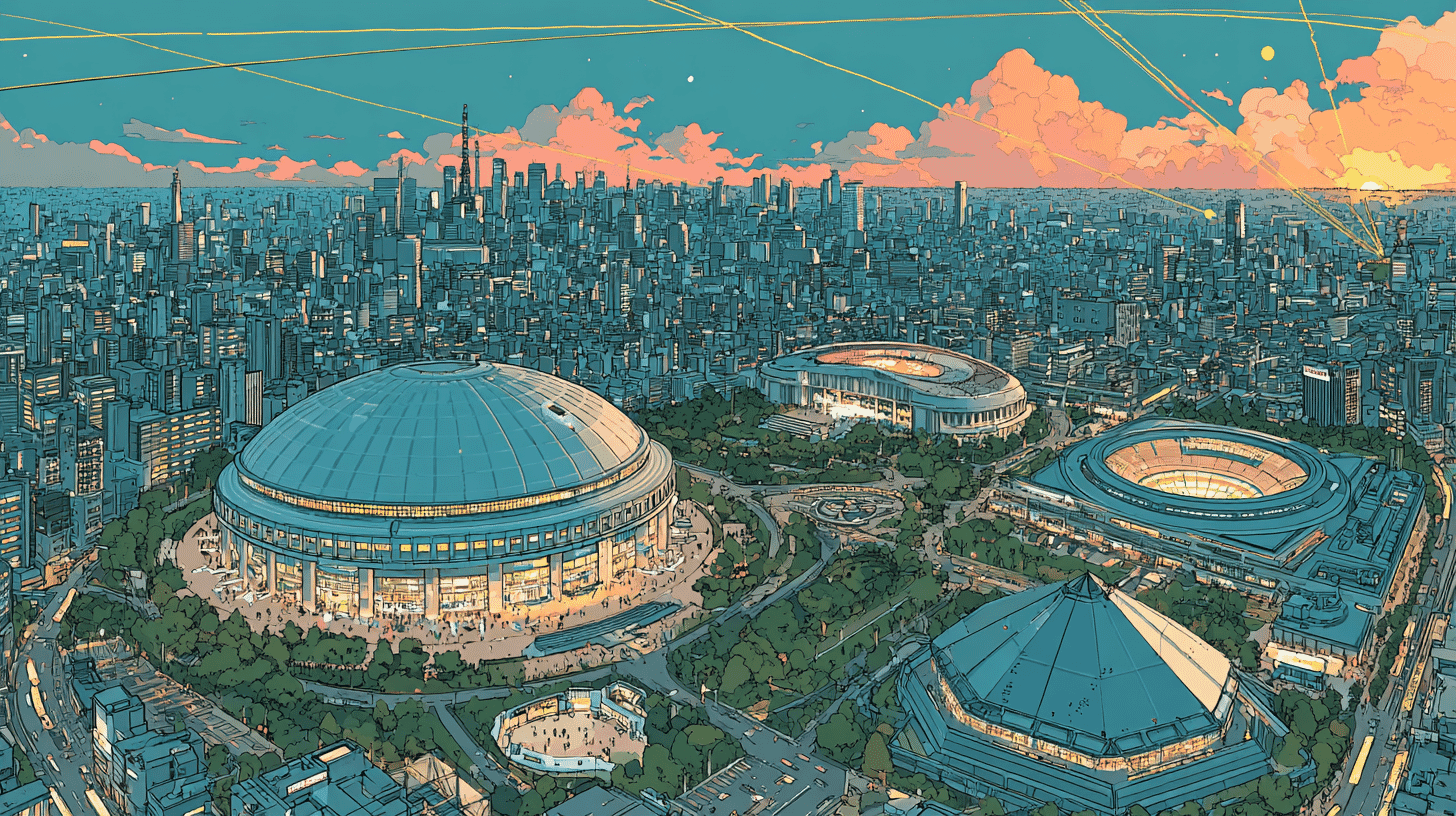
From April 29 to May 6, Japan enters its biggest annual mini-vacation: Golden Week (GW). International coverage of the 2026 edition has zeroed in on two events, the May 2 boxing showdown between Naoya Inoue and Junto Nakatani at Tokyo Dome, and the April 29 fighting-game "Kemonomichi" first-to-10 between Daigo Umehara and MenaRD at Club Citta in Kawasaki. Both deserve the attention. But Japan packs far more than two world-class fights into these eight days.
Saturday, May 2 in Tokyo alone is genuinely surreal. Tokyo Dome (Inoue vs Nakatani), Ryogoku Kokugikan (Pro Wrestling NOAH's Ryogoku show), and Tokyo Big Sight (EVO Japan 2026 Day 2), three of Tokyo's biggest indoor venues all run major internationally-followed events on the same day. La Folle Journée, Hakata Dontaku, the Hamamatsu Festival, and the Hiroshima Flower Festival run almost simultaneously across the rest of the country.
This is a guide to eight Golden Week 2026 events that haven't dominated the international news cycle.
What is Golden Week, anyway?
Golden Week isn't a single national holiday. It's an emergent phenomenon: four public holidays (Showa Day, Constitution Memorial Day, Greenery Day, Children's Day) cluster between late April and early May, and the days between get treated as de facto vacation. The result is a culturally enforced 7–10 day break.
In 2026, the standard window runs from April 29 (Wednesday, Showa Day) to May 6 (Wednesday, substitute holiday). With a couple of days of paid leave, many workers turn it into a 10+ day stretch. Domestic transit, theme parks, and hotels all hit peak pricing. Outbound Japanese travelers head overseas at the same time inbound tourists arrive, it's the busiest week of the year for Japanese airports.
In the middle of all this, the country runs a mind-bogglingly diverse calendar of events.
Sports & combat: Three major events converge in Tokyo on May 2
1. Pro Wrestling NOAH "SPRING MAYHEM RYOGOKU 2026" (May 2, Ryogoku Kokugikan)
On Saturday May 2, doors at 13:30 and bell at 15:00, NOAH brings a major card to Ryogoku Kokugikan featuring both the GHC Heavyweight and GHC Junior title matches plus the developing L.T.J vs TEAM 2000X feud carried over from earlier in the year.
A standout side note: the show ties in with a "Street Fighter II × Pro Wrestling NOAH" merch collaboration, with a second wave of items launching alongside it. NOAH inherits the "King's Road" lineage of legendary wrestlers like Mitsuharu Misawa and Kenta Kobashi, and the technically-grounded, hard-hitting style still carries strong respect among Western puroresu fans rediscovering Japanese wrestling.
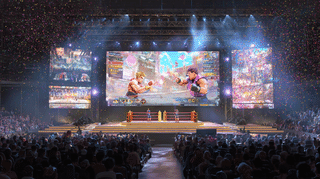
2. EVO Japan 2026 (May 1–3, Tokyo Big Sight)
The Japan edition of the world's biggest fighting game tournament. EVO Japan 2026 takes over Halls 1–3 of the East exhibition wing of Tokyo Big Sight for three full days.
The lineup is a record 12 titles: Street Fighter 6, Tekken 8, Guilty Gear Strive, KOF XV, Fatal Fury: City of the Wolves, Fist of the North Star (new), 2XKO (new), Vampire Savior, Granblue Fantasy Versus Rising, UNDER NIGHT IN-BIRTH II Sys:Celes, MELTY BLOOD: TYPE LUMINA, and Virtua Fighter 5 R.E.V.O. The total prize pool has doubled from the previous edition to ¥30 million (about $190,000 USD).
EVO Japan 2025 drew over 30,000 attendees. With players flooding in from around the world, plus the April 29 Evo Legends Live (Umehara vs MenaRD) and the EVO Japan finals on May 3, Tokyo functions for five straight days as the world capital of competitive fighting games.
Traditional festivals running simultaneously across Japan
3. Hakata Dontaku Port Festival (May 3–4, Fukuoka)
One of Japan's largest spring festivals, drawing more than 2 million attendees over two days, yet relatively unknown abroad. That's Hakata Dontaku.
Its origin traces back roughly 850 years to "Hakata Matsubayashi," a folk ceremony from 1179 that's now designated an Important Intangible Folk Cultural Property by the national government. The name "dontaku" itself has an unexpected origin: when the Meiji government temporarily banned the matsubayashi ceremony and locals later revived it, they renamed it using the Dutch word "Zondag" (Sunday/holiday), a linguistic remnant of Japan's centuries-long trade with the Netherlands via Nagasaki.
Participants march through the city banging "shamoji", the wooden paddles normally used to scoop rice, as percussion instruments. The main parade covers about 1,270 meters along Meiji-dori, with companies, schools, and community groups marching as costumed "dontaku-tai" troupes. In 2025, 11 of the participating groups came from overseas.
4. Hamamatsu Festival (May 3–5, Shizuoka)
The Hamamatsu Festival runs May 3–5 in Hamamatsu, Shizuoka. Its origin dates back to the Eiroku era (1558–1569), roughly 450 years ago. Iio Buzen-no-kami, then lord of Hikima Castle (later Hamamatsu Castle), reportedly flew a giant kite to celebrate his first son's birth, making this one of Japan's oldest documented kite-flying traditions.
By day, "Tako-age Gassen" (kite battles) take over Nakatajima Sand Dunes. Each town district raises massive kites, 2 to 10 tatami mats large (roughly 1.5 to 3.6 meters per side), and tries to cut other towns' kite strings through aggressive entanglement. They call it "kenka-dako" (fighting kites). In 2026, 173 town districts participate. The dunes fill with the smell of friction-burned string, kicked-up sand, and hundreds of men charging through each other.
By night, the action moves to central Hamamatsu for "Goten Yatai Hikimawashi", 87 ornate, lantern-lit floats parade through the streets, each carved with hundreds of detailed sculptures and accompanied by children playing traditional festival music. Across three days, the festival draws over 1 million attendees.
5. Hiroshima Flower Festival (May 3–5, Hiroshima)
A flower festival staged across Hiroshima Peace Memorial Park and Heiwa-odori (Peace Boulevard). Running since 1977, the 2026 edition is the 49th. The theme is "Colorful, Wonderful, Peaceful."
Day one (May 3) opens with the "Grand Flower Parade" along about 1.2 km of Heiwa-odori. Day three (May 5) closes with "Kinsai YOSAKOI" dance teams and a "Fire Finale." Across all three days, around 30 stages host roughly 250 groups, and about 80 outdoor "hiroba" (booth zones) line the boulevard. Annual attendance runs over 1 million.
What makes this festival genuinely distinctive on the international stage is its physical setting. It happens partly inside Peace Memorial Park, a few minutes' walk from the Atomic Bomb Dome. Young dancers, flower displays, candle messages at night, the layered "prayer plus celebration" structure of Hiroshima becomes visible across these three days in a way that's hard to encounter at any other moment of the year.
Music, culture, and food
6. La Folle Journée TOKYO 2026 (May 3–5, Tokyo International Forum)
Hearing "world's largest classical music festival," your mind probably jumps to Vienna or New York. By raw program scale, though, what happens in Tokyo every Golden Week is genuinely world-class.
The festival originated in 1995 in the French port city of Nantes, and the Tokyo edition has run since 2005. Across three days, around 90 paid concerts and roughly 300 total (counting free outdoor performances) run in parallel at Tokyo International Forum and surrounding venues in Marunouchi, Yurakucho, and Hibiya. Each concert lasts about 45 minutes; tickets run roughly ¥1,500–3,000 (about $9–19), almost unheard of for classical programming of this caliber.
The 2026 theme is "LES FLEUVES" (Rivers): a "musical world tour" along the great rivers that shaped continents, from Europe to Russia, the Americas, India, and Africa. Notable additions this year include French early-music master François Lazarevitch making his Japan debut, plus a program built around taiko drums and the rivers of Japan.
7. Niconico Chokaigi 2026 (April 25–26, Makuhari Messe)
Just before the formal start of GW, Makuhari Messe hosts what calls itself "Japan's largest subculture event." It's the offline incarnation of Niconico, the long-running Japanese video-sharing platform that helped birth Vocaloid culture as we know it. The event has run since 2012.
The premise: "physically reproduce all of Niconico (or close enough)." That means stages and booths for Vocaloid music, "odottemita" (try-to-dance) and "utattemita" (try-to-sing) culture, gaming streams, cosplay, VTubers, and "Cho-Kabuki", a Vocaloid-fused contemporary kabuki performance. 2024's edition drew 132,657 attendees. The 2026 edition uses every hall of Makuhari Messe for the first time in two years, with parallel programs including "Cho VocaNico," "Uta Colle," "Collection THE LIVE," and "Cho Odottemita Live 2026."
This isn't a "matsuri" in any traditional sense, it's a reverse-pilgrimage where internet culture descends into physical space. Overseas Vocaloid and VTuber fans have been quietly catching on for years; an increasing number now plan their Japan trips around it.
8. Craft Gyoza Festival TOKYO 2026 (April 29–May 6, Komazawa Olympic Park)
Among the seasonal food festivals that bloom across Japan during GW, Craft Gyoza Fest has been one of the fastest growers. The series has now exceeded 2.82 million cumulative visitors. The 2026 trend keyword is "neo-gyoza", dumplings that mash up Japanese, Western, and Asian ingredients, prioritize visual impact, and experiment aggressively with sauces.
The international "gyoza vs dumpling" debate has its own life on social media. Chinese jiaozi, Korean mandu, Polish pierogi, Turkish manti, Russian pelmeni, every culture seems to have its own way of wrapping filling in dough. Japan's pan-fried gyoza, with their signature crispy bottoms and chewy wrappers, occupy a defensible niche of their own.
So... what's Golden Week like in your country?
Japan packs three centuries-old folk festivals (Hakata Dontaku, Hamamatsu, Hiroshima), pro wrestling, the Japan edition of the world's biggest fighting game tournament, a world-class classical music festival, internet culture's biggest in-person convention, and a craft food festival into eight days, on top of the boxing world title and the FGC summit fight everyone abroad already knows about.
Saturday May 2 alone runs three internationally-followed events at three of Tokyo's biggest venues simultaneously. It's hard to find another country where this much variety occurs purely because of holiday clustering.
Does your country have a comparable spring break, or do religious festivals (Easter, Eid) play a similar role? We'd love to hear how the rhythm of holiday-driven cultural events differs where you live.


Global Discussion
14 comments