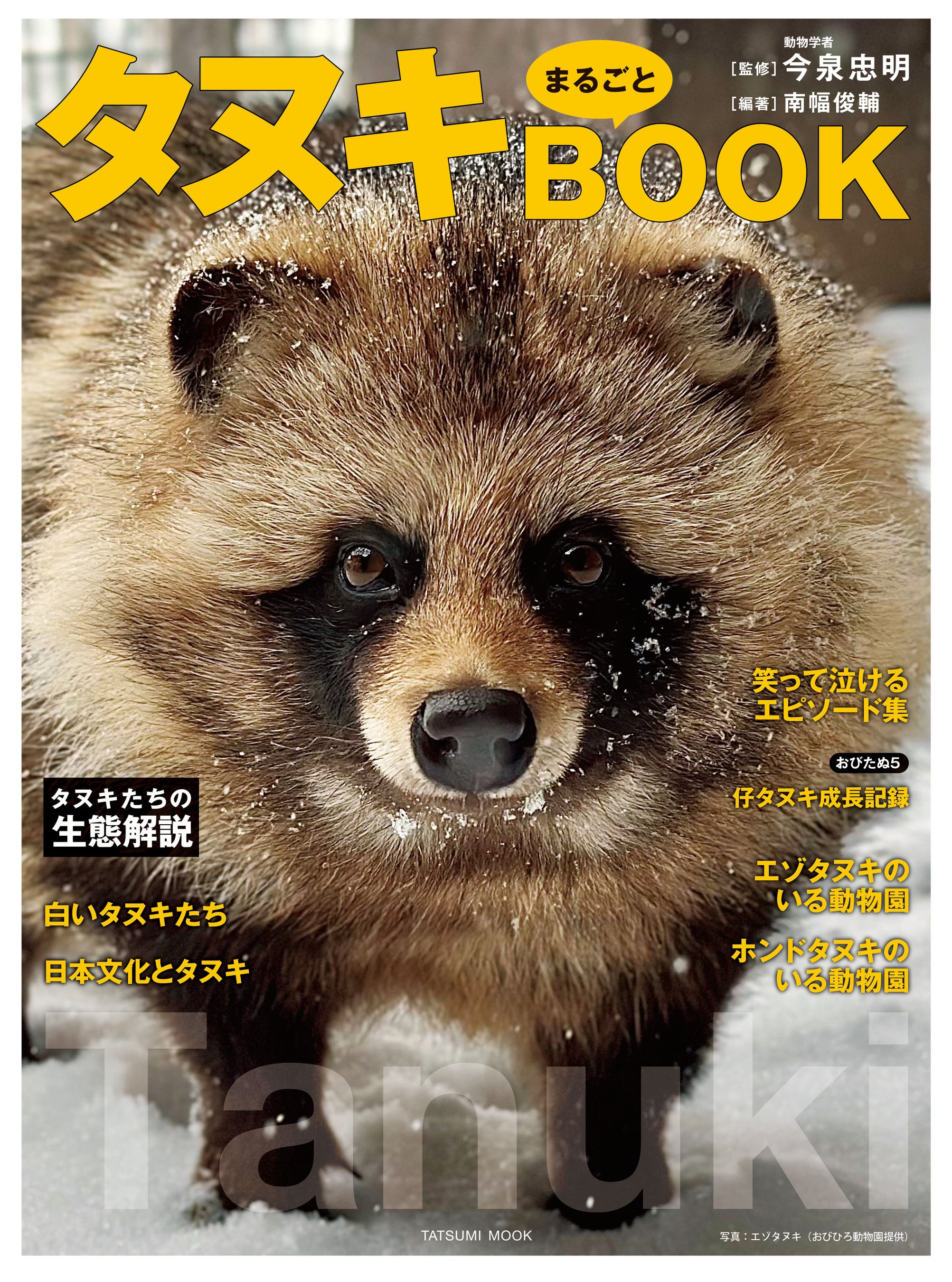
On May 1, 2026, a quietly remarkable book hit Japanese shelves: Tanuki Marugoto BOOK ("The Complete Tanuki Book") from Tatsumi Publishing. Before release it had already hit #1 in twelve separate Amazon Japan categories on pre-orders, and topped Rakuten Books' daily overall ranking.
Ceramic statues outside neighborhood restaurants. A Studio Ghibli film. Animal Crossing. A single social post about a defeated-looking tanuki that drew 96.5 million views. Japan is having a tanuki moment, and it is worth explaining why. We have to start with The Big Misconception.
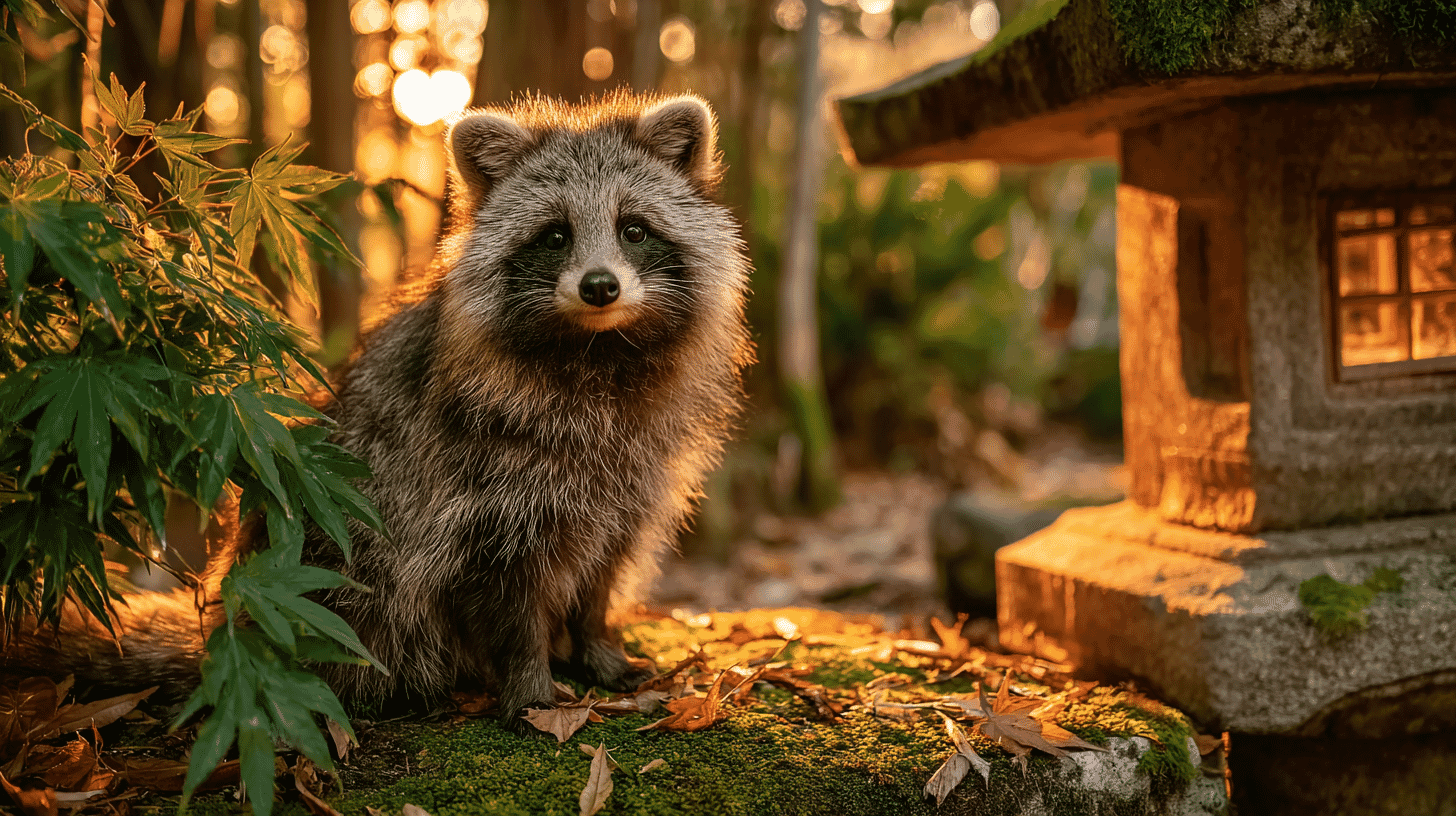
First, the most important thing: a tanuki is NOT a raccoon
When introduced abroad, the tanuki is almost always translated as "Japanese raccoon dog." And almost always, English-speaking audiences hear that and conclude: "Oh, so it's a kind of raccoon."
This is wrong.
The tanuki (Nyctereutes viverrinus) belongs to Canidae, the dog family, and is more closely related to foxes than to anything North American. It is endemic to Japan, classified either as its own species or as a subspecies of the Asian raccoon dog.
The North American raccoon (Procyon lotor), meanwhile, belongs to Procyonidae, an entirely different evolutionary lineage.
The visual resemblance comes from the black eye-mask, but they're not relatives. If your only takeaway from this article is "tanuki are canids, raccoons are procyonids," that's already a worthwhile read.
Tatsumi Publishing
Why the book became a sensation
Tanuki Marugoto BOOK, released May 1, is a full-color mook priced at ¥1,760 including tax (about $11). Zoologist Tadaaki Imaizumi supervised it; graphic designer and photographer Shunsuke Minamihaba edited and shot it. It is the fifth entry in Tatsumi's "Marugoto BOOK" series, following volumes on seals, orcas, polar bears and pygmy hippos.
The interesting thing is which Amazon categories it topped. Beyond the obvious ones, Animals & Plants, Zoology, Science and General Pets, it also hit #1 in Environmental Protection, Ecology, Social Pathology, Social Studies, Thought & Society, and even Preschool Drills and Preschool Education. Twelve categories, all #1, as counted by the publisher on April 3, 2026.
A zoology book topping "Thought & Society" alongside "Preschool Education" tells you something: the tanuki sits at unusual intersections of Japanese cultural attention.
The book is built around two subspecies: the thick-coated Ezo tanuki of Hokkaido and the Honshu tanuki. For the former it visits Obihiro Zoo, Asahiyama Zoo, Maruyama Zoo and the Kita-Kitsune Farm; for the latter, Morioka's ZOOMO, Yagiyama Zoological Park, Yumemigasaki Zoo near Tokyo, Higashiyama Zoo in Nagoya, Asa Zoological Park in Hiroshima, Shirotori Zoo in Kagawa and Hirakawa Zoo in Kagoshima, among others. In total it profiles 19 facilities keeping tanuki as of April 2026, along with keeper anecdotes and excerpts from Imaizumi's own fieldwork.
Layer 1: The pottery tanuki outside every restaurant
Walk down any provincial Japanese street and look at restaurant entrances, especially soba shops, izakayas and traditional restaurants, and you will very likely find a ceramic tanuki standing there. This is Shigaraki ware, one of Japan's Six Ancient Kilns, from Shigaraki town in Shiga Prefecture.
The classic Shigaraki tanuki is loaded with symbolism known as Hassou Engi ("Eight Lucky Aspects"), a doctrine proposed in 1952 by a monk named Goujou Ishida. Each part of the standard "sake-buying boy" tanuki carries a specific meaning:
- Straw hat: protection from unforeseen disaster
- Big eyes: paying attention and making sound judgments
- Smile: prosperity through cheerful service
- Sake bottle: cultivating virtue, never wanting for food and drink
- Account book: building trust with customers (credit comes first)
- Round belly: composure paired with bold decisiveness
- Money pouch: financial good fortune
- Tail: ending things well, the true measure of happiness
The Japanese pun helps too: "tanuki" sounds like ta-nuki, "surpassing others," which makes it a natural symbol of business success.
The Shigaraki tanuki went truly national in 1951, when the Showa Emperor visited Shigaraki and locals lined the road with tanuki statues holding little Japanese flags. The Emperor was charmed enough to compose a poem about remembering tanuki figurines from his childhood. The story was widely reported, and the tanuki became a national icon almost overnight.
Layer 2: Pom Poko, Studio Ghibli's elegy for the lost countryside
In 1994, Studio Ghibli released Heisei Tanuki Gassen Pom Poko (often just Pom Poko in English), directed by Isao Takahata. It is a parable about losing the countryside.
The film follows tanuki living in the Tama Hills west of Tokyo as a massive housing development destroys their forest. Tama New Town is a real project, one of Japan's largest, spanning four cities. The tanuki use their traditional shapeshifting abilities, drawn from centuries of folklore in which bake-danuki transform into humans, objects, or anything else, to scare the humans off and stop the bulldozers.
Their ultimate effort is "Operation Specter": a parade of over a hundred tanuki conjuring up an entire procession of yokai through downtown. It's beautiful and futile. The tanuki cannot win.
The ending is devastating in a uniquely Ghibli way. The protagonist, exhausted from passing as a human in a suit, lies down on a patch of grass. It turns out to be a manicured corner of the golf course built where his forest used to be.
Pom Poko was 1994's top-grossing Japanese film, won the Mainichi Film Award for Best Animation, took the Grand Prix at Annecy, and was Japan's submission for the Academy Award for Best Foreign Language Film. For an entire generation of Japanese viewers, the word "tanuki" carries with it a faint sadness about lost rural Japan.
Layer 3: Tom Nook, and how tanuki conquered the world
You may not know it, but if you've played Animal Crossing: New Horizons, released in 2020 and past 40 million copies sold worldwide, you've already met a tanuki.
Tom Nook, the slightly shady real estate agent who sells you that island home loan, is Tanukichi in Japanese. He is, unambiguously, a tanuki. Western localization reads him as a raccoon instead, presumably because explaining "raccoon dog" to a global audience was one step too many.
The same goes for several other characters: Redd is a kitsune (fox), Kapp'n is a kappa (water yokai), and so on. The whole Animal Crossing universe is quietly a Japanese folklore parade.
Tom Nook's combination of shrewd businessman, heart of gold and slightly suspect motives is a direct inheritance from the Shigaraki Hassou Engi tradition (commerce plus virtue) and from bake-danuki folklore (charming plus a bit sneaky). Players around the world are unwittingly absorbing centuries of Japanese tanuki culture.
The same lineage runs through Mario's Tanuki Suit, the leaf-powered transformation in Super Mario Bros. 3: tanuki shapeshifting, distilled into a power-up.
Layer 4: The "Tanuki has given up" meme
On March 10, 2024, Kashio Kine, a VTuber based in Fukushima Prefecture, posted this to X:
"There was a tanuki caught in a box trap meant for larger animals. The trap had a gap big enough for a tanuki to escape easily, but it just sat there with a 'the tanuki is finished' expression on its face. Even when we opened the cage it wouldn't come out, and had to be carried."
The post went massively viral: 96.5 million views, 270,000 likes, roughly 30,000 reposts. That is an absurd number for a wildlife post. The image of a tanuki that could escape but has emotionally given up resonated with overwork-weary Japanese readers in a way no marketing campaign ever could. "Tanuki wa mou oshimai desu" ("the tanuki is finished") settled in as a meme for the universal feeling of "I'm done, just leave me here."
Riding the same wave, manga artist Yu Hachi's Aa, Tanuki wa Mou Dame Desu ("Ah, the Tanuki is No Good Anymore") placed 17th in the web division of the 2024 Next Manga Award and was published in book form by KADOKAWA on June 13, 2025. It is a gentle slice-of-life comedy about defeated-looking tanuki who get rented out to human households.
Tanuki Marugoto BOOK includes an interview with Kashio Kine, who regularly encounters wild tanuki around her home. Recruiting her was a smart piece of editorial planning.
The tanuki vs. fox division of labor
To understand the tanuki's cultural niche, you have to understand its relationship with the kitsune, the fox. In Japanese folklore the two are always paired, but with sharply different roles:
- Kitsune: messengers of the Inari deity, intelligent, feminine-coded, deified, masters of disguise (their transformations succeed)
- Tanuki: rarely deified, masculine-coded, weak to alcohol and food, their disguises tend to fall apart
The tanuki occupies a uniquely Japanese cultural slot: the lovable failure. Not a perfect hero, but the slightly disheveled neighbor who drinks too much, means well, and is somehow more relatable than any saint.
This pairs neatly with a taste for imperfection, a contemporary cousin of the wabi-sabi sensibility. The Pom Poko tanuki who try hard and lose. The trapped tanuki who could escape but won't. The pottery tanuki holding a sake bottle outside your local izakaya. All of them are trying and never quite getting there, and Japan loves them for it.
Why a book? Why now?
What does Tanuki Marugoto BOOK hitting #1 in twelve Amazon categories actually mean?
Tanuki affection in Japan has historically been scattered: pottery for grandparents, Pom Poko for parents, Animal Crossing for kids, viral memes for adults. Each layer existed independently, with little crossover.
The 2024–2025 social booms, combined with the manga, the merchandise and now this book, mark the point where scattered affection consolidates. Fans want structured knowledge: which zoos have tanuki, what their ecology actually looks like, where to go.
The 19 facilities profiled in the book are accessible to international tourists too. Obihiro and Asahiyama in Hokkaido, Yumemigasaki near Tokyo, Shirotori in Kagawa. Adding "see a real tanuki" to a Japan itinerary is now a viable plan.
What's it like in your country?
Britain has urban foxes. North America has raccoons, the actual ones. Australia has koalas and wombats. Finland has reindeer. Every country has an iconic native or symbolic animal.
What makes the tanuki interesting isn't just that Japan loves it. It's that the affection spans pottery, anime, video games and internet memes at once. The tanuki shows up on your daily commute as a restaurant statue, in family entertainment via Ghibli, in kids' video games, and in adult internet humor. Every generation has a personal touchpoint.
Does your country have an animal that pops up across that many cultural layers? Or is your iconic species loved in a different, more singular way? We'd love to hear it.
References
- https://prtimes.jp/main/html/rd/p/000000543.000093966.html
- https://en.wikipedia.org/wiki/Japanese_raccoon_dog
- https://en.wikipedia.org/wiki/Pom_Poko
- https://en.wikipedia.org/wiki/Tom_Nook
- https://ja.wikipedia.org/wiki/%E4%BF%A1%E6%A5%BD%E7%84%BC
- https://ja.wikipedia.org/wiki/%E5%85%AB%E7%9B%B8%E7%B8%81%E8%B5%B7
- https://amzn.asia/d/02XmdEMP








Global Discussion
12 comments