On April 16, 2026, the Nikkei 225 closed at an all-time high of 59,518, up 1,384 points. We break down the structural drivers: US-Iran peace hopes, S&P 500 crossing 7,000, BOJ April rate-hike odds collapsing from 55% to 30% after Finance Minister Katayama's rebuke, USD/JPY at 158, and a 16.5% surge from end-March. Plus the simultaneous rally in tech and regional bank stocks, DAX comparison, and the April foreign-flow anomaly.
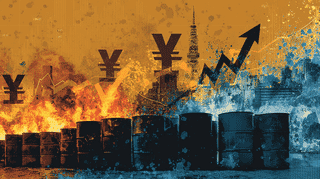
Japan's Economy Minister Akazawa was reprimanded by PM Takaichi and Finance Minister Katayama for suggesting BOJ rate hikes as a policy option on national TV. We explain why this crossed Japan's central bank independence red line, amid surging oil prices, a weak yen at 159, and the upcoming April 27-28 BOJ meeting.
On April 13, 2026, Japan's 10-year government bond yield surged to 2.490%, surpassing the 1998 'Trust Fund Bureau Shock' level for a 27-year high. BOJ Governor Ueda warned of Middle East geopolitical risks at the Trust Convention. All eyes are on the April 27-28 policy meeting.
Japan's Economy Minister Akazawa called BOJ policy to boost the yen 'one option' to curb Iran-driven inflation. With USD/JPY near 160 and a 60% chance of a BOJ rate hike on April 28, we explain why a cabinet minister weighing in on forex policy is so unusual.
Three years into Governor Ueda's tenure, the BOJ has raised rates four times from negative territory to 0.75%, while long-term yields hit a 27-year high of 2.43%. We examine the IMF's call for continued hikes, April rate hike expectations, impacts on mortgages and corporate investment, and Japan's unique position as the only G7 nation still tightening.
Japan's FY2026 budget of ¥122.3 trillion ($766B) passed on April 7, the largest ever. With defense spending at $56B, social security at $245B, and debt servicing costs exceeding $196B for the first time, can Japan sustain its finances with a 230% debt-to-GDP ratio as interest rates rise? We compare with G7 peers.
Yuri Okina takes the helm of the world's largest pension fund GPIF ($1.7 trillion). Despite Middle East-driven market volatility, she affirms the current 25-25-25-25 portfolio can meet the 1.9% real return target. We compare GPIF's strategy with Norway's GPFG and Canada's CPP.
The Bank of Japan's April 2026 Sakura Report kept economic assessments unchanged across all 9 regions. With the Hormuz Strait effectively blocked, energy prices soaring, and 10-year bond yields hitting 2.425% — a 27-year high — all eyes turn to the April 27-28 policy meeting.
Former BOJ Governor Haruhiko Kuroda has proposed a 'coalition of the willing' among Japan, the EU, and Southeast Asian nations to preserve free trade amid WTO dysfunction and Trump-era tariffs. His proposal calls for expanding frameworks like the CPTPP and strengthening economic security cooperation.
The IMF's April 2026 Article IV report recommends the BOJ continue gradual rate hikes toward neutral. With two hikes in 2026 and one in 2027 targeting 1.5%, we analyze the impact on yen, JGB yields, carry trades, and the IMF's warning on consumption tax cuts.
Finance Minister Satsuki Katayama warns the forex market has become 'highly speculative' as the yen falls to 160 per dollar. We analyze the structural forces behind yen weakness, carry trade risks, and G7 emergency coordination.
The BOJ published a landmark review on March 30, 2026, analyzing trend inflation through three approaches. We explain the new CPI core indicators stripping out special factors, compare methods with the Fed's PCE and ECB's HICP, and assess whether this signals more rate hikes ahead.
The BOJ released its 'Summary of Opinions' from the March meeting on March 30. Despite surging oil prices from the Iran crisis, multiple board members called for continued rate hikes. We analyze the path from the current 0.75% rate, accelerated hiking scenarios, comparisons with the Fed and ECB, and yen carry trade risks.
The BOJ eyes an April rate hike as Iran's oil shock pushes inflation risks higher. With 10-year yields at 27-year highs, strong wage growth, and diverging policies from the Fed and ECB, we break down what this means for the yen, carry trades, and global markets.
In February 2026, Japan's Financial Services Agency issued an unprecedented warning to regional banks about surging real estate lending. Tokyo condo prices average $900,000, the BOJ has taken its policy rate to 1.00%, and variable mortgage rates have crossed 1%. We compare the numbers with the 1990s crash and track where foreign money is going.
The Bank of Japan overhauled its output gap and potential growth rate estimation on March 26, 2026, while launching labor market indicators and new Core CPI data. Learn how these changes lay the groundwork for further rate hikes.
Japan's Zengin Net announces plans to completely rebuild its 50-year-old interbank payment system by 2030, with real-time settlement and stablecoin/tokenized deposit integration. A historic shift for the backbone handling roughly $26 trillion annually across 1,071 institutions.
Japan's 10th CBDC expert council meeting reveals concrete design plans for the digital yen, focusing on privacy protection and coexistence with private payment systems. As China pilots the e-CNY, the EU targets a 2029 digital euro launch, and the US bans CBDCs outright, Japan charts a cautious yet practical middle path in the global digital currency race.
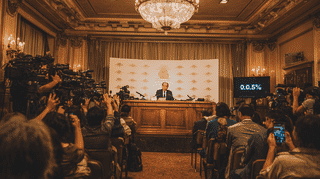
The Bank of Japan held its policy rate at 0.75% on March 19, 2026, as the Middle East conflict and surging oil prices cloud the economic outlook. Governor Ueda maintained a rate-hike bias but warned that rising energy costs could push underlying inflation either way. With spring wage negotiations delivering 5%+ raises for a third straight year and the yen hovering near 160, Japan faces a complex policy dilemma.
Japan's 2026 official land prices rose 2.8% nationwide — the steepest climb since the bubble era. Tokyo topped residential gains for the first time in 18 years, while semiconductor factories and record tourism reshape regional land markets. Foreign investors now account for 27% of property deals.