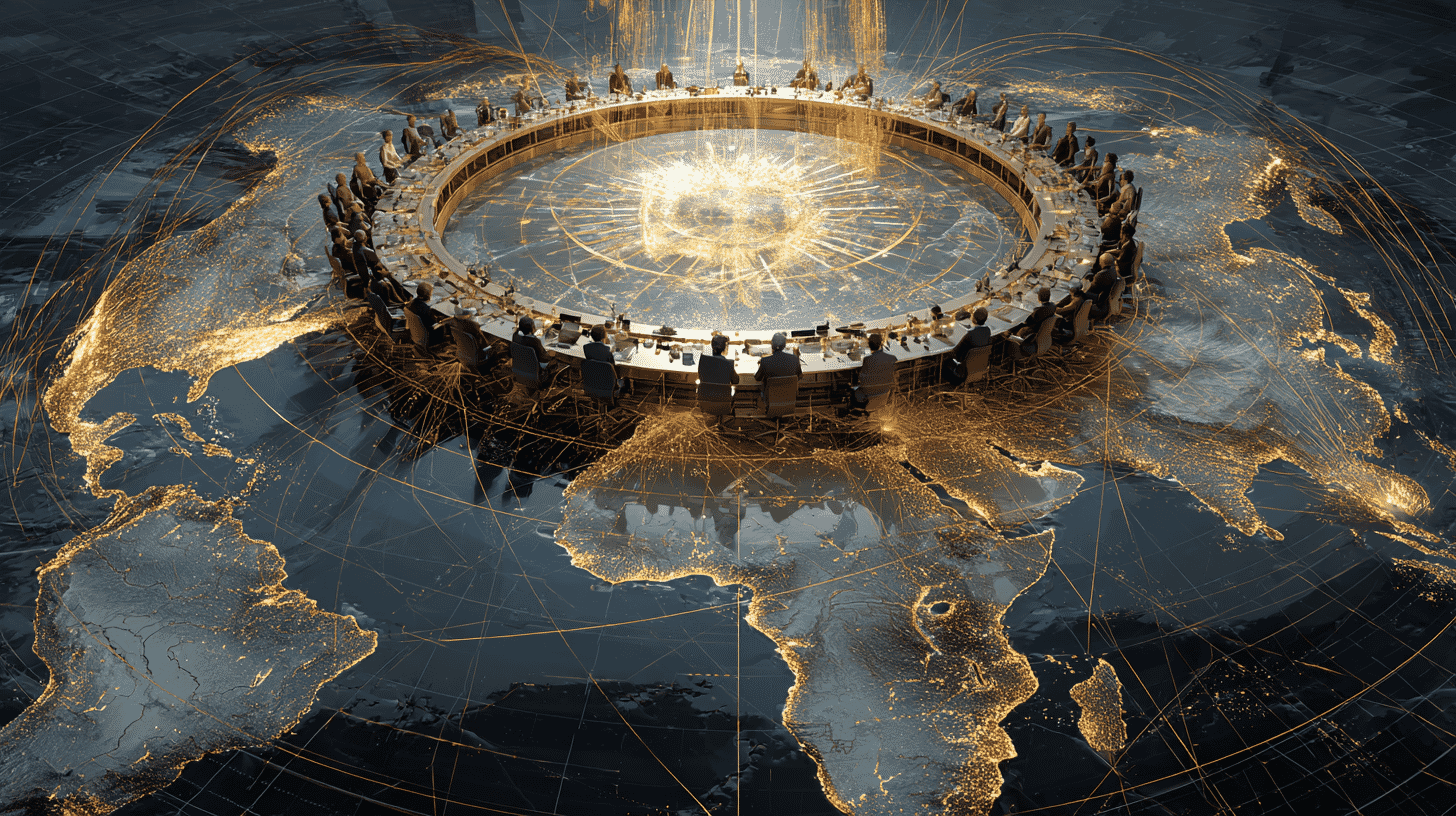
On April 3, 2026, Haruhiko Kuroda, the former governor of the Bank of Japan, took the stage at a trade policy symposium in Tokyo and unveiled an emergency proposal to protect and strengthen free trade. Kuroda chaired the expert group that drafted the proposal, working alongside Professor Naoko Munakata of the University of Tokyo's Graduate School of Public Policy and other prominent policy specialists.
The core message was blunt: the World Trade Organization (WTO) has become dysfunctional. It cannot adequately respond to the Trump administration's unprecedented tariff policies or China's overcapacity problems. A new framework, a "coalition of the willing" among Japan, the EU, Southeast Asian nations, and other countries that share free trade values, is urgently needed.
Why the WTO Has Stopped Working
The WTO was established in 1995 as the global institution for setting trade rules and resolving disputes. But its core functions have been in serious crisis for years.
The biggest problem is the paralysis of the WTO's dispute settlement mechanism. The Appellate Body, which issues final rulings on trade disputes, has been effectively non-functional since 2019, after the United States blocked the appointment of new judges. This means that when a country faces unfair tariffs, there is no way to get a binding final resolution through the WTO.
On top of that, the Doha Round of multilateral trade negotiations, launched in 2001, has essentially collapsed, and progress on new rules has stalled. The WTO's 14th Ministerial Conference (MC14), held in Yaoundé, Cameroon, in late March 2026, produced no meaningful breakthrough on reform.
Kuroda addressed this directly, stating that Trump's high-tariff policies are "having a major impact on the international trade order."
One Year of Trump Tariffs
The timing of Kuroda's proposal was symbolic. It came exactly one year after the Trump administration announced its "reciprocal tariffs" on April 2, 2025.
Here's what happened in that year. The Trump administration initially imposed a 10% baseline tariff on imports from all countries, then set higher individual rates for nations it deemed to have "unfair trade practices." Japan was initially hit with 24%.
Following a bilateral framework agreement in July 2025, Japan's reciprocal tariff rate settled at 15%. The deal came at a cost: Japan committed to roughly $550 billion in U.S. investment, among other concessions.
A major turning point came in February 2026, when the U.S. Supreme Court ruled that reciprocal tariffs imposed under IEEPA (the International Emergency Economic Powers Act) were unconstitutional. However, President Trump responded with new executive orders, and the fundamental direction of his tariff policy remained intact.
Meanwhile, tariffs on China swung wildly, reaching 145% at one point before a 90-day truce brought them down to 30%. One year on, the U.S. trade deficit structure remains largely unchanged, raising questions about the effectiveness of the whole tariff strategy.
The Three Pillars of Kuroda's Proposal
Kuroda's emergency proposal rests on three main pillars.
First: expanding the CPTPP. The Comprehensive and Progressive Agreement for Trans-Pacific Partnership currently has 12 member nations. Kuroda's proposal calls for gradually adding new members and widening the circle of countries that share high-standard trade rules. In November 2025, Uruguay, the UAE, the Philippines, and Indonesia were identified as potential new members.
Second: building a coalition framework centered on Japan, the EU, and Southeast Asia. Japan and the EU already have an Economic Partnership Agreement (Japan-EU EPA) in force. Kuroda envisions using this as a foundation to create a broader free trade zone that includes ASEAN nations. This would cover new areas that the WTO hasn't adequately addressed, digital trade, supply chain resilience, and intellectual property protection.
Third: securing economic security through cooperation. Multiple countries would work together to diversify procurement risks for critical materials and reduce over-dependence on any single country. This appears to be aimed squarely at recent developments like China's rare earth export restrictions and tightening semiconductor-related export controls.
Who Is Haruhiko Kuroda?
For international readers, Kuroda is best known for his role in monetary policy. He served as Governor of the Bank of Japan from 2013 to 2023, the longest tenure in the BOJ's modern history. His signature policy was "Quantitative and Qualitative Monetary Easing" (QQE), which Western media dubbed "the bazooka." He doubled the BOJ's government bond purchases and declared that the 2% inflation target would be achieved "in about two years." While that target proved elusive, his policies are widely credited with breaking Japan's deeply entrenched deflationary mindset.
Before the BOJ, Kuroda had a distinguished career at Japan's Ministry of Finance, specializing in international finance and tax policy, followed by an eight-year stint as President of the Asian Development Bank (ADB) from 2005 to 2013. At the ADB, he worked directly with heads of state and ministers from 68 countries and regions across Asia.
Today, Kuroda holds positions as a Senior Fellow at the National Graduate Institute for Policy Studies (GRIPS), a Distinguished Professor at Kyoto University's Graduate School of Management, and a Research Advisor at the Japan Center for Economic Research. He writes a regular column for Diamond Online on global economics and trade policy.
How This Fits With Existing Trade Frameworks
Kuroda's proposal is not meant to replace existing trade agreements, it's designed to complement and strengthen them.
The CPTPP was originally negotiated as the TPP under U.S. leadership. After the U.S. withdrew in 2017, Japan took the lead in reviving it, and the agreement took effect in 2018 with 12 members. It covers not just tariffs but also intellectual property, investment, e-commerce, and labor standards.
RCEP (the Regional Comprehensive Economic Partnership) is the world's largest free trade zone by GDP, bringing together 15 countries including all 10 ASEAN nations plus Japan, China, South Korea, Australia, and New Zealand. It took effect in 2022. While its liberalization standards are lower than the CPTPP, it notably includes China.
The Japan-EU EPA took effect in 2019 and covers agricultural tariff elimination on the EU side and auto tariff elimination on Japan's side. In November 2025, a joint EU-CPTPP statement advanced cooperation on WTO reform, digital trade rules, and supply chain resilience.
Kuroda's vision essentially seeks to "connect the dots" between these existing frameworks, creating a free trade safety net that can function even without U.S. participation. The approach is pragmatic: start with countries willing to accept high-standard rules, then gradually expand membership, rather than waiting for consensus among all 166 WTO members.
What This Means for Japan
Japan is a mature economy with annual real GDP growth of about 0.5%, so free trade is not just desirable but essential for growth. The combined impact of Trump tariffs (15% reciprocal plus 15% auto tariff) is estimated to cut Japan's GDP by roughly 0.55% within a year, about a full year's growth.
If deteriorating Japan-China relations are added to the equation (China's travel advisory against Japan and rare earth export restrictions), the total GDP reduction could reach 0.72%.
Facing this "dual geopolitical risk," Japan's strategic interest in strengthening multilateral trade frameworks, rather than relying solely on bilateral negotiations with the U.S., is clear.
Kuroda's proposal carries an implicit message: Japan should stop merely "asking America" for concessions and take the lead in free-trade rule-making itself.
In Japan, the impact of Trump tariffs is now felt in everyday life, sparking intense debate about the future of free trade. A former central bank chief calling for like-minded nations to band together is a significant development. What does the free trade debate look like in your country? Share your thoughts in the comments.
References
- https://www.nikkei.com/article/DGXZQOUA01B6Z0R00C26A4000000/
- https://www.okinawatimes.co.jp/articles/-/1809935
- https://www.saga-s.co.jp/articles/-/1682935
- https://www.bruegel.org/first-glance/first-step-coalition-building-reform-global-trading-system
- https://www.piie.com/blogs/realtime-economics/2026/are-regional-pacts-future-world-trade
- https://www.nri.com/jp/media/column/kiuchi/20260216.html









Global Discussion
14 comments