Japan's three megabanks (MUFG, SMFG, and Mizuho) posted a combined net profit of 5.26 trillion yen ($33B) for the fiscal year ended March 2026, breaking the 5-trillion-yen barrier for the first time. We unpack how BOJ rate hikes drove the surge, how the numbers compare to JPMorgan and HSBC, and what Japan's monetary normalization means for global markets.
Kioxia forecast a 48-fold jump in Q1 net profit to 869 billion yen ($5.5 billion), making the Japanese NAND maker Japan's single-largest AI beneficiary on a quarterly basis after Toyota. We unpack the US ADS listing plan, the supercycle reshaping NAND prices, the HBM gap with Samsung and SK Hynix, and what it all means for Japan's broader semiconductor revival.
On the afternoon of May 14, Japan's 10-year government bond yield hit 2.625%, the highest since 1997. OIS markets now price a 74% probability of a rate hike at the June 15-16 BOJ meeting. BOJ board member Kazuyuki Masu, previously considered cautious, said in a Kagoshima speech that 'early rate hikes are desirable.' With US PPI surprise, USD/JPY near 158, and 'long rates at 3% in sight,' we map where Japan's FX, bond, and rate-hike expectations stand right now.
Taiwanese buyers now account for 62% of all foreign home purchases in Tokyo's 23 wards, according to data released by Japan's government for the first time. Behind this surge: a historic yen, a Taipei property bubble exceeding Tokyo, TSMC's Kumamoto pipeline, geopolitical hedging, and Taiwan's AI boom—all converging at once.
Nintendo sold 19.86 million Switch 2 units in about ten months, the fastest start of any hardware it has made. On the same day, it announced a 10,000 yen price hike for Japan effective May 25, plus $50 increases in the US and Canada from September 1. Japan's 20% jump beats the 11% in the US and lands nearly four months sooner. Why Japan went first and hardest: AI-driven memory prices, a weak yen, and an arbitrage gap that made the domestic model a reseller target.
Reuters reported that Japan conducted multiple yen-buying interventions during the May Golden Week, exploiting thin holiday liquidity. Market estimates put the total at roughly 10 trillion yen including the April 30 operation; the Ministry of Finance later confirmed 11.7349 trillion yen, a record for a yen-buying episode. Vice Finance Minister Mimura said IMF rules do not constrain intervention frequency. Within a month the effect had faded and the yen was back at 161 to the dollar.
The BOJ released its March 18-19 meeting minutes on May 7. The deliberation sections are anonymous, but votes and dissenting opinions are published with names attached. The 8-1 split? Hajime Takata alone dissented. We trace the 9 members behind the March meeting, the shift to a 6-3 split in April, and the rebalancing coming when Nakagawa's term ends in late June.
Private estimates put Japan's April 30 yen-buying intervention at 5 to 5.4 trillion yen, derived from the gap between the BOJ's current-account forecast and money brokers' projections. What that bazooka means in practice: a 190bp US-Japan rate gap, a yen carry trade starting to unwind into emerging markets, and the political constraint of the US Treasury's monitoring list.
Haruhiko Kuroda, the governor who ran Japan's decade of extraordinary easing, now calls the weak yen excessive and wants 130 per dollar, plus rate hikes to 1.5%. Japanese social media responded with a collective 'look who's talking.' The rate-gap mechanics, the carry trade, and why the yen kept sliding even after the BOJ went to 1.00% in June 2026.
The day after Japan's April 30 intervention, Vice Finance Minister Atsushi Mimura hinted at more with a single line: Golden Week is just getting started. The campaign eventually totalled a record 11.7 trillion yen. But against a fifth straight year of trade deficits, an oil bill inflated by the Iran conflict, yen weakness against every major currency, and a 40-trillion-yen carry trade, intervention only buys time. Even the June hike to 1.0 percent did not turn it.
On April 30, Japan intervened to buy yen for the first time in 21 months. Hours after Finance Minister Satsuki Katayama warned of 'decisive action' and Vice Minister Atsushi Mimura issued a 'final evacuation warning,' the dollar fell about 5 yen from the high 160s to 155.50, its steepest one-day drop since December 2022. The campaign continued through Golden Week and totalled a record 11.73 trillion yen. The yen kept falling anyway.
One day after the Bank of Japan held rates on April 28, the yen hit a 21-month low of 160.67 and 10-year JGB yields reached 2.535 percent, the highest since 1999. A falling currency and rising yields are not supposed to move together. We unpack what that combination says about being behind the curve, the intervention question, the carry trade, and a hawkish Fed, then follow the story through the June hike to 1.0 percent and a yen that kept sliding anyway.
Oriental Land Company, operator of Tokyo Disney Resort, posted record revenue of 704.5 billion yen ($4.4 billion) for fiscal 2026, yet operating profit fell, and the stock has been cut nearly in half since 2023, hitting a fresh year-low days before the earnings release. Here is what is making investors nervous about the 'house of mouse' in Japan, from shrinking margins and demographic headwinds to a 330 billion yen cruise gamble.
The Bank of Japan held its policy rate at 0.75% on April 28, 2026 by a 6-3 vote, with three dissenters proposing a hike to 1.0%, a first under Governor Ueda. We unpack Ueda's press conference, allegations of pressure from the Takaichi administration, the sharp upward revision in inflation forecasts, the immediate market reaction, and the divergence between domestic and international assessments.
Nissan revised its FY2026 operating outlook from a 60-billion-yen loss to a 50-billion-yen profit. The 110-billion-yen swing reflects cost cuts, yen weakness, and a one-off provision reversal tied to the US repealing its greenhouse-gas vehicle rule. Net loss still expected at 550 billion yen for a second straight year of red ink.
Tokyo Gas raises its monthly base fee by ¥150 ($0.94) starting October, the first hike since 1980. But in Japan, many are reacting with 'isn't 46 years of NO change the weird part?' A look at how Japan compares to US, UK, and Sweden gas bills, what yen weakness and LNG imports mean, and why this signals the end of Japan's deflation era.
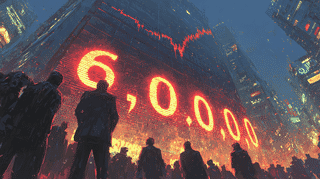
On April 23, 2026, the Nikkei 225 crossed 60,000 intraday for the first time in history. We compare this milestone with the 1989 bubble peak at 38,915 yen, examining USD-based performance, the foreign ownership shift from 5% to 32.4%, the PER drop from 60x to 16x, and the heavy concentration in just a handful of AI and semiconductor stocks like SoftBank Group, which surged 9.6%.
Otafuku Holdings subsidiary Nakagawa has completed a new tenkasu (tempura crumb) factory in Omura, Nagasaki, boosting output from 4,200 to 6,300 tons annually, a 1.5x jump aimed at Europe and beyond. A deep dive into what tenkasu is, how it powers okonomiyaki and udon culture, the rise of tempura crumbs in sushi rolls overseas, and how it compares to Britain's beloved chip-shop 'scraps'.
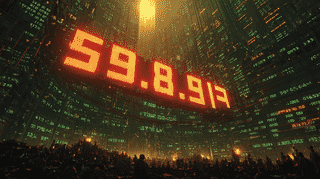
On April 16, 2026, the Nikkei 225 closed at an all-time high of 59,518, up 1,384 points. We break down the structural drivers: US-Iran peace hopes, S&P 500 crossing 7,000, BOJ April rate-hike odds collapsing from 55% to 30% after Finance Minister Katayama's rebuke, USD/JPY at 158, and a 16.5% surge from end-March. Plus the simultaneous rally in tech and regional bank stocks, DAX comparison, and the April foreign-flow anomaly.
Japan's Economy Minister Akazawa was reprimanded by PM Takaichi and Finance Minister Katayama for suggesting BOJ rate hikes as a policy option on national TV. We explain why this crossed Japan's central bank independence red line, amid surging oil prices, a weak yen at 159, and the upcoming April 27-28 BOJ meeting.