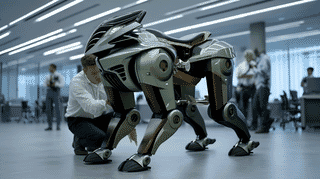
Kawasaki's four-legged Home LEO prototype is meant to live with older people and notice falls, not do chores. What it says about Japan's stalled care workforce of 2.126 million, and what is still missing.
At a July 28, 2026 briefing, Kawasaki said its four-legged CORLEO has no steering or brakes planned. Force sensors in the stirrups become the controls, NVIDIA physics engines build a virtual off-road course, and the rider becomes part of the machine.
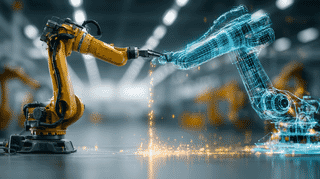
FANUC, Yaskawa and Kawasaki are teaming up with Fujitsu and NVIDIA to bring Physical AI to factories, warehouses and hospitals. What each firm is really after, how they plan to bridge simulation and real machines, and whether Japan can keep its lead against US and Chinese humanoid makers.
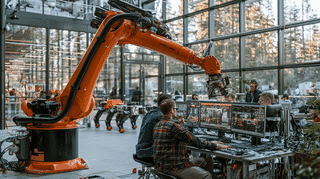
Kawasaki Heavy Industries, maker of jets, bullet trains and motorcycles, has opened a physical AI development hub in Silicon Valley, teaming up with NVIDIA, Analog Devices, Microsoft and Fujitsu. We unpack why a 130-year-old industrial giant is betting on AI that acts in the real world, and where Japan stands in the US-China robotics race.
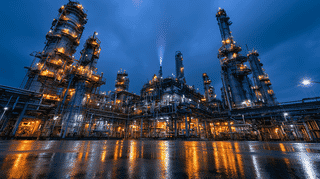
Kawasaki Heavy Industries has begun pitching a technology that produces naphtha, the building block of plastics, from hydrogen instead of crude oil. Built on its commercial gas-to-gasoline plant in Turkmenistan, the proposal lands in the middle of a Japanese petrochemical crisis triggered by the Strait of Hormuz disruption.