Fans in Japan call a favourite anime or game character "ore no yome", my wife, and the word waifu has since travelled worldwide. Gatebox is the gadget that summons her into the room. But when the character lives on a server, the end of a service is the end of the wife. Here is the technology, and the catch that comes with it.
What Does "Ore no Yome" Mean? Japan's Unique Way of Expressing Love
"Ore no yome" (俺の嫁). If you thought this phrase refers to someone's actual wife, you're in for a surprise. In Japanese otaku culture, "ore no yome" (literally "my wife") is a slang term expressing deep affection for 2D characters from anime, games, and manga.
This phenomenon emerged in the late 2000s through internet forums and social media. Fans began using the term to describe characters they loved so deeply that they considered them "wife-level." The term has since gone global, with "waifu" becoming a universally recognized word among anime fans worldwide.
Interestingly, female fans sometimes use "ore no yome" for their favorite male characters as well, or alternatively "danna" (husband), showing that this culture transcends gender boundaries.
Why Fall in Love with 2D Characters?
"Why develop feelings for fictional characters?" you might ask. Consider this: 2D characters never betray you, never age, and are portrayed as idealized beings.
Japan has a long cultural tradition of attributing souls to dolls and figurines, and affection for anime characters may be an extension of this practice. In today's stressful society with its complex interpersonal relationships, 2D characters provide pure comfort and become emotional anchors for many.
Of course, most fans treat "ore no yome" as a half-joking, half-serious expression of affection. Some are genuinely devoted, others enjoy it as playful banter, and that range is the point.
The Dream Becomes Reality: Gadgets That Bring Your Waifu to Life
To fulfill fans' dreams of manifesting their love for 2D characters, Japan has produced numerous innovative gadgets.
Gatebox
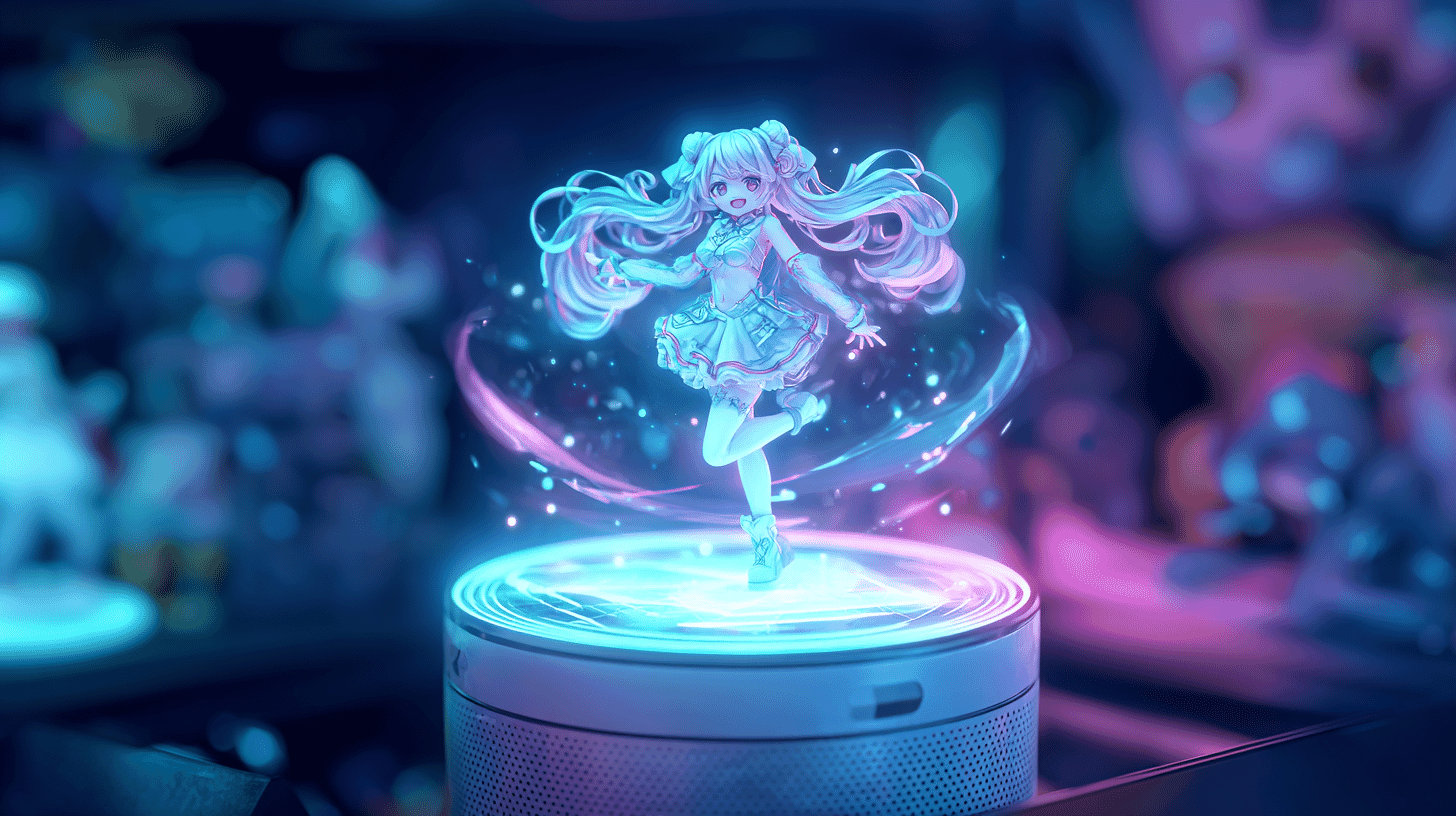
The flagship product in this space is "Gatebox." This cylindrical device projects a hologram-like character inside its chamber, integrated with AI to enable conversations and interactions with users. Your virtual companion can greet you when you come home, inform you about the weather, and essentially create a cohabitation experience with your 2D waifu.
The face of the product is an original character, Azuma Hikari. In December 2023 Gatebox released "Azuma Hikari V2," linked to ChatGPT, so she is no longer limited to a fixed script. The mass-production model, the GTBX-100, was repriced from 165,000 to 120,000 yen including tax in March 2021. The line has since moved on, and the current model is the Gatebox3, now billed as a character summoning display rather than a summoning device. It was shown at Wonder Festival in the summer of 2026, and from that September a collaboration edition that summons Zundamon went on advance sale through Makuake, alongside options such as a custom panel for Azuma Hikari and a mini PC case.
There is a catch with devices like this. The original limited-production model, the GTBX-1, was discontinued at the end of March 2020, and the Hatsune Miku display and voice conversation it carried went with it. HoloModels, the digital figure service that let owners summon characters such as Rem from Re:Zero, ended its Gatebox version in July 2023. When your character lives on someone else's cloud, the service ending means the waifu ends too. Fans have been arguing about that trade-off ever since.
Azuma Hikari V1 and the developer programme on the mass-production model were also the subject of a change announced in June 2024. There is a way out of the structure, though. Tying the box to generative AI shifted it from a dedicated machine for one character to a display for AI characters generally. An official service can end and the hardware still works with something else. The Gatebox Collection app adding support for VRM avatars points the same way.
Holographic Display Devices
Recently, holographic displays that make figures appear to float three-dimensionally, along with smartphone-linked AR apps that "summon" characters, have gained popularity. Fans can now "materialize" their favorite characters in their rooms, take photos with them, and integrate them into daily life.
VR and AR Technology Integration
Taking things further, VR headset services now allow users to go on virtual dates with their beloved characters. As the boundary between reality and virtual worlds blurs, time spent with your "waifu" becomes increasingly immersive and realistic.
How Does Japanese Society React?
Japanese society's reaction to these gadgets and services is varied.
Some praise the technological advancement with comments like "technology has come so far" or "we live in an age where dreams come true." Others offer more grounded perspectives, suggesting people might want to "focus on reality." Some jokingly express concern about "accelerating the declining birth rate," but most Japanese people are tolerant, viewing it as a personal hobby choice.
Interestingly, this technology also holds promise for communication robots and elderly care applications. As a conversation partner for seniors living alone or as part of mental health care, holographic companion technology may contribute to society in unexpected ways.
What's Your Country's "Oshi" Culture Like?
Does your country have a culture of developing strong affection for fictional characters? If so, how do people express it? What do you think about holograms and AI companions? We'd love to hear about your country's "oshi" culture in the comments.
References
- https://www.gatebox.ai/news/20210322-price - Gatebox on the repricing
- https://www.gatebox.ai/news/20231218-v2 - Gatebox on Azuma Hikari V2
- https://www.gatebox.ai/news/20240619-v1 - Gatebox on Azuma Hikari V1 and the developer programme
- https://www.phileweb.com/news/hobby/201912/10/2748.html - PHILE WEB on the limited model shutdown
- https://kai-you.net/article/47447 - Otaku culture and technology









Global Discussion
15 comments