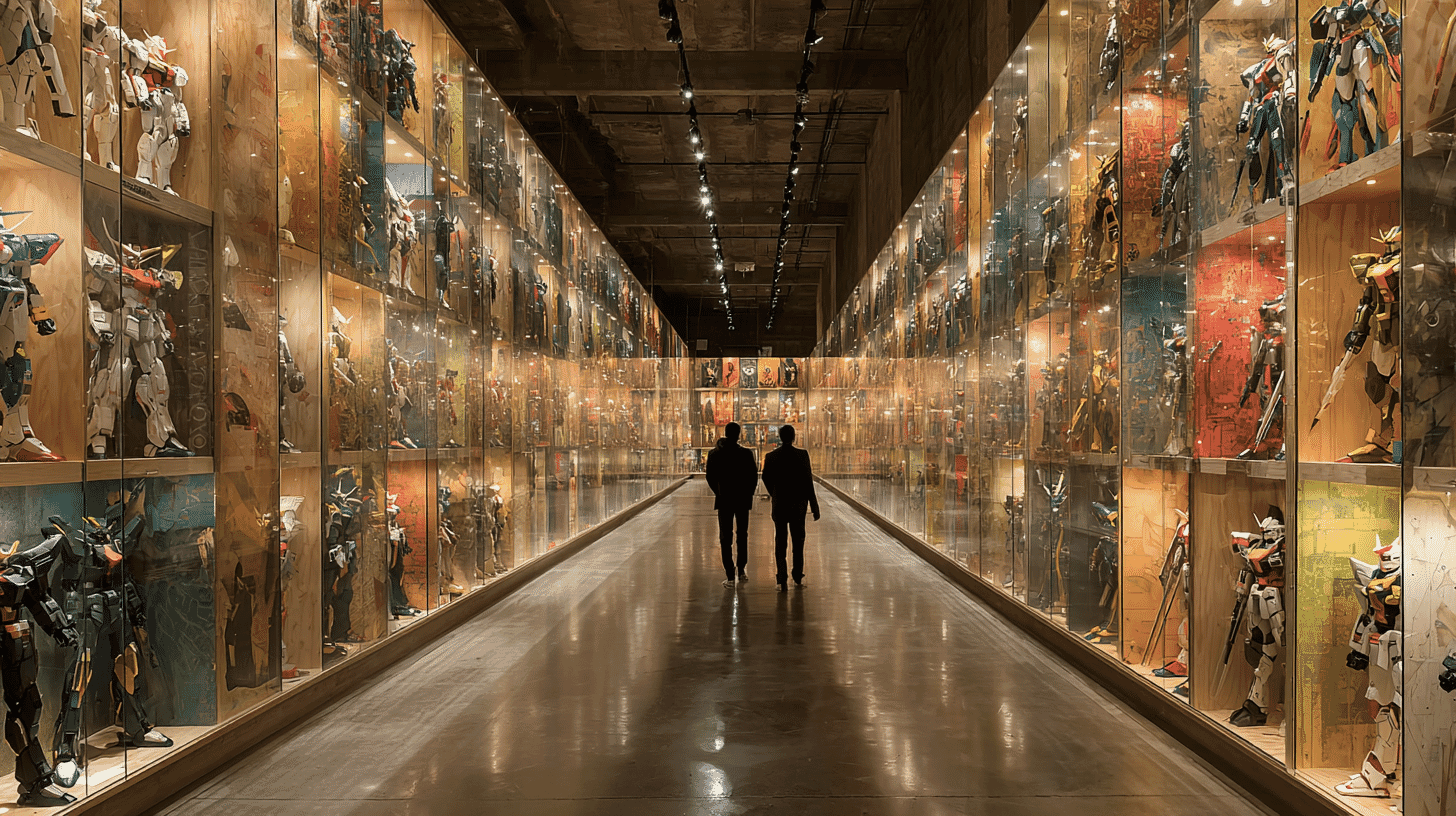
Roughly 80% of Japan's domestic plastic model kit share comes from a single city: Shizuoka. Now Japanese lawmakers want model kit culture officially recognized as a national cultural asset, alongside anime, manga and video games. From the halls of parliament to factory museums and hobby mega-stores, here is why Japan's building culture matters, and where you can experience it.
Japan Launches a Parliamentary League for Model Kit Culture
On March 24, 2026, a group of lawmakers from Japan's ruling Liberal Democratic Party held the inaugural meeting of the "MOKEI Culture Promotion Parliamentary League" inside the National Diet building. The word "mokei" (模型) means "model" or "scale model" in Japanese, and the league's goal is to have model kit culture formally designated as a Japanese cultural asset worthy of government support and international promotion.
Chairing the league is Yoko Kamikawa, a former Foreign Minister who represents Shizuoka's 1st district, in the undisputed capital of Japan's model kit industry. There were eleven conveners in all, among them Yoichi Fukazawa of Shizuoka's 4th district. Shizuoka is home to legendary manufacturers like Tamiya (famous for military models and Mini 4WD), Bandai Spirits (makers of Gunpla), Hasegawa (aircraft models), and Aoshima (cars and ships). Together, these companies account for about 80% of Japan's domestic plastic model production.
At the inaugural meeting, Kamikawa emphasized that model kits embody the spirit of Japanese craftsmanship, or "monozukuri," and hold untapped potential across education, industry, tourism, and international exchange. The invited special guest was comedian Tetsuo Sato of the duo Punk Boobooo, a well-known enthusiast who once headed Yoshimoto's in-house plastic model club. He pointed out that unlike Beyblade, spinning tops repackaged and marketed through anime, model kits have never had their own entertainment vehicle to drive mainstream awareness. His pitch was that entertainment is how you widen the base from heavy users to casual ones, and then to people who simply enjoy looking.
The Cool Japan Connection, and Why People Are Skeptical
The league plans to work through channels including the "Cool Japan" initiative, a government program launched over a decade ago to promote Japanese culture internationally. Shizuoka City has already been designated as a "Content Regional Revitalization Hub" under the Cool Japan strategy, and it boasts the highest plastic model export value in the country.
However, Cool Japan carries significant baggage. The program has been criticized for pouring billions of yen into investments with little measurable return. Online reactions in Japan were a mix of cautious hope and weary cynicism. Many commenters worried that government involvement would mean subsidies flowing to middlemen rather than actual creators, echoing a pattern seen in other cultural promotion efforts. Others questioned whether petroleum-based products were the right thing to promote in an era of environmental consciousness. The league is an informal body without direct policy authority, but its members are expected to advocate for model kits within budget discussions and program planning.
Miniature Culture: A Japanese Tradition Since the Edo Period
Japan's affection for miniatures isn't new. As early as the late Edo period (1603–1868), people across the country enjoyed "hakoniwa", the art of creating landscape scenes inside small boxes using rocks, trees, and sand. This sensibility for condensing vast worlds into tiny, meticulous forms connects directly to bonsai, Japanese garden design, and yes, modern plastic models.
After World War II, Shizuoka's woodworking industry evolved into model kit manufacturing. By the 1960s, plastic model kits had become a household hobby. The game-changer came in 1980 when Bandai released the first Gunpla (Gundam plastic model), featuring an innovative snap-fit design that eliminated the need for glue. This made model building dramatically more accessible. Cumulative Gunpla shipments are reported to be on the order of 800 million units worldwide.
Must-Visit Hobby Spots for Travelers in Japan
If you want to experience Japan's model kit culture up close, here are the top destinations.
Bandai Hobby Center, BHC PDII MUSEUM (Shizuoka City) Opened in September 2025 inside Bandai's new factory, this reservation-only museum offers a 90-minute tour that includes a working factory floor tour, a "Plamo Designer Experience" where you customize your own kit, and a jaw-dropping display of over 4,000 Gunpla units. Tickets are approximately $19 for adults (ages 13+) and $7 for children. A lottery for reservations opens on the 1st of each month for dates three months ahead, so plan early. The museum is an 8-minute walk from JR Higashi-Shizuoka Station.
Gundam Base Tokyo (Odaiba) Located on the 7th floor of DiverCity Tokyo Plaza, this official Gunpla flagship facility features four zones: buy, build, view, and learn. You can purchase exclusive kits available nowhere else, assemble them on-site in the "Build Room," and admire professional modelers' showcase pieces. Outside the building stands a life-size Unicorn Gundam statue that transforms at scheduled times, a must-see photo spot. Satellite locations also operate in Fukuoka, Nagoya, Kyoto, Sendai, and Sapporo's New Chitose Airport. On popular product release days, entry requires a pre-event lottery.
Akihabara & Nakano Broadway (Tokyo) Akihabara's Yodobashi Camera houses an enormous hobby floor, while specialty shops like Yellow Submarine and Volks offer everything from rare vintage kits to the latest releases, plus paints, tools, and aftermarket parts. Nakano Broadway, a short train ride away, is a treasure trove of out-of-print and vintage kits, anchored by the legendary Mandarake chain of secondhand hobby stores.
Shizuoka Hobby Show (Every May) Held annually at Twin Messe Shizuoka, this is Japan's premier model kit event. Tens of thousands of fans from around the world gather for manufacturer reveals, hands-on demos, and a massive amateur modelers' exhibition where the line between pro and hobbyist blurs completely.
Why Plastic Models Deserve More Recognition
When people talk about Japanese pop culture, the conversation usually centers on the "big three": anime, manga, and video games. But plastic models occupy a fundamentally different space, they require the consumer to actively create something. Cutting parts from runners, snapping or gluing them together, sanding, painting, weathering, customizing, the process itself is a form of creative expression, and the finished product is genuinely a one-of-a-kind piece of art.
Social media has supercharged this creative community. Hashtags like #Gunpla connect modelers across borders, with builders from Southeast Asia, Europe, and the Americas sharing techniques and finished pieces. Bandai's Gundam R Operation recycling program collects used runners for reprocessing, adding an environmental dimension to the hobby. What was once seen as a niche pastime is evolving into a globally connected creative movement.
Whether the parliamentary league will translate into meaningful policy support remains to be seen. But the symbolic act of declaring model kits a cultural asset from within the National Diet sends a clear message: Japan is proud of its builders, not just its animators and game designers.
What's the status of plastic models and model kits in your country? Are they seen as toys for kids, a niche hobby, or a respected art form? We'd love to hear your perspective, share your thoughts in the comments!





Global Discussion
15 comments