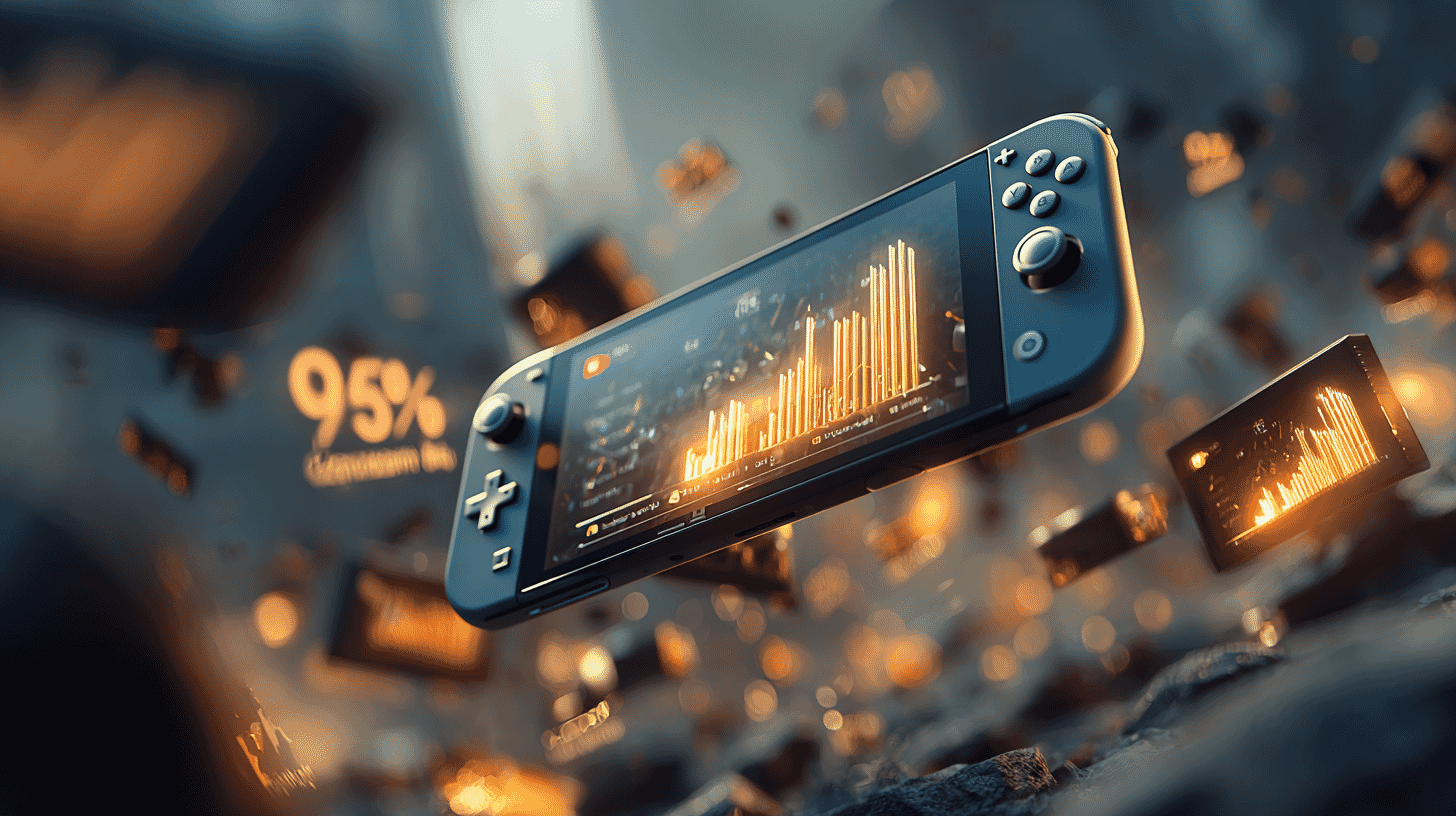
Third-party games on Nintendo platforms just had a record year: revenue jumped 76% over the year before. The number of games sold went down. Revenue rose anyway, and the reason comes down to price.
$2.3 Billion in Third-Party Sales, a 76% Year-Over-Year Surge
UK-based research firm Ampere Analysis released a bombshell report on March 31, 2026, revealing that third-party full game revenue (excluding DLC and season passes) across Nintendo Switch and Switch 2 platforms reached approximately $2.3 billion from Q2 to Q4 of 2025. That's up from $1.3 billion during the same period in 2024, a staggering 76% increase and roughly $1 billion in additional revenue.
For years, Nintendo consoles carried a reputation as "first-party machines" where Mario, Zelda, and Pokémon dominated while third-party titles struggled to gain traction. The report suggests that assumption is loosening. Ampere senior analyst Katie Holt adds a caveat, though: there is no significant evidence yet, she says, of a dramatic shift in the commercial balance between Nintendo's own releases and those from other publishers on Switch 2.
The Switch 2 Effect: AAA Games Finally Come to Nintendo
The primary catalyst for this growth is the Nintendo Switch 2, which launched in June 2025 with significantly upgraded hardware. The improved specs mean that major titles previously limited to PS5, Xbox Series X|S, and PC can now run on the Switch 2. Titles like Cyberpunk 2077 and Street Fighter 6 made their way to the platform in 2025, and Resident Evil Requiem arrived day-and-date alongside other platforms.
Ampere's report also ranked third-party publishers by estimated revenue. Warner Bros. Games claimed the top spot, largely driven by Hogwarts Legacy, followed by Bandai Namco in second and EA in third. All three reportedly earned over $100 million on Nintendo platforms during the tracked period. Japanese publishers including Level-5, Square Enix, Sega, and Capcom also placed prominently in the rankings.
Fewer Games Sold, Higher Prices Paid
While revenue surged 76%, the number of games sold dropped 2.5% year-over-year. Players bought fewer games and spent more. The variable that moved is the average selling price (ASP), up 81%. During the Switch era, the Nintendo platform was flooded with budget-priced ports, indie gems, and mid-tier releases, many priced between $20 and $40. The Switch 2 era has shifted this mix toward full-price AAA releases at $60–$70, matching PlayStation and Xbox pricing.
The $70 Debate: A Global Conversation
Game pricing has been a hot-button issue across gaming communities worldwide, and the Switch 2 has brought Nintendo squarely into the debate.
In Japan, Nintendo's Switch 2 titles cluster in the ¥8,000–¥9,000 range: Mario Kart World is ¥8,980 digital and ¥9,980 physical. In the US the same game is $79.99, which pushed the ceiling on full-price releases. Third-party publishers have generally followed suit, pricing their Switch 2 releases in line with other platforms.
On March 25, 2026, Nintendo announced that starting in May, digital versions of Switch 2 exclusive first-party games in the US would carry a lower MSRP than physical copies. The first title under the policy, Yoshi and the Mysterious Book, launched May 21 at $59.99 digitally versus $69.99 physically. Nintendo said the games offer the same experience in either format and that the difference reflects the costs of producing and distributing each one, adding that the cost of physical games is not going up.
Online reaction has been mixed. Some gamers see it as Nintendo finally acknowledging that digital games should cost less, while others suspect it's a way to gradually push physical prices higher without backlash. Japan has had a split like this since the Switch 2 launched, with digital editions listed ¥1,000 below their physical counterparts.
Why Switch 2 Is Becoming Essential for Publishers
Ampere Analysis argues that the Switch 2 will play an increasingly critical role in third-party platform strategies, for several key reasons.
First, the competition is shrinking. The combined active installed base of PS5 and Xbox Series consoles sits about 15 million units below the PS4/Xbox One generation, a 13% decline in addressable devices. This makes the Switch 2's rapidly growing user base increasingly attractive to publishers.
Ampere counts 154 million original Switch units in consumers' hands by the end of 2025. Nintendo's own figures put lifetime Switch sales at 155.37 million as of December 31, 2025, enough to pass the Nintendo DS and become the company's best-selling console ever. Switch 2 stood at 17.37 million on the same date, roughly seven months after launch, the fastest start in Nintendo's history. Ampere projects the combined active user base across both Switch generations to reach roughly 130 million by the end of 2026, a market too large for any publisher to ignore.
Japan's Gaming Giants Shine
One striking detail from the report is the strong showing of Japanese publishers. With Bandai Namco in second place and Level-5, Square Enix, Sega, and Capcom all ranking high, the data underscores a reality that has long defined Nintendo platforms: they are where Japanese gaming thrives.
The Switch 2's enhanced hardware has allowed these publishers to bring their flagship titles to the platform without major compromises, a capability the original Switch often lacked. For Japanese studios with deep ties to Nintendo's audience, the Switch 2 represents both a homecoming and a commercial opportunity.
Fewer Games, More Money: Sustainable or Fragile?
The Ampere data is clear enough: Switch 2 has arrived as a legitimate revenue platform for third-party publishers. But revenue is up because prices are up, not because more people are buying more games. A 2.5% decline in unit sales is modest, but it signals that the higher price point may be dampening purchase frequency.
"Buy less, pay more" is the current consumer reality. Whether this trend is sustainable or will eventually hit a wall of price resistance remains an open question for the entire gaming industry.
In Japan, opinions are split. Some accept higher prices as an inevitable reflection of ballooning development costs, while others say they've started waiting for sales rather than buying at launch. What about in your country, how are gamers reacting to the rising price of games? Is $70 the new normal, or is there a limit to what players will accept?
References
- https://www.ampereanalysis.com/report/nintendo-switch-switch-2-since-launch-of-new-console-3rd-party-sales-have-grown-76-ye
- https://automaton-media.com/articles/newsjp/20260402-434229/
- https://www.tweaktown.com/news/110810/switch-2-boosts-third-party-sales-by-dollars1-billion-analyst-firm-estimates-wb-games-bandai-and-ea-earned-dollars100-million-plus/index.html
- https://www.nintendo.com/us/whatsnew/about-nintendo-switch-2-game-pricing/
- https://www.eteknix.com/third-party-nintendo-switch-2-games-generate-1-billion-in-nine-months/


Global Discussion
15 comments