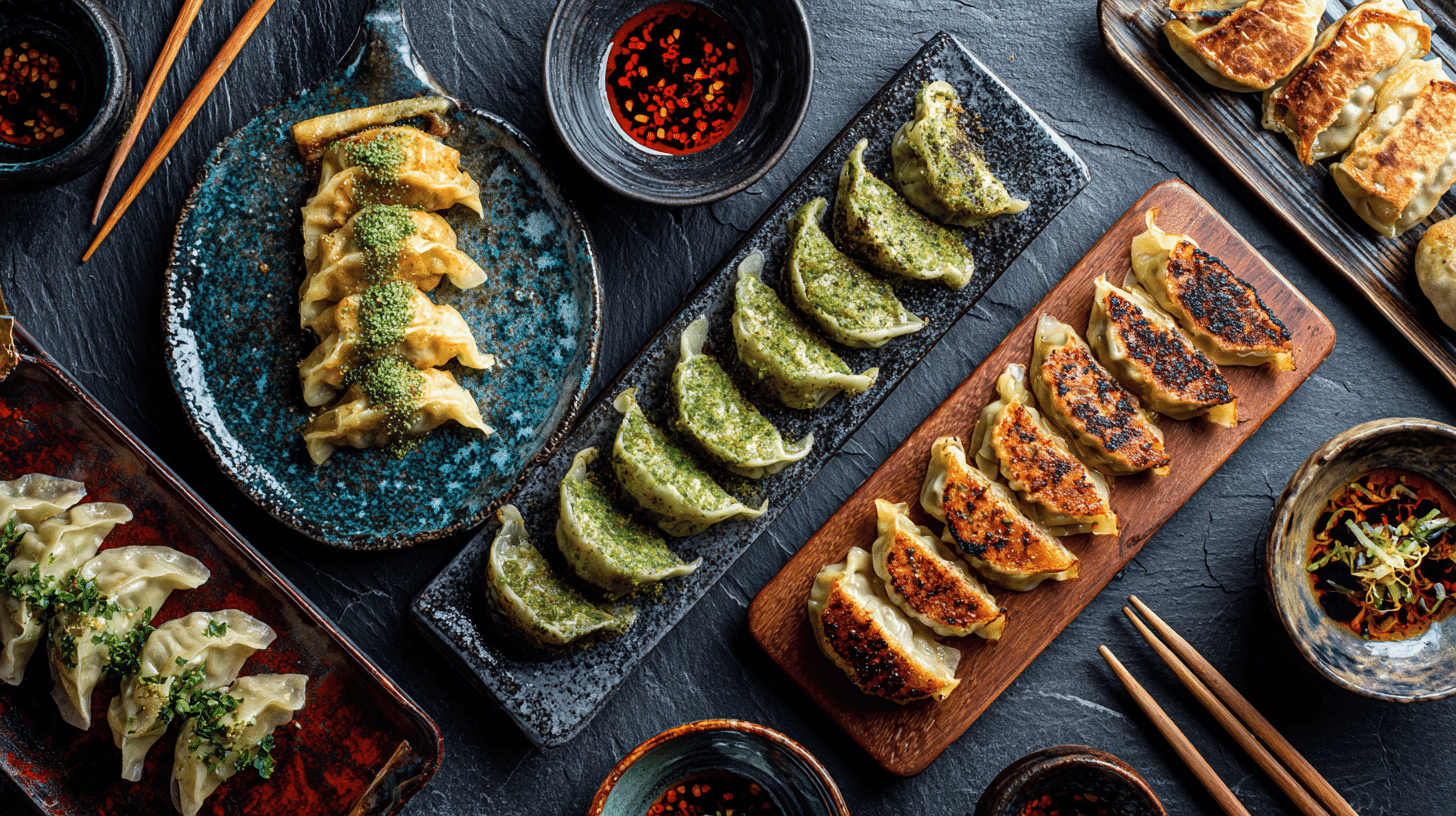
"An izakaya where you can eat gyoza that evolved in America." That single line packs the entire ambition of a Japanese company. After 56 years of running gyoza-centric Chinese eateries across Japan, Osaka Ohsho is finally landing on U.S. soil on May 8, 2026, on a corner of West Los Angeles known affectionately as "Little Osaka." But this isn't your typical international expansion. It's a strategic experiment to flip gyoza from ramen sidekick to the main attraction.
OSAKA OHSHO GYOZA & TAPAS Opens May 8
EAT&HOLDINGS Co., Ltd. (Tokyo, President & COO Hiroyasu Nakata), through its joint venture EAT&MS USA INC., will open its first North American location in Los Angeles' Sawtelle district. The store name is OSAKA OHSHO GYOZA & TAPAS, and grand opening is set for Friday, May 8, 2026.
- Store name: OSAKA OHSHO GYOZA & TAPAS
- Address: 2129 Sawtelle Blvd, Los Angeles, CA 90025
- Size: 27 tsubo (~89 sqm / ~960 sqft)
- Seating: 26 indoor seats + 8 terrace seats (34 total)
- Hours: Weekdays 5:00 PM – 1:00 AM / Weekends 11:00 AM – 1:00 AM
- Operator: EAT&MS USA INC. (joint venture between EAT&HOLDINGS and Mitsubishi Shokuhin, founded October 2024)
What makes this notable isn't that another Japanese chain is opening in America. It's the framing, "an izakaya where you can eat gyoza that evolved in America", and the strategy packed inside that one phrase.
Why Sawtelle (Little Osaka)?
Sawtelle Japantown sits on the west side of Los Angeles, with its commercial heart along Sawtelle Boulevard between Santa Monica Boulevard and Olympic Boulevard. Within just a few blocks you'll find Japanese ramen shops, sushi bars, izakaya, cafes, and the legendary Asian pop-culture store Giant Robot. It's one of LA's premier "Japanese food streets."
The neighborhood's history goes back to the early 1900s, when California's Alien Land Law of 1913 (which banned land ownership by Asian immigrants, including Japanese, until 1952) restricted where Japanese-Americans could live. Sawtelle became one of the few areas open to Japanese settlement, evolving into a community of nurseries, gardeners, and small businesses. After Japanese-American internment during World War II, many returnees resettled here, and the area became a hub of postwar Nikkei life. In 2015, the LA City Council officially designated it "Sawtelle Japantown."
Today, Sawtelle has become a foodie destination, drawing both younger Japanese-Americans and food tourists chasing places like Tsujita LA Artisan Noodle and Tatsu Ramen. Per the press release, Osaka Ohsho chose this location precisely because it offers both food-tourist traffic and walkable residential neighborhoods nearby, the ideal proving ground for an overseas debut.
In America, "Gyoza" Is Just a Side Dish for Ramen
So why is Osaka Ohsho so insistent on the "izakaya" / "GYOZA & TAPAS" framing? Simple, because it's trying to flip the position of gyoza in the American market.
In Japan, gyoza is the most popular ramen side dish, and the ramen-and-gyoza combo is a national staple. But in the United States, that pairing has hardened into a near-rule. At American Japanese restaurants, gyoza is typically served as a small plate of three to five pieces alongside ramen, priced at $6–10. Standalone gyoza specialty restaurants, establishments where gyoza is the headliner, barely exist, even in major cities like Los Angeles or New York.
Osaka Ohsho wants to redefine gyoza as a core element of Japanese food culture, not a footnote. The store will offer 30 varieties of gyoza, all hand-made in-house, with vibrant toppings, new ways of eating designed specifically for the American market, and photogenic plating engineered to make gyoza the star of the table.
Pair that with 40–50 drink options, beer, sake, wine, shochu highballs, designed for gyoza-and-drink combinations, and you've imported the Japanese izakaya experience of "drinking with gyoza." The strategy targets both higher per-customer ticket size and repeat visits.
A Tailwind Is Blowing Through the U.S. Gyoza Market
Here's the other piece of context: gyoza is genuinely growing in America right now. The global frozen gyoza market hit roughly $4.18 billion in 2024 and is forecast to grow at a 7.1% compound annual rate through 2033. North America in particular is projected at 7.8% annual growth from 2025 to 2033, outpacing the global average.
Meanwhile, the U.S. Japanese restaurants industry overall reached approximately $32.2 billion in 2025. Sushi and ramen still dominate that pie, but the question is whether a gyoza-first concept can carve out an independent category. Osaka Ohsho's bet is that the timing is right.
The Tableside Mapo Omurice Show
The most striking element is the entertainment angle. The press release reveals that some menu items, notably mapo omurice (a fluffy omelet over rice topped with spicy mapo sauce), will be finished tableside, in front of guests. The cooking process itself becomes the show.
This echoes a strategy Benihana pioneered in New York back in 1964 with its hibachi tableside cooking, a format that has sustained that chain for 60+ years in America by combining "Japanese food + entertainment." What Osaka Ohsho appears to be attempting is a 21st-century reinvention of that format, optimized for the social-media era.
Engineered for Instagram and TikTok
The strategy's secret weapon is how thoroughly it's tuned to Instagram and TikTok culture:
- Vivid plating: Colors are deliberately amplified beyond standard Chinese or Japanese cuisine
- Mismatched dishware and glassware: The visual rhythm comes from intentional inconsistency
- Tableside cooking: Built for video, designed to deliver an instant moment of impact
- TAPAS format: Small-plate variety encourages "I want to try them all" Instagram-friendly spreads
Adding "TAPAS" to the store name is also a clever cultural translation. Spanish-style tapas bars have been firmly established in U.S. cities since the 2010s. Most American consumers know the format, order lots of small plates, share them around the table. The Japanese izakaya format isn't familiar to most Americans, but tapas bars are. By bridging through that vocabulary, Osaka Ohsho makes its concept instantly graspable.
For Gen Z and Millennials, Instagram and TikTok have become the primary entry points for restaurant decisions. According to U.S. restaurant marketing research, more than half of younger consumers say a social-media post directly led them to visit a new restaurant. Designing for organic social shareability is, effectively, an extremely cost-efficient ad strategy.
Why Mitsubishi Shokuhin?
EAT&MS USA INC. was established in October 2024 as a joint venture between EAT&HOLDINGS and Mitsubishi Shokuhin. Mitsubishi Shokuhin is one of Japan's largest food distribution companies, with deep expertise in supply-chain management and logistics.
Why does this combination matter? The single hardest problem in deploying a restaurant brand overseas is building a local supply chain, sourcing ingredients that can faithfully reproduce the home flavor, maintaining quality, and managing distribution. Doing all of that from scratch is brutal for a restaurant company alone. Mitsubishi Shokuhin already has a U.S. subsidiary (Mitsubishi International Food Ingredients, Inc.) plugged into the North American food distribution network.
EAT&MS USA INC. essentially packages two of the most critical ingredients of overseas expansion, restaurant brand power (EAT&HOLDINGS) and distribution infrastructure (Mitsubishi Shokuhin), into a single strategic vehicle. As the press release puts it, this isn't aimed at short-term profit, but at a medium-to-long-term global growth strategy.
Osaka Ohsho Is Already an Overseas Veteran
To be clear: this isn't Osaka Ohsho's first rodeo internationally. The brand has been expanding overseas for years.
The EAT&HOLDINGS group already operates Osaka Ohsho restaurants across China, Taiwan, Thailand, Singapore, and South Korea, with roughly 30 locations as of February 2024. In March 2024, the group struck a joint venture in China with Yuanji Food Group, a major Chinese chain operating over 3,500 dumpling-and-noodle stores, to accelerate expansion in Guangdong Province.
But all of those markets are in Asia, where cultural distance from Japan is relatively short and where dumplings are already understood as a staple food. The U.S. is fundamentally different, gyoza here lives as a "novelty," a "ramen accompaniment," or a "Chinese takeout side dish." Competing here requires an entirely different strategic playbook.
From a Kyobashi Storefront in 1969 to Los Angeles
A quick history lesson grounds why this matters. Osaka Ohsho was founded in September 1969 in Kyobashi, Osaka, originally as a restaurant simply called "Ohsho." Its signature dish since day one has been "gansojiyaki gyoza", pan-fried gyoza with a crispy bottom and juicy filling. The corporate parent was incorporated as Osaka Ohsho Foods Co. in 1977, renamed EAT&Co. in 2002, and reorganized as EAT&HOLDINGS in 2020 under a holding-company structure.
Today, EAT&HOLDINGS operates over 460 restaurants in Japan and holds 32.5% of Japan's frozen gyoza market, the No.1 share in frozen boiled gyoza. For Japanese consumers, Osaka Ohsho is the very definition of the casual neighborhood Chinese restaurant, the "machichuka", where a bowl of ramen, a plate of gyoza, and half-fried-rice combo runs about ¥1,000 ($6.30) and fills you up.
That extremely working-class brand is now repositioning itself as an experience-driven flagship in the American market, and that swing in framing is what makes this opening genuinely interesting. Per the press release, this is positioned as "not merely an overseas opening that exports Japanese food culture, but the first step in an experience-value-creating overseas expansion model." If the first store works, expansion across California and eventually nationwide is on the table.
Experiential Dining: Japanese Food Export's Next Phase
Step back, and the broader trajectory of Japanese food's overseas expansion comes into focus. There have been roughly four phases:
- Phase 1 (1960s–80s): High-end "special-occasion" cuisine, sushi, tempura, sukiyaki, entered foreign markets
- Phase 2 (1990s–2010s): Daily foods spread internationally, ramen, udon, curry, Japanese-style bakeries
- Phase 3 (2010s–2020s): Japanese ingredients, condiments, and frozen foods penetrated foreign supermarket shelves
- Phase 4 (2020s and beyond): Experience-driven, entertainment-rich restaurant formats are exported
Osaka Ohsho's LA opening is a textbook Phase 4 case. The package being exported isn't just the taste, it's the space, the service, the cooking spectacle, and the social-media virality, bundled together as a total experience. That's a fundamentally different business model than the steady decades-long export of sushi or tempura.
In recent years, Japanese companies have increasingly pivoted from "sell the product" to "sell the experience." Calbee launched "Saya" to differentiate its potato-snack lineup in the U.S.; Kewpie pushed mayonnaise globally for its 100th anniversary. Osaka Ohsho's opening is the leading-edge of that experiential-export wave.
May 8: The Doors Open
The grand opening is the evening of Friday, May 8, 2026, at 2129 Sawtelle Blvd, the heart of Little Osaka. Hours run 5 PM to 1 AM weekdays, 11 AM to 1 AM weekends. The late-night closing time targets SoCal's nightlife crowd, with full izakaya operating hours.
If it works, Osaka Ohsho will have effectively created, and dominated, a new American restaurant category called "Gyoza & Tapas." If it doesn't, the model itself goes back to the drawing board. Either way, this opening is going to be a litmus test for what the next decade of Japanese food expansion abroad looks like.
Would You Want a Gyoza Specialty Bar in Your Neighborhood?
In Japan, gyoza is the partner to ramen, the partner to beer, and the home-cooked dumpling your mother folded by hand. It's a deeply familiar, deeply working-class dish. Now that gyoza is crossing the Pacific to be reframed as the headline act of a drinking spot, how do you, the international reader, react?
Would you go to a place like this if it opened in your city? Or do you think gyoza belongs alongside ramen, not at the center of the table? Drop a comment and let us know.
References
- https://prtimes.jp/main/html/rd/p/000001039.000010329.html
- https://www.eat-and.jp/company/outline/
- https://www.eat-and.jp/company/history/
- https://www.osaka-ohsho.com/
- https://en.wikipedia.org/wiki/Sawtelle_Boulevard
- https://www.discoverlosangeles.com/things-to-do/a-walking-tour-of-sawtelle-japantown






Global Discussion
14 comments