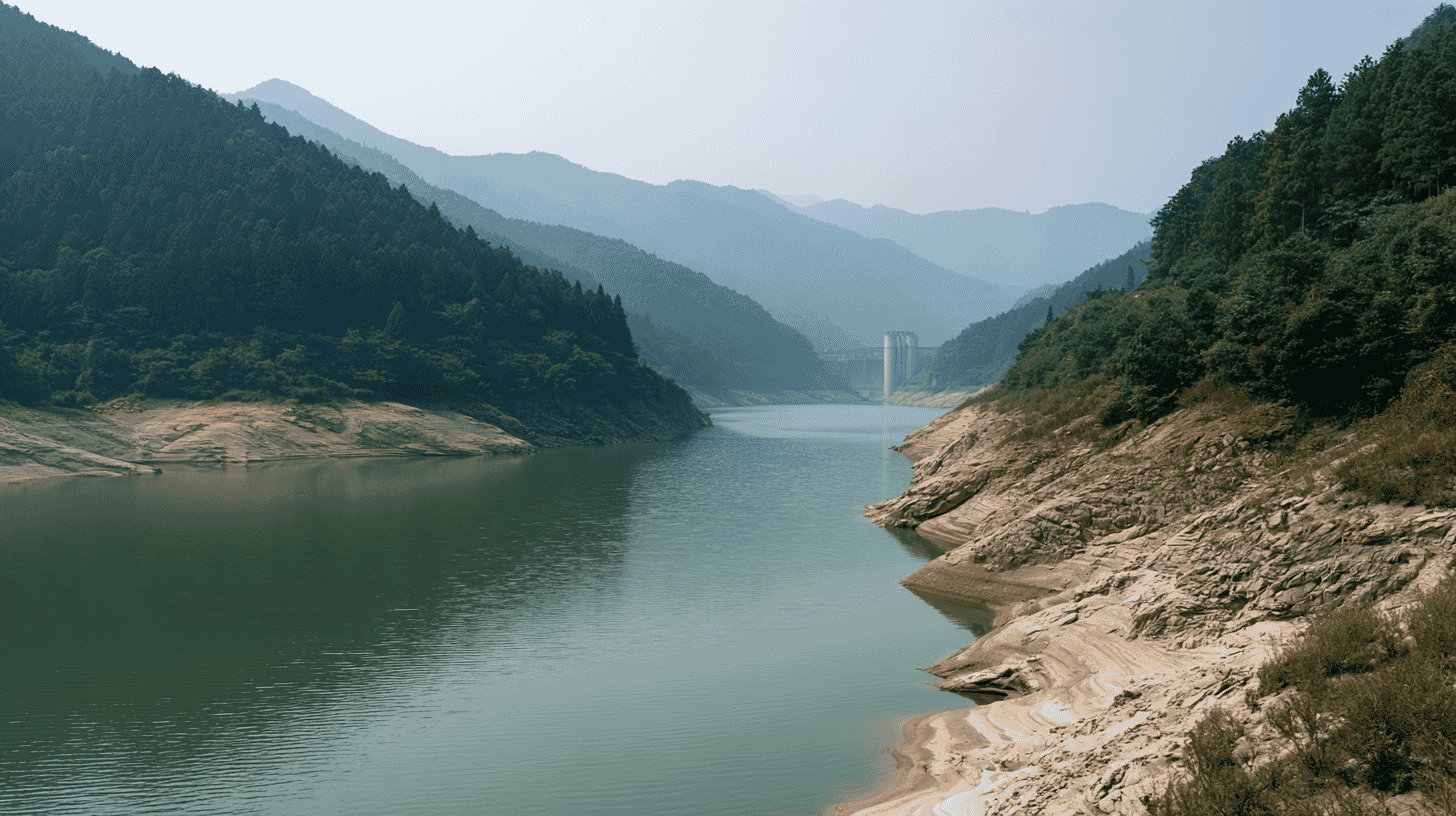
In early September 2026, more than 10,000 small fish floated dead on a reservoir in the hills of Hiroshima Prefecture. They were wakasagi, a smelt that belongs in cold northern water. This reservoir was never home to wakasagi. Who brought them there, and how, is still unknown.
A fish with no business being there
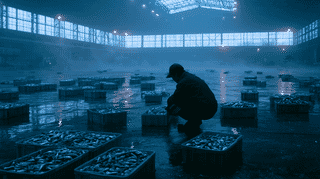
The reservoir sits behind Haizuka Dam in Miyoshi, Hiroshima Prefecture. It is a state-run dam, finished in 2006 on the Joge River, part of the Gonokawa river system, and its reservoir covers 354 hectares. On the afternoon of September 2, a worker patrolling the dam noticed large numbers of dead fish. They were wakasagi, 8 to 10 centimeters long, and cleanup crews collected about 10,400 of them on September 3 and 4, according to the Chugoku Shimbun, a regional daily.
Wakasagi (Japanese smelt) are a fixture of Japanese winter fishing, where anglers drill holes in frozen lakes, and of tempura. Their native range is Hokkaido, plus Honshu north of the Tokyo area on the Pacific side and north of Shimane Prefecture on the Sea of Japan side, according to a database run by Japan's National Institute for Environmental Studies (NIES). Yet today they live in lakes and reservoirs across nearly all of Japan north of Kyushu, because people keep stocking them for anglers. More than a century ago, eggs were carried from Lake Kasumigaura to Lake Suwa in Nagano. Today Lake Suwa ships its own eggs across the country.
According to the Chugoku Shimbun, Hiroshima Prefecture has wakasagi in two other reservoirs, where fisheries cooperatives licensed by the prefecture buy fertilized eggs from Hokkaido. But both sit in the Takahashi River system, separate from the Gonokawa, so it is hard to see how the fish could have arrived on their own. The two local fisheries cooperatives around Haizuka hold no fishing rights for wakasagi and do not stock their eggs.
The Miyoshi office of the Ministry of Land, Infrastructure, Transport and Tourism (MLIT), which oversees the dam, first recorded wakasagi in the reservoir during an environmental survey in 2023. A member of a local volunteer cleanup group first found a dead one about three years ago while bass fishing, and says he has seen schools of them many times. The MLIT office told the paper it can only assume someone released them.
30°C water, a reservoir at 60%
The office blames heat and drought. It says wakasagi can live in water up to about 26°C, but the surface of the reservoir reached around 30°C. Scant rain since July had dropped the water level by 2.5 meters, and the reservoir stood at about 60% of capacity, against close to 90% in a typical year at this point. Below 50%, water intake restrictions kick in, local broadcaster RCC reported. According to the Japan Meteorological Agency (JMA), western Japan's average temperature in mid-July, late July and late August 2026 each set a record going back to 1946.
Small fish were seen swimming beside the dead wakasagi, so the dam office does not suspect poisoning, Hiroshima TV reported.
Lake Shinji in Shimane Prefecture, which the prefecture says marks the southern limit of the wakasagi's natural range in Japan, offers a precedent. Its catch fell from 190 tons in 1993 to 20 tons in 1994, and in recent years the fish has barely been caught. The prefecture believes water above 30°C through the summer of 1994 probably killed them; some researchers point to pesticides instead.
Not "alien" under the law
Invasive species need not come from abroad. A species carried to a part of its own country where it never lived counts as an alien there too. Hokkaido's prefectural government gives an example: a Japanese rhinoceros beetle carried into Hokkaido, where it does not naturally live, counts as a domestic alien species. Even within one species, local populations differ genetically, and Genji fireflies in Japan fall into three broad regional groups, according to Toho University. Haizuka is the blunter case: a whole species moved outside its range.
Japan's Invasive Alien Species Act, however, defines alien organisms as those brought in from overseas and does not cover species moved within Japan, according to the Ministry of the Environment. Hiroshima Prefecture's nature conservation division told the Chugoku Shimbun that releasing wakasagi is not illegal, unlike releasing black bass, which is a designated invasive species. The Environment Ministry's list of invasive species does include domestic ones, but its purpose is to raise awareness and encourage people to act. It is a guide, not a ban.
Introductions are not always deliberate, either. Genetic analysis has shown that pale chub of Lake Biwa origin reached rivers in the Kanto region mixed in with ayu (sweetfish) from the lake that were shipped for stocking, and now live alongside the local lineage, according to a 2009 paper in the Japanese Journal of Limnology. How wakasagi reached Haizuka is unknown, and it was not necessarily a deliberate release.
In California, the same fish is the invader
Across the Pacific, wakasagi play a different part. In 1959, California's fish and game department brought wakasagi from Japan as an experimental food source for trout, according to the U.S. Geological Survey (USGS). The fish is now established in several California reservoirs and their tributaries, and it interbreeds with the native delta smelt. The delta smelt has been protected under federal and California endangered-species laws since 1993, and California upgraded it to endangered in 2009, according to the California Department of Fish and Wildlife.
A 2000 study in the journal Oecologia compared how the two handle heat. In a heating test on fish acclimated to 17°C, the delta smelt tolerated water up to 25.4°C and the wakasagi up to 29.1°C. In California, the wakasagi is the tougher newcomer. The surface of the Hiroshima reservoir, at around 30°C, was warmer than even that.
Good intentions and accidents
Fish get moved for many reasons, from stocking a fishing spot to riding along unnoticed in someone else's shipment. The NIES database, last updated in 2013, lists the wakasagi's effect on the waters where it is introduced as unknown. The Haizuka fish died in the heat; in a milder summer, they might have stayed.
Where you live, can anyone release fish from another part of the country into a lake or river, or does it take a permit?
References
- https://www.chugoku-np.co.jp/articles/-/890222
- https://iraw.rcc.jp/topics/articles/36409
- https://iraw.rcc.jp/topics/articles/36435
- https://news.livedoor.com/article/detail/32242462/
- https://www.data.jma.go.jp/cpd/longfcst/seasonal/202608/202608s.html
- https://www.nies.go.jp/biodiversity/invasive/DB/detail/50890.html
- https://www.pref.nagano.lg.jp/suisan/joho/kids-wakasagi.html
- https://www.pref.shimane.lg.jp/admin/seisaku/koho/teian/record/2024/202410/A2024-00125.html
- https://www.pref.hokkaido.lg.jp/ks/skn/tayousei/gairaisyu.html
- https://www.toho-u.ac.jp/sci/bio/column/0829.html
- https://www.env.go.jp/nature/intro/1law/yougo.html
- https://www.env.go.jp/nature/intro/2outline/iaslist.html
- https://doi.org/10.3739/rikusui.70.249
- https://nas.er.usgs.gov/queries/factsheet.aspx?SpeciesID=794
- https://wildlife.ca.gov/Conservation/Fishes/Delta-Smelt
- https://doi.org/10.1007/s004420051025



Global Discussion
4 comments