
🏛️ Japan just revealed how it plans to invest in Rapidus, the startup aiming to mass-produce cutting-edge 2nm chips. The government becomes the largest shareholder, with only about 10% of voting rights. It holds "golden shares" with veto power over foreign acquisitions. And if things go south, it can seize majority control overnight. Here's how Japan built a precision safety mechanism for a $19 billion bet.
The Full Picture: Largest Shareholder with Minimal Voting Rights
On February 26, 2026, the complete structure of Japan's government investment in Rapidus was revealed. At first glance, it seems contradictory, the government will be the largest shareholder while holding only about 10% of voting rights.
Here's how it works. The vast majority of government-held shares are designed as "non-voting preferred stock." This means the government is the biggest investor by capital but deliberately stays out of day-to-day management decisions. It holds just 1% more voting rights than the largest private shareholder, securing its position as the top shareholder in name.
The investment flows through the Information-technology Promotion Agency (IPA), an independent administrative agency under the Ministry of Economy, Trade and Industry (METI). On February 27, 2026, the government paid in ¥100 billion (about $630 million) through IPA, becoming the top shareholder with 11.5% of voting rights. A further ¥150 billion (about $950 million) followed from IPA on June 5, 2026.
This "light voting rights, heavy capital" structure has a clear rationale. Semiconductor manufacturing demands rapid responses to market shifts, government interference in every business decision would be fatal. But with billions of dollars in public funds at stake, accountability to taxpayers is equally non-negotiable. This scheme resolves that tension.
Golden Shares and the "Emergency Brake"
Government involvement extends beyond voting rights. It also holds "golden shares", a special class of stock that grants veto power over critical corporate decisions.
For those unfamiliar with the term, a golden share lets the government say "no" when the company is about to be acquired by a foreign entity or transfer key technologies to a third party. Specifically, any share transfers to other companies or major technology partnerships require government consent.
Japan has precedent for this: energy giant INPEX issued golden shares to the government to protect energy security. More recently, when Nippon Steel acquired US Steel, it agreed to give the US President veto-power shares over relocation of headquarters, production, and jobs overseas, heightening interest in this mechanism.
Even more critical is the "emergency brake" function. If Rapidus falls into insolvency or faces a financial crisis that makes recovery difficult, the government can convert its share class to obtain over two-thirds of voting rights, matching its actual investment ratio. METI officials describe the veto as something to be exercised if an economic security problem arises, with the private sector leading day to day. In normal times the company runs freely; in a crisis the government takes the wheel. This is the safety valve on a very large deployment of public funds.
$19 Billion and Counting: Japan's Commitment by the Numbers
The scale of government support for Rapidus is staggering when laid out in detail.
R&D subsidies and contract research from FY2022–2025 total up to $10.7 billion (¥1.7 trillion). An additional $4 billion is earmarked for FY2026, plus $1.9 billion for FY2027. Direct equity investment through IPA adds $630 million in FY2025 and $950 million or more in FY2026. In FY2027–28, equipment at the Chitose factory currently owned by NEDO (Japan's national R&D agency) will be transferred to Rapidus in exchange for equity, a "contribution in kind."
Combined, cumulative government support reaches approximately $19 billion (¥2.9 trillion). Total investment needed for mass production is estimated at $31.5 billion (¥5 trillion), with the remainder to come from private sources. Private appetite came in above expectations. In the capital increase executed on February 27, 2026, the government put in ¥100 billion while 32 companies, including 24 newcomers such as Honda, Canon, and Fujitsu, contributed ¥167.6 billion, for a combined ¥267.6 billion (about $1.7 billion). The private share alone beat the ¥130 billion that had been projected as of November 2025. SoftBank and Sony Group each put in about ¥21 billion (roughly $130 million) to become the largest corporate shareholders.
According to the business plan submitted to METI, Rapidus targets operating profitability by FY2030 and an IPO with positive free cash flow by FY2031.
Can 2nm Mass Production Actually Happen?
Rapidus's technical progress has surprised even skeptics.
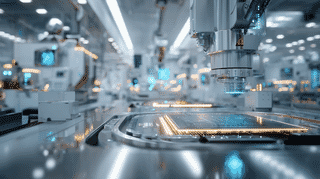
The pilot line at the IIM-1 facility in Chitose, Hokkaido, became operational in April 2025, equipped with over 200 state-of-the-art single-wafer processing tools. By July 2025, Rapidus successfully fabricated 2nm GAA (Gate-All-Around) transistors and confirmed their operation. What stunned the industry was the speed: a process that typically takes 45 days was completed in just 12 days and 18 hours, leveraging AI-driven optimization.
GAA transistors represent the next generation of chip architecture, where nanoscale sheet channels are surrounded by gates on all sides. Compared to the older FinFET design, GAA offers lower leakage current and better performance, but manufacturing complexity increases dramatically.
The roadmap ahead includes mass production of 2nm chips in the second half of FY2027 (targeting 25,000 wafers per month), followed by 1.4nm generation production in FY2029–30. Back-end processing R&D (chip packaging) begins in earnest in April 2026 at a newly built facility adjacent to the main fab.
Challenges remain significant. Yield improvement, stable EUV lithography operation, and securing sufficient customers are all critical. Some Japanese lawmakers have suggested that if yield targets aren't met, pivoting to 5nm or 7nm processes should be considered. The current workforce exceeds 1,000, but mass production will require substantially more talent.
Global Comparison: How Nations Are Building Semiconductor Industries
Understanding Rapidus requires context from the global semiconductor subsidy race.
The US CHIPS Act (2022) provides $39 billion in manufacturing grants and up to $25 billion in tax credits (25% of investment). TSMC, Samsung, and Intel are major recipients. As of January 2025, approximately $33.7 billion in direct funding has been awarded. TSMC has pledged to expand its US investment from $65 billion to $165 billion.
The EU Chips Act (2023) aims to mobilize €43 billion ($50.5 billion) in total investment, but only €3.3 billion comes directly from the EU budget. The rest relies on member state contributions and reallocation of existing EU funds. The approval process has been criticized as slow, and the original target of 20% global market share by 2030 is expected to fall short at 11.7%. A "Chips Act 2.0" is currently under discussion.
Japan's semiconductor strategy commits over $63 billion (¥10 trillion) to semiconductors and AI through FY2030, including Rapidus support and TSMC's Kumamoto fab. Relative to GDP, Japan's semiconductor investment is among the most aggressive of any major economy.
The 2nm Race: Where Rapidus Stands Against TSMC, Samsung, and Intel
The current state of the 2nm production race highlights Rapidus's competitive position.
TSMC began mass production of its N2 process in late 2025, ramping to 100,000 wafers per month in 2026 and 200,000 by 2027. Wafer prices exceed $30,000 (roughly double 4nm prices). Apple has locked up nearly half of initial N2 capacity, and 2026 production is already fully booked. TSMC holds approximately 71% of the global foundry market.
Samsung announced the world's first 2nm mobile processor (Exynos 2600) in December 2025, with yields stabilizing at 50–60%. Its Taylor, Texas fab targets completion in July 2026, with orders from AMD and Google expected. Samsung recently secured a $13.2 billion foundry deal with Tesla.
Intel has pushed its 18A process (roughly 2nm equivalent) to 55% yield, targeting mass production in late 2025 to 2026, though past delays warrant caution.
Rapidus plans to begin mass production in the second half of FY2027, roughly two years behind TSMC and Samsung. However, Rapidus is not trying to compete on volume. Its strategy centers on "short TAT" (turnaround time), aiming for manufacturing cycles half as long as TSMC's. The RUMS (Rapid and Unified Manufacturing Service) model integrates design support, front-end, and back-end processes to target custom chips, prototypes, and small-lot production for AI, autonomous vehicles, and data centers.
Why the Government Is Going All-In: Economic Security
Japan's aggressive commitment to Rapidus is driven by deep national security concerns.
In the 1980s, Japanese companies held over 50% of the global semiconductor market. By the 2020s, that share had fallen below 10%. Japan's ability to manufacture cutting-edge logic chips had essentially dropped to zero, leaving the country entirely dependent on foreign suppliers for the chips powering AI, autonomous driving, and data centers.
The rising geopolitical tension around the Taiwan Strait has exposed how dangerous this dependency is. Approximately 90% of the world's most advanced logic semiconductors are produced in Taiwan, meaning a single military conflict could paralyze the global economy.
If the Chitose factory succeeds, Japan will regain cutting-edge logic chip manufacturing capability for the first time in 20 years. The investment scheme, minimal voting rights in peacetime, golden share vetoes against technology leakage, and emergency majority control, is specifically designed to protect this strategic asset.
METI Minister Ryosei Akazawa has called Rapidus "a national project that must succeed for the sake of national interest." It is treated less as a company's project than as a state undertaking.
In Japan, there's a fierce debate between those who worry about pouring billions in taxpayer money into an unproven venture and those who believe this is Japan's last chance to revive its semiconductor industry. How does your country handle government investment in strategic industries? We'd love to hear your perspective.
This article was published from the investment scheme disclosed on February 26, 2026. The February 27 capital increase totaling ¥267.6 billion and the additional ¥150 billion from IPA on June 5 were added as of July 2026.
References
- https://www.nikkei.com/article/DGXZQOUA192Q60Z10C26A2000000/
- https://www.nikkei.com/article/DGXZQOUA218OG0R21C25A1000000/
- https://www.zaikai.jp/articles/detail/5412
- https://www.jiji.com/jc/article?k=2025112101164&g=eco
- https://www.nikkei.com/article/DGXZQOUC120RH0S5A211C2000000/
- https://en.wikipedia.org/wiki/2_nm_process
- https://www.meti.go.jp/shingikai/sankoshin/shomu_ryutsu/next_generation_semiconductor/pdf/008_03_00.pdf
- https://xtech.nikkei.com/atcl/nxt/column/18/00001/11537/








Global Discussion
15 comments