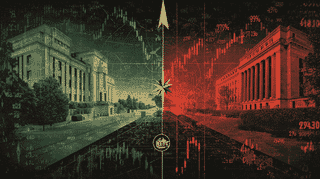
Haruhiko Kuroda, the governor who ran Japan's decade of extraordinary easing, now calls the weak yen excessive and wants 130 per dollar, plus rate hikes to 1.5%. Japanese social media responded with a collective 'look who's talking.' The rate-gap mechanics, the carry trade, and why the yen kept sliding even after the BOJ went to 1.00% in June 2026.
The day after Japan's April 30 intervention, Vice Finance Minister Atsushi Mimura hinted at more with a single line: Golden Week is just getting started. The campaign eventually totalled a record 11.7 trillion yen. But against a fifth straight year of trade deficits, an oil bill inflated by the Iran conflict, yen weakness against every major currency, and a 40-trillion-yen carry trade, intervention only buys time. Even the June hike to 1.0 percent did not turn it.
On April 30, Japan intervened to buy yen for the first time in 21 months. Hours after Finance Minister Satsuki Katayama warned of 'decisive action' and Vice Minister Atsushi Mimura issued a 'final evacuation warning,' the dollar fell about 5 yen from the high 160s to 155.50, its steepest one-day drop since December 2022. The campaign continued through Golden Week and totalled a record 11.73 trillion yen. The yen kept falling anyway.
One day after the Bank of Japan held rates on April 28, the yen hit a 21-month low of 160.67 and 10-year JGB yields reached 2.535 percent, the highest since 1999. A falling currency and rising yields are not supposed to move together. We unpack what that combination says about being behind the curve, the intervention question, the carry trade, and a hawkish Fed, then follow the story through the June hike to 1.0 percent and a yen that kept sliding anyway.
The Bank of Japan held its policy rate at 0.75% on April 28, 2026 by a 6-3 vote, with three dissenters proposing a hike to 1.0%, a first under Governor Ueda. We unpack Ueda's press conference, allegations of pressure from the Takaichi administration, the sharp upward revision in inflation forecasts, the immediate market reaction, and the divergence between domestic and international assessments.
Tokyo Gas raises its monthly base fee by ¥150 ($0.94) starting October, the first hike since 1980. But in Japan, many are reacting with 'isn't 46 years of NO change the weird part?' A look at how Japan compares to US, UK, and Sweden gas bills, what yen weakness and LNG imports mean, and why this signals the end of Japan's deflation era.
Japan's gasoline has hit record highs, dialysis tubing is running out, and bathtubs can't be shipped. With 95% of crude oil coming from the Middle East, pivoting to the world's largest oil producer, America, seems like a perfect Win-Win. But refinery design, tanker size, the Panama Canal bottleneck, and an ironic naphtha yield problem all stand in the way. Here's why the obvious solution isn't simple.
The Hormuz Strait blockade has cut off Japan's naphtha supply, forcing TOTO to halt bathtub orders and LIXIL to declare delivery dates unknown. Insulation up 40%, paint up 80%, pipes up 20%; housing materials are skyrocketing across the board. We analyze Japan's structural vulnerability of depending on the Middle East for 90% of its crude oil, with comparative data from other countries.
Japan's Economy Minister Akazawa was reprimanded by PM Takaichi and Finance Minister Katayama for suggesting BOJ rate hikes as a policy option on national TV. We explain why this crossed Japan's central bank independence red line, amid surging oil prices, a weak yen at 159, and the upcoming April 27-28 BOJ meeting.
On April 13, 2026, Japan's 10-year government bond yield surged to 2.490%, surpassing the 1998 'Trust Fund Bureau Shock' level for a 27-year high. BOJ Governor Ueda warned of Middle East geopolitical risks at the Trust Convention. All eyes are on the April 27-28 policy meeting.
Japan's Economy Minister Akazawa called BOJ policy to boost the yen 'one option' to curb Iran-driven inflation. With USD/JPY near 160 and a 60% chance of a BOJ rate hike on April 28, we explain why a cabinet minister weighing in on forex policy is so unusual.
Bandai's new Shizuoka factory boosts production capacity by 35%, and discounted Gunpla is returning to store shelves. But restock-day chaos, customers running through aisles, grabbing boxes from carts, is pushing some retailers to drop Gunpla entirely. We cover Yahoo Auction's 3-month resale ban, overseas availability improvements, and what it all means for fans worldwide.
Three years into Governor Ueda's tenure, the BOJ has raised rates four times from negative territory to 0.75%, while long-term yields hit a 27-year high of 2.43%. We examine the IMF's call for continued hikes, April rate hike expectations, impacts on mortgages and corporate investment, and Japan's unique position as the only G7 nation still tightening.
The Bank of Japan's April 2026 Sakura Report kept economic assessments unchanged across all 9 regions. With the Hormuz Strait effectively blocked, energy prices soaring, and 10-year bond yields hitting 2.425% — a 27-year high — all eyes turn to the April 27-28 policy meeting.
The IMF's April 2026 Article IV report recommends the BOJ continue gradual rate hikes toward neutral. With two hikes in 2026 and one in 2027 targeting 1.5%, we analyze the impact on yen, JGB yields, carry trades, and the IMF's warning on consumption tax cuts.
Japan's real estate investment hit a record $43 billion in 2025, with foreign investors accounting for $16 billion. As the weak yen makes Tokyo properties a global bargain, locals are being priced out — but signs of a market correction are emerging.
Finance Minister Satsuki Katayama warns the forex market has become 'highly speculative' as the yen falls to 160 per dollar. We analyze the structural forces behind yen weakness, carry trade risks, and G7 emergency coordination.
The BOJ published a landmark review on March 30, 2026, analyzing trend inflation through three approaches. We explain the new CPI core indicators stripping out special factors, compare methods with the Fed's PCE and ECB's HICP, and assess whether this signals more rate hikes ahead.
The BOJ released its 'Summary of Opinions' from the March meeting on March 30. Despite surging oil prices from the Iran crisis, multiple board members called for continued rate hikes. We analyze the path from the current 0.75% rate, accelerated hiking scenarios, comparisons with the Fed and ECB, and yen carry trade risks.
The BOJ eyes an April rate hike as Iran's oil shock pushes inflation risks higher. With 10-year yields at 27-year highs, strong wage growth, and diverging policies from the Fed and ECB, we break down what this means for the yen, carry trades, and global markets.