In February 2026, Japan's Financial Services Agency issued an unprecedented warning to regional banks about surging real estate lending. Tokyo condo prices average $900,000, the BOJ has taken its policy rate to 1.00%, and variable mortgage rates have crossed 1%. We compare the numbers with the 1990s crash and track where foreign money is going.
The Bank of Japan overhauled its output gap and potential growth rate estimation on March 26, 2026, while launching labor market indicators and new Core CPI data. Learn how these changes lay the groundwork for further rate hikes.
As the yen approaches 160 to the dollar, the Hormuz Strait blockade has triggered an oil price surge, delivering a devastating double blow to Japan's energy-import-dependent economy. Analysis of record gasoline prices, structural vulnerabilities, and comparisons with South Korea and Germany.
Behind the global matcha craze, Japan's domestic tea prices are surging to unprecedented levels. The cheapest tea grade now costs more than premium first-harvest leaves. With tea farms shrinking and overseas demand exploding, Japan's centuries-old tea culture faces its biggest challenge yet.
Japan's gasoline hits a record ¥190.8/L ($1.27/L) as the Hormuz Strait blockade chokes off 90%+ of crude imports. With the last Middle East tanker arriving March 22, government subsidies restarting, and Alaska crude on the table at the US-Japan summit, Japan faces its gravest energy crisis in decades.
The Bank of Japan held its policy rate at 0.75% on March 19, 2026, as the Middle East conflict and surging oil prices cloud the economic outlook. Governor Ueda maintained a rate-hike bias but warned that rising energy costs could push underlying inflation either way. With spring wage negotiations delivering 5%+ raises for a third straight year and the yen hovering near 160, Japan faces a complex policy dilemma.
Japan's 2026 official land prices rose 2.8% nationwide — the steepest climb since the bubble era. Tokyo topped residential gains for the first time in 18 years, while semiconductor factories and record tourism reshape regional land markets. Foreign investors now account for 27% of property deals.
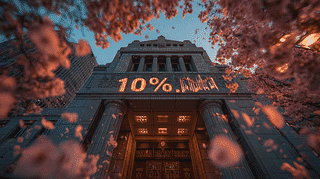
PM Takaichi declared no further consumption tax increases in parliament. We break down Japan's fiscal strategy, its 10% rate vs Europe's 20%+ VAT, and how markets are responding to the world's highest debt-to-GDP ratio.
Japan's Cabinet Office reports Q4 2024 output gap turned positive at +0.2%, marking approximately $6.7 billion in annual excess demand. This key indicator suggests a historic shift away from decades of deflation and demand shortfall. Analysis covers BOJ rate decisions, wage growth, CPI trends, and comparisons with the US and eurozone.
Japan's Financial Services Agency is tightening scrutiny of regional banks' real estate lending, which has hit a record $770 billion. As BOJ rate hikes stress the property market, we examine cross-border lending risks, lessons from Japan's bubble collapse, comparisons with the US SVB crisis, and the ongoing wave of regional bank consolidation.
Market consensus points to April for the BOJ's next rate hike. From the current 0.75% policy rate toward a 1.5% terminal rate, we analyze the tightening path, the Iran crisis oil shock creating a stagflation dilemma, and key points for the March 18-19 policy meeting.
With the Strait of Hormuz shut in all but name, the IEA's 32 members unanimously approved a record 400-million-barrel coordinated release on March 11, 2026. Japan carried 80 million of it and began draining national reserves on March 26. Where those 254 days went, and what July's re-escalation means.
The Bank of Japan held its policy rate at 0.75% at its March 18-19, 2026 meeting, as oil prices and yen weakness from the late-February Iran conflict weighed on the case for a hike. We cover Deputy Governor Himino and hawk Takata, the reflationist board nominees, the rate gap with the Fed and ECB, the yen carry trade, and the road to the June hike to 1.0%.
BOJ's most hawkish board member Hajime Takada urged further rate hikes in a Kyoto speech, using a "gear shift" metaphor to describe Japan's monetary policy normalization. With the 2% inflation target nearly achieved and wage growth accelerating for a fourth year, we analyze what this means for global markets, the yen carry trade, and how Japan's path diverges from the Fed and ECB.
Japan's PM Takaichi pushes for a cross-party "National Council" to eliminate food consumption tax for two years. We break down the $32 billion revenue impact, risks to fiscal balance, yen depreciation concerns, and how Japan's 10% rate compares to VAT systems in the EU, UK, and Canada.
Resales at Harumi Flag are stalling and Osaka tower mansion inventory has doubled in two years. Foreign ownership above 40%, zero-capital flipping via simultaneous registration, tighter bank screening, and 2026 data showing prices and contract rates moving apart.
As cocoa prices hit record highs, Japan embraces innovative alternatives — from sunflower seed "chocolate" to soy meat. Discover how rising food costs are reshaping Japanese food culture, driving innovation, and changing consumer habits just in time for Valentine's Day.
Japan's child poverty rate stands at 11.5%, soaring to 44.5% for single-parent households. A survey by Good Neighbors Japan reveals how inflation is forcing families to cut meals, with 90% of respondents unable to afford basic staples like rice, meat, and vegetables. Inside the "invisible poverty" crisis hiding in plain sight in one of the world's wealthiest nations.
From Ito-Yokado to Parco and Meitetsu Department Store, commercial facilities across Japan are shutting down at an alarming rate. With e-commerce growth, population decline, and aging buildings converging, redevelopment plans remain uncertain. We explore the impact on local economies and what comes next.
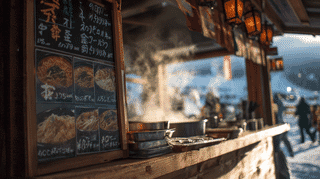
A ¥3,000 plate of yakisoba in Niseko, Hokkaido, has drawn attention. Behind such prices are hourly wages above ¥2,000, Tokyo-level rents and a business that must earn a year's income in about 100 winter days; one operator says a ¥3,000 katsu curry leaves only about ¥180 in profit. A look at the economics of a world-class resort and its shadows.