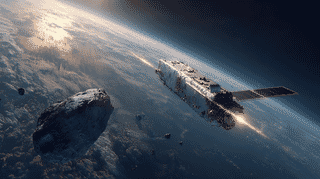
On April 13, 2029, the 450m asteroid Apophis will pass just 32,000 km above Earth. Japan and Europe are joining forces on RAMSES, the next planetary defense mission after NASA's DART. JAXA provides the infrared imager, solar panels, and H3 rocket launch as a rideshare with DESTINY+, stepping up as US budget cuts threaten its own Apophis mission.
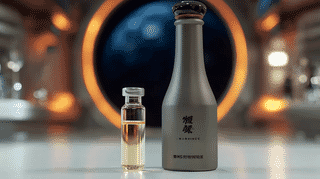
Yamaguchi's premium sake brand Dassai and Japanese engineering giant Mitsubishi Heavy Industries brewed sake in space for the first time in human history. The result was a single 100ml bottle, priced at about $700,000, and it sold. Inside the Dassai MOON Project, the long-term plan to build a brewery on the Moon, plus practical brewery-tour information for visitors to Iwakuni, Yamaguchi.
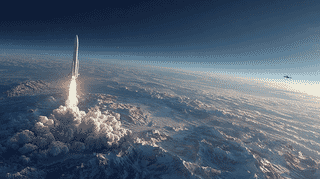
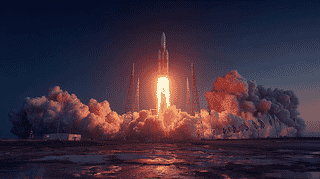
JAXA confirms H3 No.8 failure was caused by satellite adapter delamination. On June 12, the minimum 'Type 30' configuration without boosters launched successfully for the first time. Japan's environmental satellites vs China's Daqi-2.
Waseda University, JAXA, the University of Tokyo, and Keio University have completed Japan's first Mach 5 combustion test using a hypersonic experimental aircraft. How does Japan's passenger-focused strategy compare with the US (Hermeus, Lockheed) and a militarily advanced China?
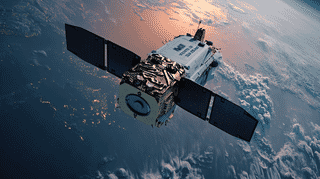
NTT and JAXA have completed the world's first orbital demonstration of satellite MIMO communication and IoT sensing technology aboard a low-Earth orbit satellite. By applying MIMO, the same technology that speeds up your smartphone, to space, they aim to double satellite data transmission capacity. The breakthrough could bring IoT connectivity to mountains, oceans, and remote islands where no cell towers exist.
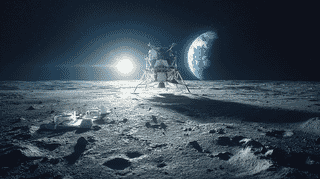
ispace's Improvement Task Force, co-chaired by MIT and Keio professors, has released 7 recommendations after analyzing two failed lunar landings using CAST methodology. With the new integrated ULTRA lander, JAXA SLIM technology transfer, and restructured missions through 2030, ispace is emerging as a role model for how space startups can learn from failure.
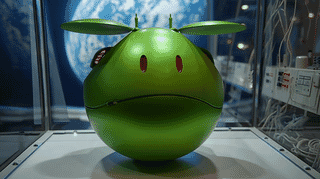
Space Entry Inc. launches 'Minna no Haro,' an autonomous space robot inspired by Gundam's iconic Haro, bound for the ISS Kibo module. Designed by legendary mecha designer Kunio Okawara and running Zephyr RTOS, the project achieves three world firsts and invites public participation through crowdfunding.
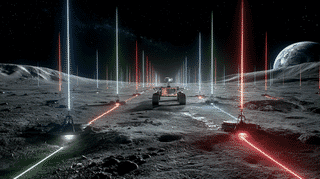
Casio and JAXA have demonstrated ±5cm positioning accuracy using LED-based visible light communication technology 'picalico' in a simulated lunar environment. With no GPS available on the Moon, this warehouse-born technology could become essential infrastructure for future lunar bases and rover operations.
Japanese space laser startup Orbital Lasers has closed a $20 million Series A round backed by nine investors including Keio Innovation Initiative and JIC Venture Growth. Spun out from satellite operator SKY Perfect JSAT in 2024, the company develops compact, high-efficiency space lasers for debris removal via laser ablation and high-precision 3D terrain mapping via satellite LiDAR. We explore how it compares to Astroscale and SpaceX, and what it means for Japan's booming space startup ecosystem.
Japanese space startup Astroscale has announced its ISSA-J1 mission to realize a 'space safety patrol' service in orbit. As the space debris crisis intensifies with over 130 million pieces of junk circling Earth, this article explores how Astroscale's first-mover advantage in on-orbit servicing compares to rivals like ClearSpace and SpaceX, and what it means for Japan's growing space industry.
Chiba Institute of Technology has achieved the world's first ground combustion test of thrust vector control (TVC) using a gas hybrid rocket. Part of the Hestia Project, which aims to launch small satellites via balloon-based "Rockoon" method, this breakthrough demonstrated successful thrust vectoring at 2.0 kN over 8 seconds — opening a new path for affordable space access.
China's Commerce Ministry banned dual-use exports to 20 Japanese defense entities including Mitsubishi Shipbuilding, Kawasaki Heavy's aerospace arm, IHI Aerospace and JAXA, while adding 20 more firms such as Subaru and TDK to a watch list. Seen as a response to PM Takaichi's Taiwan remarks, the move puts rare earth and semiconductor material supply chains at risk. The list was expanded again in June 2026.
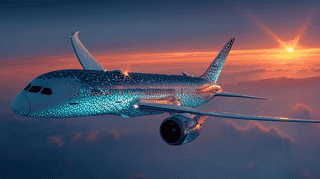
ZIPAIR's Boeing 787-8 becomes the first ZIPAIR aircraft to receive the riblet coating technology inspired by shark skin. Learn how this biomimetic innovation reduces air resistance; estimates for the earlier JAL 787-9 point to roughly 154 tons of fuel saved annually. Discover Japan's approach to sustainable aviation developed by JAL, JAXA, and Orwell.
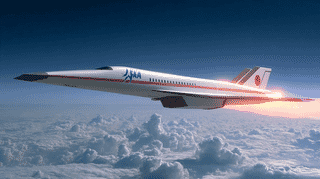
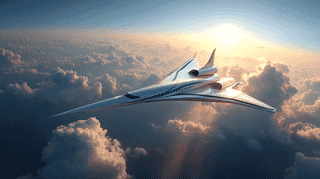
JAXA's robust low-boom design technology aims to cut the sonic boom to less than half of Concorde's. A roughly 10-meter unmanned demonstrator is due to fly around 2028, with the results headed for ICAO's supersonic noise standard, expected in 2031. In the US, the X-59 flew supersonic for the first time in June 2026.