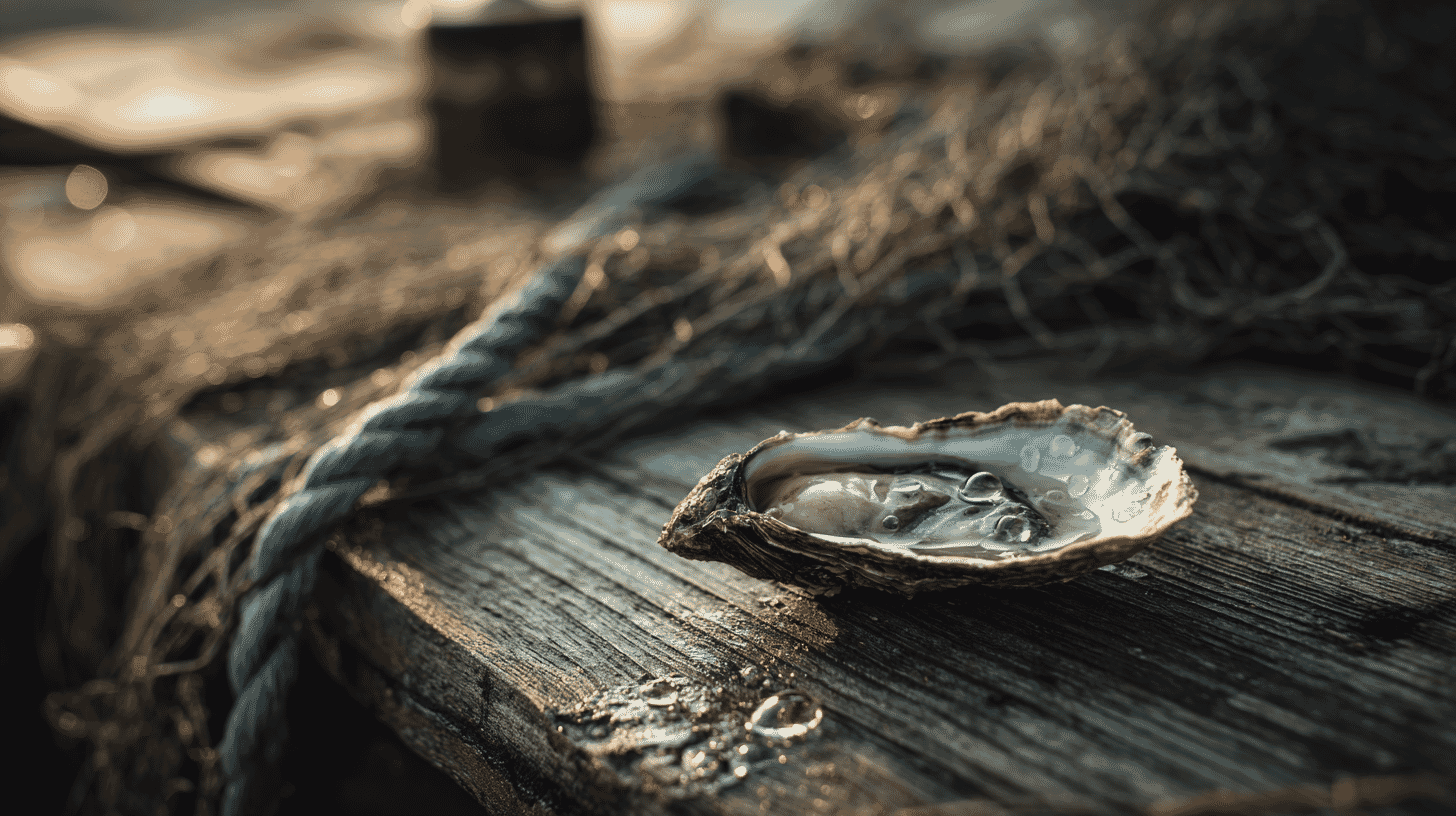
The "Milk of the Sea" has vanished from a winter table. In Hiroshima Prefecture, responsible for roughly 60% of Japan's farmed oyster production, up to 90% of cultivated oysters have been found dead. An unprecedented environmental crisis in the Seto Inland Sea is devastating a 450-year-old aquaculture tradition and forcing Japan's fishing communities to confront the realities of climate change head-on.
An "Unprecedented" Mass Die-Off Sweeps the Seto Inland Sea
When oyster farmers in Hiroshima Prefecture began their harvest season in October 2025, the scene was devastating. Oysters pulled from the water had their shells gaping open, the flesh inside dissolved and gone. Across the central and eastern coastal areas of the prefecture, particularly the cities of Kure and Higashihiroshima, 80% to 90% of harvested oysters were already dead.
Under normal conditions, the mortality rate for farmed oysters at harvest is around 30% to 50%. But in the 2025 season, die-off rates of 60% to 90% were reported across a vast stretch of the Seto Inland Sea: Hiroshima's central-eastern waters and southern Hiroshima Bay, Ehime Prefecture (50–90%), Hyogo Prefecture's Harima-nada coast (up to 80%), and Kagawa Prefecture (50–90%). Tokushima Prefecture recorded losses of 70% to total wipeout in some areas. One farmer with over 20 years of experience told AFP, "I've never experienced this in my whole career."
Crucially, major oyster-producing areas outside the Seto Inland Sea, such as the Sanriku coast in northeastern Japan and Mie Prefecture, reported no unusual losses. This strongly suggests that something specific to the Seto Inland Sea, a semi-enclosed body of water, triggered the catastrophe.
Why the Oysters Died: A Perfect Storm of Stressors
Investigations by Hiroshima Prefecture and Japan's Fisheries Agency point to a convergence of multiple environmental stressors rather than a single cause.
Prolonged high water temperatures top the list. Monitoring by the Hiroshima Prefectural Technology Research Institute showed that average coastal water temperatures from July to October 2025 were 1.5°C to 2.4°C above the 1991–2020 average. Oysters spawn during summer, a process that drains their energy. When warm water persists, they undergo repeated spawning cycles, compounding exhaustion. Some oysters in 2025 were still spawning as late as mid-September.
Elevated salinity added a second layer of stress. An unusually short rainy season, with Japan's 2025 tsuyu (monsoon) ending at record speed, combined with the absence of approaching typhoons meant that freshwater inflow from rivers dropped dramatically. This left the farming waters with abnormally high salt concentrations, creating what researchers describe as a dehydration-like condition for the shellfish. Areas in eastern Hiroshima, which lack major rivers, were hit especially hard.
Nutrient depletion and low dissolved oxygen completed the picture. Less river water also meant fewer nutrients reaching the sea, reducing the phytoplankton that oysters feed on. Additionally, changes in wind patterns disrupted normal water circulation, leading to oxygen-depleted zones in the farming areas.
Long-term data shows Hiroshima Bay's water temperature has been rising at 0.17°C per decade, and as a semi-enclosed sea, the Seto Inland Sea is less buffered by ocean currents than open coastlines. This isn't a one-off disaster; it's a structural shift driven by climate change.
Economic Devastation for "Japan's Oyster Capital"
Hiroshima's connection to oysters runs deep. The prefecture produces about 60% of Japan's farmed oysters (approximately 89,000 metric tons in 2023), and oyster farming here dates back over 450 years to the Muromachi period. Together with Okayama and Hyogo prefectures, the Seto Inland Sea region accounts for roughly 80% of national production. For all three areas to be struck simultaneously is extraordinary.
The financial toll is staggering. The Nikkei reported potential losses of ¥30 billion (approximately $200 million) for Hiroshima Prefecture alone. Oyster farming's economics are particularly brutal in a crisis: the winter harvest season of just a few months generates an entire year's revenue, but input costs (equipment, fuel, materials) are paid upfront in autumn.
At Yamane Suisan, a family operation in Kure City's Yasuura port, only 10% of oysters survived. The business normally employs five part-time workers to shuck oysters, but with so little product, two Indonesian technical intern trainees who handle the harvesting are now doing double duty. Monthly losses exceed ¥1 million (about $6,600), while the city's subsidy covers only ¥500,000 ($3,300). The company's popular kaki-goya (oyster shack), a beloved winter attraction, has been forced to close its doors.
Perhaps most alarming is the outlook for next season. Yamane Suisan cultivates oysters for roughly two years before harvest, and the stock earmarked for the 2026–27 season has also largely perished. "Next season could be a near-total wipeout," the owner warns. Other producers face the same grim prospect, raising fears of permanent business closures that would hollow out coastal communities.
The impact is reaching consumers too: wholesale prices have risen 20–30% and deliveries are less than half of a normal year. Tourists who had looked forward to Hiroshima's famous oyster dishes have also voiced disappointment.
Fighting Back: Technology, Policy, and Community Support
Japan's Agriculture Minister Norikazu Suzuki visited Higashihiroshima in November 2025 and described the situation as "frankly quite grim." The national government has pledged to investigate the cause and coordinate financial support through existing insurance and loan systems.
The Hiroshima Oyster Production Council launched a crowdfunding campaign running through February 2026 to fund the disposal and recycling of massive volumes of empty shells and to purchase environmental monitoring equipment for ongoing research.
On the technology front, Higashihiroshima City announced a collaboration with Hiroshima University starting in fiscal 2026 to develop adaptive farming methods, specifically moving oyster rafts to optimal locations based on real-time temperature and salinity data. In Okayama Prefecture, some producers are experimenting with "basket farming," which allows more flexible positioning compared to the traditional raft-and-wire suspension method (ikada-shiki suika-hō).
Other ideas under discussion include breeding heat-resistant oyster varieties, deploying IoT sensor networks for real-time sea monitoring, and exploring land-based aquaculture. However, all of these require significant time and investment, a difficult proposition for farmers already drowning in debt.
The Paradox of a "Too-Clean Sea"
Behind the immediate crisis lies a longer-term irony. Following severe pollution in the 1960s–70s, Japan enacted the Seto Inland Sea Environmental Conservation Special Measures Law, which dramatically reduced nitrogen and phosphorus runoff through advanced sewage treatment. The sea became cleaner, but too clean for oysters, whose food supply depends on phytoplankton nourished by those very nutrients.
This means Hiroshima's oysters have been caught between two forces: the acute shock of climate-driven heat and salinity stress, and the chronic weakening caused by decades of nutrient depletion. Some farmers suspect that overcrowding of farming rafts has further intensified competition for dwindling food resources.
A Canary in the Coal Mine for Japan's Fisheries
The oyster die-off is a stark example of how climate change threatens Japan's food security and cultural identity. In recent years, scallop harvests in Hokkaido have faltered, nori (seaweed) quality has declined in the Seto Inland Sea, and catches of Pacific saury (sanma) and squid have plummeted nationwide. Rising ocean temperatures are reshaping marine ecosystems faster than communities can adapt.
According to the IPCC, the rate of ocean warming has more than doubled since 1993, and average sea surface temperatures set new records in both 2023 and 2024. As a semi-enclosed sea with limited exchange with the open ocean, the Seto Inland Sea may be one of the world's most vulnerable aquaculture environments, a canary in the coal mine for global shellfish industries.
Hiroshima's oysters are far more than a menu item. They are woven into the region's identity: a 450-year tradition, the centerpiece of winter kaki-goya culture, and the pride of local festivals. How this community responds to an existential threat may set a precedent for traditional food industries worldwide as they grapple with a warming planet.
Has climate change affected traditional fishing, farming, or food culture in your country?
References
- https://news.yahoo.co.jp/articles/451f7701dbc4cf2d9407426e88f646b381878756
- https://www.japantimes.co.jp/news/2025/11/20/japan/society/hiroshima-oyster-deaths/
- https://www.dailysabah.com/life/environment/ocean-warming-linked-to-massive-shellfish-losses-in-japan
- https://www.nippon.com/en/news/yjj2025111900903/
- https://weathernews.jp/news/202512/050146/
- https://www.tabechoku.com/feature_articles/oyster-support-202510




Global Discussion
14 comments