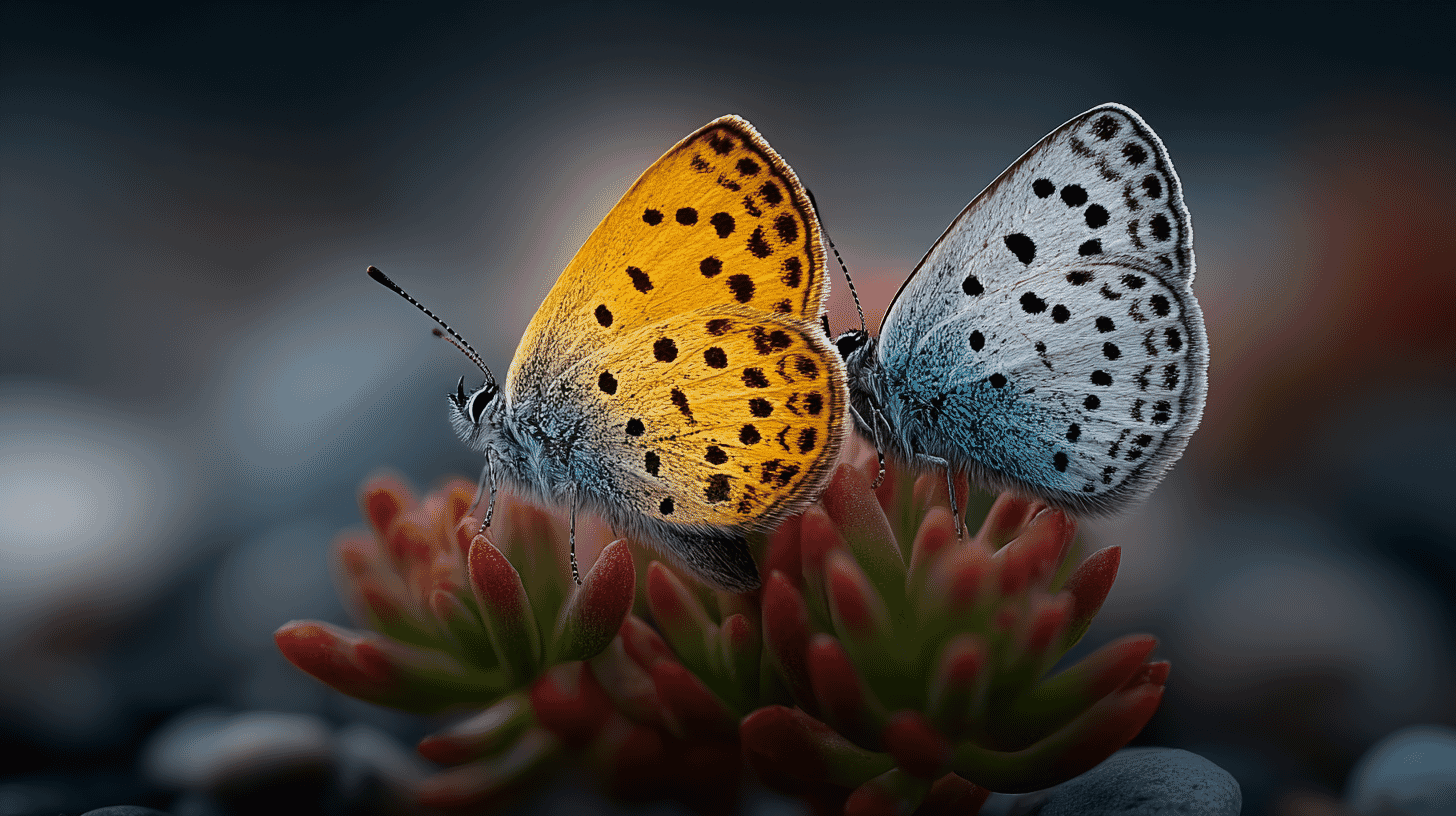
"Eat local if you want to be attractive", this isn't a wellness influencer's hot take. Researchers at Osaka Metropolitan University have scientifically proven that in the butterfly world, your diet literally determines your dating prospects. Butterflies raised on invasive plants develop duller wings and get completely ghosted by potential mates. You are what you eat, and apparently, so is your love life.
Meet the Underdog of the Butterfly World
Our protagonist is the short-tailed blue (Tongeia fischeri), known in Japanese as "kurotsubame shijimi." It's a small, unassuming butterfly, dark-winged, quiet, the kind that blends into the background at a party. It lives along riverbeds and rocky areas across Japan, from Niigata to Kagoshima, and is classified as Near Threatened on Japan's Red List. In other words, it's in the "not in immediate danger, but one bad decision away from serious trouble" category. Relatable, honestly.
These butterflies normally grow up eating Orostachys japonicus (a native succulent called "tsumerenge"), their equivalent of home-cooked meals. But lately, an invasive plant called Sedum sarmentosum (stringy stonecrop, or "tsuru-mannengusa") has been spreading into their neighborhoods. The larvae have started thinking, "Close enough, I'll eat this instead." That lazy shortcut? It's ruining their dating lives.
You Are What You Eat, Literally
Professor Norio Hirai and graduate student Karen Hisai at Osaka Metropolitan University's Graduate School of Agriculture ran a straightforward experiment: raise caterpillars on native plants vs. invasive plants, then compare the adults.
Growth rate? No difference. Pupal weight? Same. So the "junk food" didn't stunt their growth. But it changed their appearance, and in the butterfly dating scene, looks are everything.
The wing undersides of native-fed butterflies had a warm, golden-yellow tone. The invasive-fed ones? A washed-out gray. Think of it as the difference between someone who grew up on fresh Mediterranean cuisine versus someone who lived on microwave dinners. Same body, different glow.
Here's where it gets really interesting: under UV photography, which shows what butterflies actually see, the native-fed group appeared much darker, meaning they absorbed more ultraviolet light. In butterfly terms, UV absorption is basically your attractiveness score. Strong UV signal = hot. Weak signal = invisible.
The culprit? Flavonoids, plant pigments that differ between the two host species and end up in the butterfly's wings. The chemistry of your childhood diet directly determines your "glow-up" as an adult. "You are what you eat" isn't just a saying; it's entomology.
Swiped Left: The Butterfly Dating Experiment
So does this actually affect mating success, or are male butterflies more open-minded than we think? The research team set up the ultimate field experiment, essentially a butterfly version of a dating app.
They tethered females from both diet groups in a habitat where males were actively cruising, then counted courtship contacts. Think of it as measuring "likes" on a dating profile.
The results were brutal. Native-fed females got swarmed with attention. Invasive-fed females were basically invisible, the butterfly equivalent of zero matches. Even when pinned specimens were used (removing pheromone signals entirely), males still preferred native-fed females. Pure visual discrimination. No personality points, no second chances.
The Sneakiest Kind of Ecological Damage
Professor Hirai notes that if invasive-fed females can't find mates and die without reproducing, invasive plant spread could be silently driving population decline in an already vulnerable species.
When we think of invasive species damage, we picture dramatic stuff, one creature eating another, or plants choking out entire landscapes. But this study reveals something far more insidious. The invasive plant doesn't kill the butterfly. It just makes it... plain. And a plain butterfly in a world where UV glow determines your entire reproductive future? That's a death sentence in slow motion.
Hisai plans to dig deeper into the physiological mechanisms behind the color change and investigate whether other butterfly species face the same problem. The study, conducted with the University of Tokyo's University Museum, was published in Basic and Applied Ecology in March 2026.
So the next time someone tells you to "eat local," maybe take it seriously, at least if you're a butterfly. In your country, have invasive species caused any surprising or unexpected damage to native wildlife? We'd love to hear your stories.





Global Discussion
14 comments