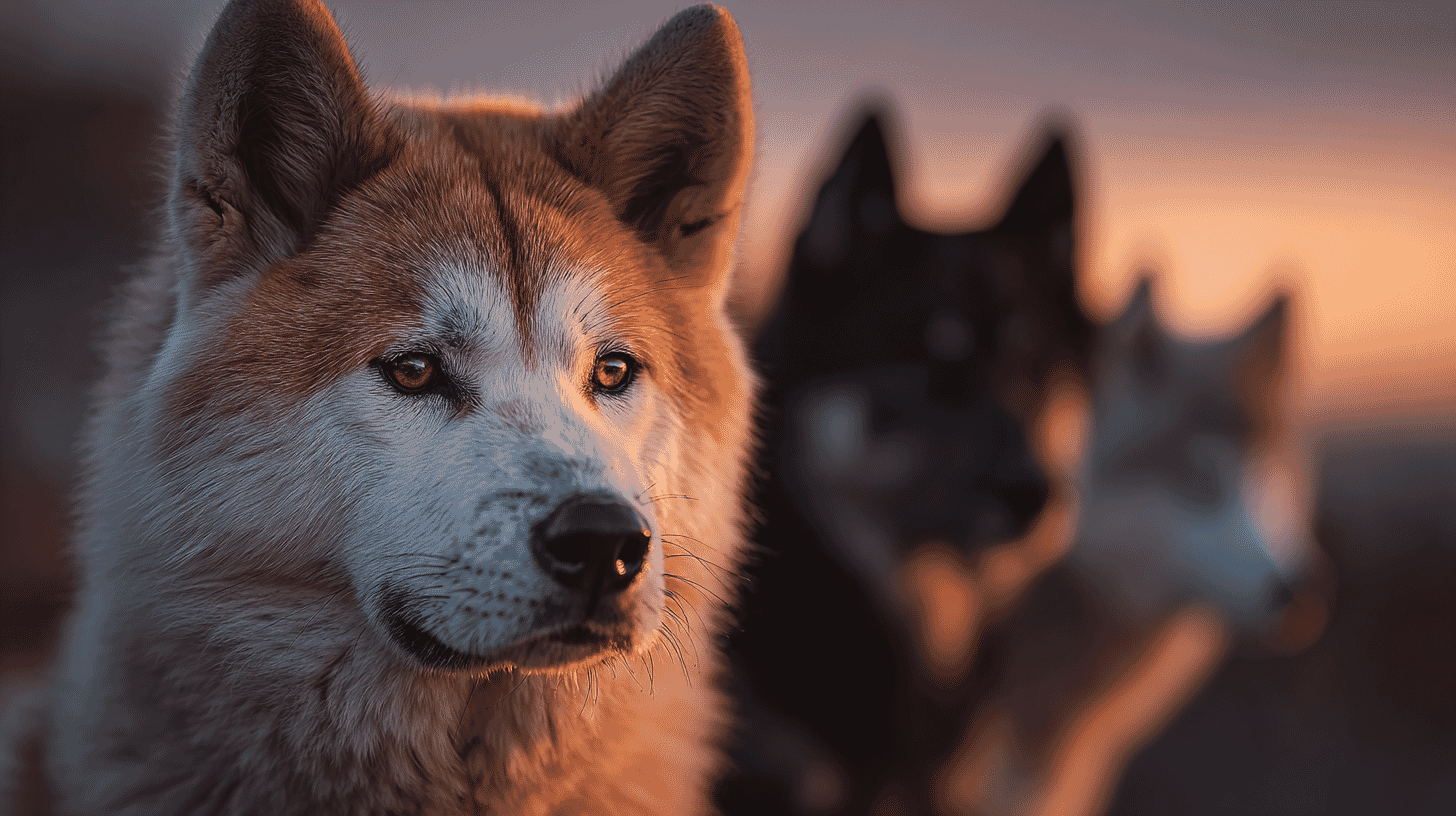
Ask Japanese men to name "the coolest dog breed in the world," and the answer turns out to be a breed most international viewers already know, even if they couldn't name it. A new 2026 nlab Research survey of 943 Japanese men crowned the Akita Inu at #1 with 9.5% of votes, edging out Germany's iconic Doberman (8.8%) into second place. What makes this curious: the same survey run on Japanese women, and on a gender-mixed sample, both put Doberman first. So what's going on with men's tastes, and who exactly are these 943 respondents?
What the survey actually disclosed (and what it didn't)
Nlab Research, a polling-and-listicle arm of Japan's ITmedia, published the male-only rankings on May 2, 2026. Here's the full disclosed methodology:
- Survey date: March 11, 2026
- Population: Men nationwide (Japan)
- Valid responses: 943
- Polling partner: Voicenote, a survey site operated by NEXER Inc.
That's it. There is no published breakdown by age bracket, region, occupation, or sampling method (whether quota-based or open-recruit). Anyone reading this as "what Japanese men think" should pause on that gap, because it matters.
For context: in other surveys it has run on its own magazine, Voicenote has used age-stratified samples like "120 respondents each from under-30s, 40s, 50s, 60s, and 70+," meaning their default panel design tends to over-represent older men compared to a pure online-population sample. Voicenote's direct membership is around 160,000 (with affiliated media, the company claims roughly 5 million), which is mid-tier compared with Japan's largest survey panel Macromill (around 2.3 million members).
In other words, these 943 votes are not a rigorous national census of Japanese men. They're a self-selecting sample of men who happen to be registered with a particular survey site. "What men who answer Voicenote surveys find cool" is a fairer reading than "what every Japanese man finds cool."
The full top 10, and how tight the race was
| Rank | Breed | Vote share |
|---|---|---|
| 1 | Akita Inu | 9.5% |
| 2 | Doberman Pinscher | 8.8% |
| 3 | Siberian Husky | 8.1% |
| 4 | Shiba Inu | 7.6% |
| 5 | Golden Retriever | 6.8% |
| 6 | Saint Bernard | 5.2% |
| 7 | Boxer | 4.1% |
| 8 | German Shepherd | 3.6% |
| 9 | Bulldog | 2.4% |
| 10 | Beagle | 2.0% |
The gap between #1 and #2 is just 0.7 points. The top five all sit between 6.8% and 9.5%. And "Other" pulled in 19.0%, the largest single category, meaning preferences were spread across many breeds with no runaway favorite.
Why Akita Inu took #1
The Akita Inu originates from Akita Prefecture's Odate region in northern Japan. Among Japan's six native breeds, it is the largest. Designated a National Natural Monument in 1931, the breed is best known internationally as the breed of Hachiko, the loyal dog who waited at Tokyo's Shibuya Station for his deceased owner for nearly ten years.
Nlab attributed the win to the breed's loyalty, calm temperament, "dignified large-dog presence," and fluffy coat.
The interesting part is what changed across recent surveys in this same series. Three nlab × Voicenote polls in 2026 asked the same "coolest breed?" question to different populations:
- March 29, 2026 (gender-mixed, all of Japan): #1 Doberman, #2 Akita
- April 12, 2026 (women only): #1 Doberman, #2 Husky, #3 Akita
- May 2, 2026 (men only): #1 Akita, #2 Doberman
So when you isolate the male vote, Akita jumps over Doberman. That gender split is the genuine signal in this data. And notably the Shiba Inu, which has more international meme recognition than any other Japanese breed thanks to Doge, only placed fourth among Japanese men. Domestic taste and viral overseas fame don't always line up.
2 Doberman, the international "tough dog" archetype
The Doberman Pinscher was bred in late-19th-century Germany by tax collector Karl Doberman as a guard dog, and has served as a police and military dog ever since. The short coat, muscular frame, sharp ears, and lean face have made it cinema's go-to "intimidating but capable" dog, from action films to anime.
In reality, with proper socialization Dobermans are often gentle and affectionate at home, but it's the visual presence that drives the "cool" rating. At 8.8% with men, the Doberman remained close to its 11.3% performance with women in nlab's 2025 women's survey. Men just had a slightly less concentrated vote for it.
3 Siberian Husky, the wolf-faced sled dog
Third place went to the Siberian Husky (8.1%), the Siberian-origin sled breed known for piercing blue or pale eyes, wolf-like masking, and gray-and-white coat patterns. In Japan, the breed had a major popularity boom triggered by Doubutsu no Oishasan (Animal Doctor), Noriko Sasaki's manga serialized in Hakusensha's Hana to Yume from 1987 to 1993, in which the protagonist's husky Chobi became a national icon. Huskies are demanding to keep, with high energy and high exercise needs, but they perform well as a visual favorite.
What men's votes have in common: big, primal, working-dog DNA
Looking at the full top 10, men's choices skew toward a particular profile:
- Big dogs win. Seven of the ten are medium-to-large breeds. Akita, Doberman, Husky, Golden, Saint Bernard, Boxer, German Shepherd.
- Working-dog history matters. Police dogs, military dogs, mountain rescue dogs: Doberman, Shepherd, Saint Bernard, and Boxer all bring documented service-dog résumés.
- Primal silhouettes do well. Husky, Akita, and Shiba all carry that wolf-adjacent "ancient breed" look.
Compare that with breeds that fell to the bottom: Pomeranian (18th, 1.3%), Maltese (21st, 1.1%), Poodle (21st, 1.1%). Small companion breeds barely registered. Men in this sample weren't voting on cuteness. They were voting on stature and presence.
Where to actually meet an Akita in Japan
If you're visiting Japan and want to spend time with an Akita Inu, here are accessible options:
- Akita Inu no Sato (Odate, Akita Prefecture): located right next to Odate Station, Hachiko's hometown. Free admission, with a dedicated room where visitors can meet live Akitas during scheduled times.
- Hachiko Statue (Shibuya, Tokyo): probably the most photographed Akita in the world. The original 1934 statue was melted down during WWII; the current bronze has stood since 1948 and serves as Tokyo's most iconic meeting spot.
- Akita Inu interaction stations in tourist areas like Asakusa offer paid sessions to play with adult Akitas. Pricing varies by venue, typically around ¥1,500 to ¥2,500 (roughly $9 to $15 at the July 2026 rate of about ¥163/USD).
International recognition of the Akita has steadily grown since Richard Gere starred in the 2009 Hollywood remake Hachi: A Dog's Tale. Russian President Vladimir Putin was famously gifted a female Akita named "Yume" in 2012. The breed travels well in soft power terms.
What this data can and can't tell us
What it can show: relative preference patterns among men registered with a Japanese online survey panel, when offered a list of dog breeds and asked which feels "coolest."
What it can't show: a statistically representative view of all Japanese men. Differences by age cohort, regional taste differences, correlations with current dog ownership, or any longitudinal trend.
That said, the gender split visible across the three 2026 surveys is robust enough to be interesting on its own. Only the men's sample crowned an Akita. Japanese male respondents leaning toward their own native loyal-companion breed, over the German military dog that consistently wins with women and mixed audiences, is a small but suggestive cultural signal.
What about your country? When someone says "the coolest dog breed," do you picture a German Shepherd, a Husky, a local working breed, or something else entirely?






Global Discussion
15 comments