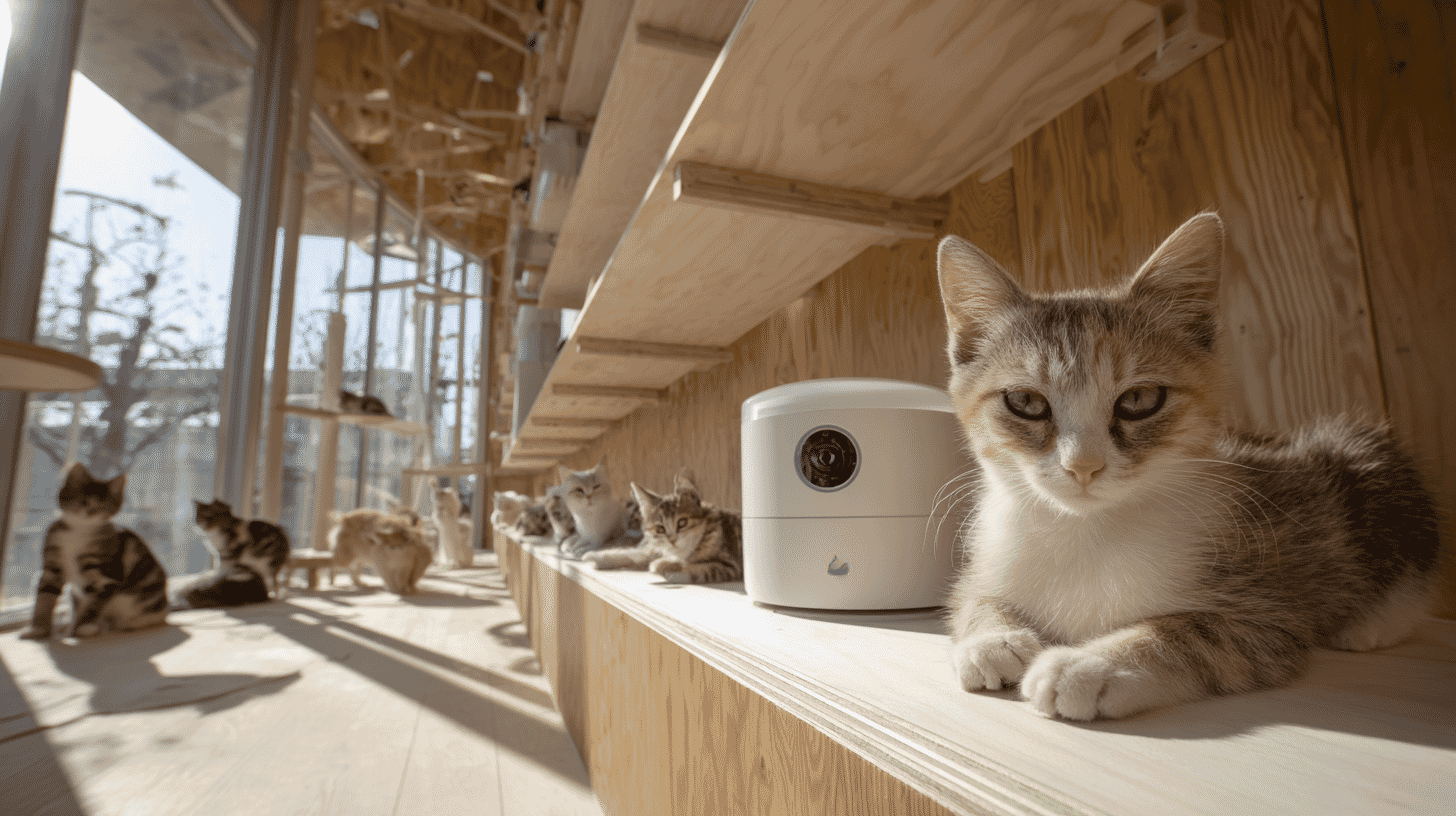
Somewhere in Japan today, a dog or cat's life will quietly end. 6,830 animals per year, that's the latest euthanasia figure from Japan's Ministry of the Environment. It represents a 99%+ reduction from half a century ago. But it isn't zero. To close that final gap, a Tokyo tech company has launched an unexpected idea: feeding shelter dogs and cats through your smartphone.
From Crisis to Quiet Progress
Japan has long drawn international criticism for its approach to stray and unwanted animals. But the last fifty years tell a very different story than the one many foreign readers might expect.
In 1974, approximately 1.1 million dogs and 63,000 cats were euthanized in Japan in a single year. By 2004, the combined total was still around 390,000. In fiscal 2024 (April 2024 to March 2025), that figure had fallen to 1,964 dogs and 4,866 cats, a total of 6,830 animals. That's a reduction of roughly 99.4% from the 1974 peak.
The progress has been driven by successive amendments to Japan's Animal Welfare and Management Act (2012, 2019, 2021), mandatory microchipping, stricter rules allowing municipal shelters to refuse arbitrary owner surrenders, and the tireless work of rescue volunteers. Several prefectures and cities, including Kanagawa and Nara, have now achieved zero-euthanasia status for multiple consecutive years.
How Does Japan Compare Internationally?
This may surprise readers from abroad: by absolute numbers, Japan now ranks among the lower-euthanasia countries in the developed world.
According to data compiled from ASPCA sources, per-pet euthanasia rates in the United States are roughly nine times higher than in Japan. In Italy, approximately 40% of companion animals have their lives ended through euthanasia. Japan's 6,830 annual figure represents about 0.03% of its estimated 20 million-plus pet population.
None of this means the problem is solved. It still means that roughly 19 dogs and cats die every single day in Japanese shelters, animals that, in most cases, have done nothing wrong.
Why Zero Is So Hard to Reach
Three main factors explain why the number hasn't dropped to zero.
Cases deemed non-adoptable. Animals with severe injuries, untreatable diseases, significant aggression, or training as fighting dogs are rarely rehomed. Animals carrying contagious diseases also fall into this category.
The kitten problem. About half of the 4,866 cats euthanized in 2024 were pre-weaning kittens. Feral cat populations reproduce faster than TNR (trap-neuter-return) programs can manage, particularly in rural areas.
Shelter capacity limits. No matter how efficient rescue operations become, physical space is finite. Japan's aging society is creating a new category of surrendered pets, animals whose elderly owners have died or entered care facilities, leaving them with no home.
Paw Me: Feeding Shelter Animals Through Your Phone
Signal Talk, a Tokyo-based IT company in Ota Ward, believes part of the answer lies in expanding who gets to participate in rescue work. On March 24, 2026, the company launched a limited beta test of Paw Me, a service that lets anyone, from anywhere, remotely feed shelter dogs and cats via smartphone.
Signal Talk, founded in 2002, is best known in Japan for its long-running online mahjong platform Maru-Jan. More recently, the company has moved into social impact technology, launching AI-powered health apps like FoodScore and my healthy. Paw Me is the latest extension of that shift.
The concept is straightforward. Through a web interface (no app installation required), users watch live camera feeds inside partner animal shelters. Purchased coin points can be used to trigger automated feeders, the user presses a button and watches, in real time, as food dispenses and the animal eats. A microphone feature allows users to speak to the animal. Photos can be taken to record the animal's progress over time.
Coins can also be gifted to specific shelters as ongoing support. All revenue from the service is directed either to shelter operations or to running Paw Me itself, which Signal Talk frames explicitly as a social-contribution business, not a profit venture.
Three Tokyo-area shelters are participating in the beta: Nyanhotto in Ota Ward (specialized in cat adoptions), Nyankotei in Toshima Ward (operating two cat cafés), and Suama Shokai in Itabashi Ward (a café-adjoined shelter where every coffee supports cats). The beta runs through April 23, 2026, with a full national launch planned for summer 2026.
Opening Rescue Work to People Who Can't Adopt
What makes Paw Me genuinely novel is who it invites into animal rescue, categories of people who have historically been locked out.
Many Japanese apartment buildings prohibit pets, leaving urban renters unable to adopt even when they deeply want to. People with animal allergies face the same wall. The elderly often hold back out of a realistic fear: what happens to my pet if I pass away or can no longer care for them? And rescue supporters living overseas simply cannot show up at a Tokyo shelter to walk a dog on weekends.
Paw Me offers all of these people a concrete way to engage. It isn't simply a donation button. It's a specific, named animal that you feed, speak to, and photograph over weeks and months, a relationship, mediated through screens but still genuine.
The service will invite legitimate criticism. Is remote interaction reducing animals to entertainment? Does camera-monitored feeding add workload for already-stretched shelter staff? Does this replace, rather than complement, direct adoption? These are questions worth debating openly.
A Separate Conversation Japan Still Needs to Have
Downstream solutions like Paw Me work alongside, but don't answer, a much larger upstream question. Why do adoptable animals keep arriving at Japanese shelters in the first place?
France banned the sale of dogs and cats in pet shops starting in 2024. The UK has its Lucy's Law. Germany's animal welfare framework is considered among the world's strictest. Meanwhile in Japan, it remains entirely normal to see puppies and kittens displayed in pet shop windows in major shopping districts. Puppy mills have been a recognized problem for years without structural reform. That upstream conversation deserves its own dedicated treatment, but it shouldn't diminish what Paw Me is doing at the downstream end, saving animals that are already in shelters, today.
What's It Like in Your Country?
In Japan, an IT company is now installing live cameras and automatic feeders so that people thousands of kilometers away can participate in saving a shelter cat's life with a tap on their phone screen. It's a specifically Japanese response to a specifically Japanese challenge, but the underlying questions are universal.
How are shelter animals treated where you live? How do ordinary citizens participate in rescue work in your country? Are there technology-driven approaches to animal welfare you've seen that we should know about? We'd love to hear.
References
- https://paw.signaltalk.com/
- https://www.atpress.ne.jp/news/575641
- https://www.env.go.jp/nature/dobutsu/aigo/2_data/statistics/dog-cat.html
- https://www.signaltalk.com/
- https://japantoday.com/category/features/lifestyle/pet-euthanasia-and-culling-in-japan-how-kill-rates-dropped-and-the-challenges-that-remain









Global Discussion
14 comments