GPU-to-GPU optical interconnects were forecast to arrive around 2033. NVIDIA just pulled them in by five years, putting co-packaged optics into the NVLink switch of its 2028 Feynman generation, and locking in supply with $2 billion investments in each of Lumentum and Coherent. Furukawa Electric is spending 38 billion yen to more than quintuple DFB laser chip capacity; Sumitomo Electric supplies core components for NVIDIA's Quantum-X Photonics switches but was left out of the funding round. Where Japan's optical suppliers stand, and how NTT's IOWN runs on a different clock.
JBIC and Japan's three megabanks signed $2.221 billion in loans for the first three projects of a $550 billion US investment ceiling, the price Tokyo paid to bring Trump's tariffs down to 15%. The deal, the dollar-funding crunch, and what changed when the Supreme Court ruled IEEPA tariffs unlawful in February 2026.
By fiscal 2034, new data centers and semiconductor fabs will add peak electricity demand equal to seven nuclear reactors in Japan, with roughly 60 percent of capacity clustered around Tokyo and the connection queue backed up. The government's answer is Watt-Bit Integration. Set against Virginia's pricing fix, Ireland's renewables mandate, and Singapore's hard area cap, Japan's regional-distribution-plus-decarbonization bet comes into focus.
Kioxia and Sandisk have achieved a world-first technological milestone toward 3D NAND flash memory exceeding 1,000 layers. Their multi-stacked cell array CMOS (MSA-CBA) structure with wafer-to-wafer Cu direct bonding successfully demonstrated QLC operation, and will be unveiled at the VLSI Symposium 2026 in Hawaii this June. We break down the technology, the three-way stacking race against Samsung, SK hynix, and Micron, and what soaring AI data center demand means for the NAND market.
Kao, famous for Biore and Attack, has brought its first overseas semiconductor cleaning center online in Hsinchu, Taiwan. Ajinomoto, the MSG maker, is putting over 25 billion yen into ABF insulation films that hold nearly 100% global share, and has bought land in Gifu for a third plant. How Japanese consumer goods companies, alongside Shin-Etsu, SUMCO, JSR and TOK, became indispensable to the AI chip supply chain, and how they compete with US, European, Korean, Taiwanese and Chinese rivals.
On April 28, 2026, the day Denso formally withdrew its acquisition proposal for Rohm, Mitsubishi Electric CEO Kei Uruma declared he wants to spin off only the power semiconductor businesses of all three companies and form a joint venture. This proposes a different framework from Rohm and Toshiba's full semiconductor integration plan, adding a new wrinkle to the world No.2 alliance vision. We analyze competition with Wolfspeed, Infineon, and STMicroelectronics, the SiC market share battle, and the impact on the EV industry.
Fujitsu is doubling down on its sovereign AI strategy with the FUJITSU-MONAKA CPU series, choosing Rapidus as a manufacturing partner and 'coexisting' with NVIDIA's GPUs rather than competing. We compare Japan's hybrid approach to China's fully autonomous Loongson (LoongArch) and Europe's Arm-based SiPearl, revealing how Japan's pragmatic balance defines a third path in global chip sovereignty.
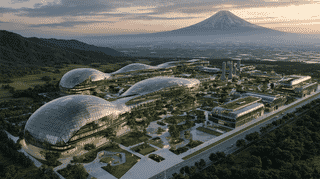
Kumamoto Prefecture, Koshi City and Mitsui Fudosan signed a partnership agreement on April 27 to launch a 31-hectare 'Kumamoto Science Park' core hub — modeled on Taiwan's Hsinchu — to anchor Japan's semiconductor revival around TSMC's 3nm Kumamoto fab by 2030. We compare it with the US CHIPS Act and EU Chips Act, and unpack the land-price spikes and labor crunch already reshaping the region.
On April 25, 2026, Denso announced plans to withdraw its $8.2 billion acquisition proposal for Rohm. Rohm chose the three-way alliance with Toshiba and Mitsubishi Electric, while Denso pivots to actively explore partnerships with third parties. We analyze the conclusion of Japan's 50-day power semiconductor reshuffle and what's next for Toyota Group's chip in-house strategy.
Resonac, the world's top supplier of back-end semiconductor materials, has fully launched US-JOINT, a 12-company Japan-US consortium R&D center in Union City, California. The goal: cut proof-of-concept cycles from six months to one, and plug directly into the custom AI chip development of GAFAM-class hyperscalers.
On April 23, 2026, the Nikkei 225 crossed 60,000 intraday for the first time in history. We compare this milestone with the 1989 bubble peak at 38,915 yen, examining USD-based performance, the foreign ownership shift from 5% to 32.4%, the PER drop from 60x to 16x, and the heavy concentration in just a handful of AI and semiconductor stocks like SoftBank Group, which surged 9.6%.
Three weeks after the March 27 three-way merger announcement, Japan's power semiconductor reshuffle has accelerated. Denso declared its semiconductor-maker ambitions in CORE 2030, Rohm's CEO asserted leadership, Toshiba eyes re-listing, and Mitsubishi Electric opened a new Fukuoka plant. A timeline update.
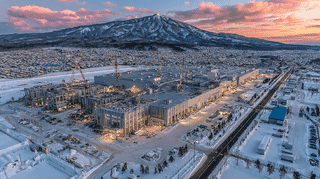
Japan's METI announced a $377M subsidy for Sony's new image sensor factory in Kumamoto on April 17. With $1.13B total investment and production starting May 2029, this is Japan's counter-strike against Samsung's bid to break Sony's iPhone monopoly and capture the booming AI-camera and self-driving car sensor markets.
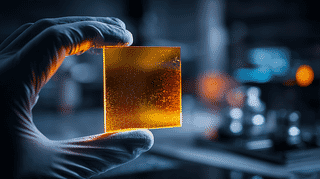
Tokyo-based Orbray has produced the world's largest 30mm square (111) freestanding diamond single-crystal substrate, leaping from the previous few-millimeter limit. The twin-suppression breakthrough, published in Applied Physics Express, unlocks NV-center quantum sensors and next-generation power semiconductors.
Nine months after the Japan-EU BRT proposal, the rare earth landscape has transformed: 55-nation pricing agreements, an EU center modeled on Japan's JOGMEC, and $1.3B US funding. But can the West truly break China's grip?
Japan's METI officially approved an additional $4 billion for Rapidus, bringing total government support to $15 billion. We analyze Japan's 2nm chip ambitions alongside the US CHIPS Act, EU Chips Act, TSMC's Kumamoto expansion, and the critical challenge of finding customers.
TDK will manufacture TMR sensors for Apple in the U.S. for the first time as part of Apple's expanded American Manufacturing Program, with $400 million invested through 2030. We examine how Trump-era reshoring pressure is reshaping supply chains for Japanese component makers including Murata and Taiyo Yuden.
Japan's March 2026 startup funding ranking saw Startale Japan ($530M) and AI & AND ($500M) lead. With Pharos Network's $44M raise backed by Sumitomo and only ~9 unicorns vs. a 100-company target, we examine where Japan's ecosystem stands globally.
The shutdown of Qatar's LNG facilities due to Middle East conflict has wiped out 30% of global helium supply. Without helium, dry etching, essential for all advanced chips, physically cannot function. South Korea's memory makers face a 5-month countdown, and the U.S. no longer has a strategic reserve to cushion the blow.
Japan's FSA is considering allowing foreign banks to join syndicated loans without establishing local branches. The reform aims to channel overseas capital into AI and semiconductor sectors, boosting Tokyo's competitiveness as a global financial hub.